The Enduring Question: Could Romania and Moldova Reunite Amid Shifting Geopolitics?
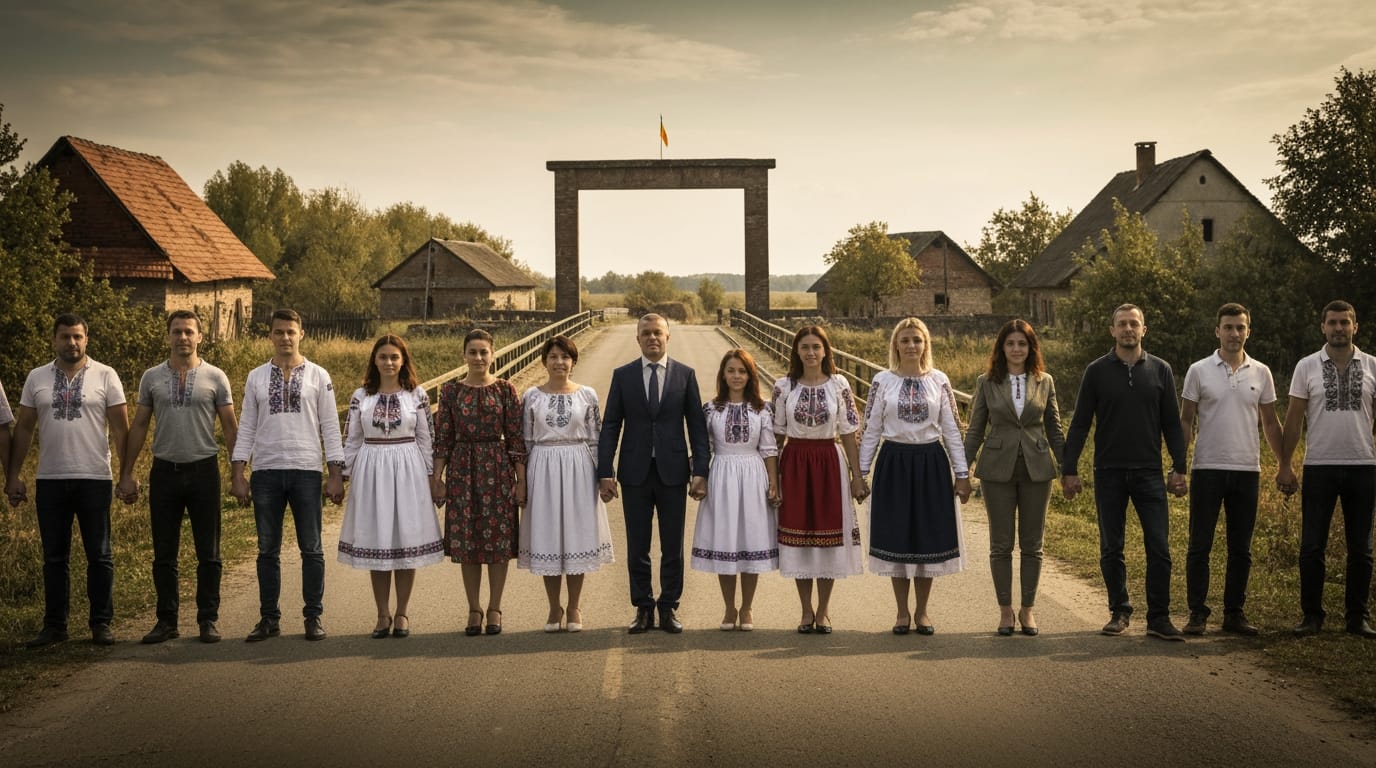
The idea of Romania and the Republic of Moldova uniting has resurfaced with renewed intensity, propelled by shared historical ties, linguistic kinship, and the profound geopolitical shifts emanating from the conflict in Ukraine. What was once a topic largely confined to historical discourse and nationalist sentiment is now being openly discussed by political leaders and debated across society, weighing deep-rooted identity against the complex realities of economic disparity, frozen conflicts, and strategic international alignments. The potential for a single, unified Romanian state is fraught with historical resonance, but its realization hinges on overcoming significant political, economic, and geopolitical hurdles.
A Shared Past, A Divided Present
The historical narrative binding Romania and Moldova is long and intricate, forming the emotional bedrock for calls for reunification. For centuries, much of what is now the Republic of Moldova, known historically as Bessarabia, formed an integral part of the Principality of Moldavia. This shared heritage was fractured in 1812 when Bessarabia was annexed by the Russian Empire, leading to over a century of Russian rule. Following the collapse of the Russian Empire in 1917, Bessarabia declared its independence and, in 1918, voted to unite with the Kingdom of Romania, creating what unionists refer to as "Greater Romania." This unity was short-lived, however. In 1940, under pressure from the Molotov-Ribbentrop Pact, Romania ceded Bessarabia and northern Bukovina to the Soviet Union, which then organized Bessarabia into the Moldavian Soviet Socialist Republic. The Soviet era actively promoted a distinct Moldovan identity, including the use of the Cyrillic script, further complicating the linguistic and cultural landscape. Upon the dissolution of the Soviet Union in 1991, Moldova declared independence within its Soviet-era borders, including the breakaway region of Transnistria, setting the stage for the contemporary debate.
Political Voices and Shifting Stances
The ongoing war in Ukraine has dramatically reshaped the geopolitical landscape of Eastern Europe, breathing new life into the reunification discussion. Moldovan President Maia Sandu has openly stated that she would personally vote in favor of unification with Romania if a referendum were held, framing it as a potential route to accelerated European Union (EU) accession and a defense against mounting Russian pressure. However, she consistently emphasizes that such a decision must be backed by a majority of Moldovan citizens and that EU integration as a sovereign state remains the more realistic and broadly supported national objective.
In Romania, the response has been largely supportive, albeit with a pragmatic understanding of the complexities involved. Romanian President Nicușor Dan has reiterated Bucharest's long-standing position that Romania stands ready to unify if the Moldovan people democratically express such a desire. The Romanian Parliament notably voted in 2018 to support unification under these conditions. Political parties in both countries align along "unionist" and "Moldovenist" lines. Unionist groups in Moldova and Romania advocate for unification based on shared identity, while Moldovenists or "Statalists" emphasize the preservation of Moldova's distinct statehood and sovereignty.
Public Opinion: A Complex and Evolving Picture
Public sentiment regarding reunification presents a nuanced and often contradictory picture across the Prut River. In Romania, support for unification is considerably strong. Recent polls indicate that a significant majority, sometimes as high as 71.9% of Romanians, would vote in favor of unification in a referendum. This support is often rooted in a sense of historical duty and the belief that Moldovans are "of the same language and nation, separated from Romania only by recent history."
Conversely, support for reunification in Moldova, while showing a slow but steady increase over the past decade, remains divided and has not consistently reached majority levels necessary for a definitive political move. While some polls, particularly those including the Moldovan diaspora, have shown support hovering around 47-55% (with opposition at 36.5-44%), other surveys present lower figures. For instance, a September 2025 poll indicated that approximately 33.4% of Moldovans would vote for unification, while 45.7% would vote against it. Support varies significantly, often influenced by geopolitical events and internal political dynamics. Factors such as perceived economic benefits, the prospect of quicker EU accession, and a sense of shared national identity drive support, while concerns over national sovereignty, economic integration costs, and the Transnistria issue fuel opposition.
Economic Realities and Geopolitical Obstacles
The economic implications of reunification are a significant consideration. Moldova is one of Europe's poorest countries, with a nominal Gross Domestic Product (GDP) that is less than 5% of Romania's, and a GDP per capita approximately one-third of Romania's. While some studies suggest that reunification could bring annual economic growth of 5% and a boost to trade and investment for the combined entity, the immediate costs of integrating Moldova's weaker economy would be substantial for Romania. Experts warn that economic unification would be a "long, complex and costly process," potentially leading to a short-to-medium-term decrease in Romania's average GDP per capita.
Perhaps the most formidable geopolitical obstacle to reunification is the unresolved "frozen conflict" in Transnistria, a breakaway region on Moldova's eastern border supported by Russia. Transnistria, with its predominantly Russophone population and a strong pro-Russian stance, has consistently opposed any attempts at unification between Moldova and Romania. NATO, of which Romania is a member, has a policy of not importing unresolved territorial disputes, meaning that the integration of a region with Russian troops and a de facto independent administration into a NATO member state would pose significant challenges under Article 5 collective defense provisions. Any unification scenario would likely necessitate a prior resolution of the Transnistrian issue, potentially through its exclusion from a unified state or a complex reintegration process with significant autonomy.
Geopolitically, Russia would likely interpret unification as a "political defeat" rather than an immediate casus belli for conventional military action against a NATO member, given the risks of a broader conflict. However, Moscow would almost certainly respond with political pressure, propaganda, economic leverage, and efforts to destabilize the region.
The Path Forward: EU Integration as a Unified Horizon
Despite the strong historical and cultural arguments for reunification, the current trajectory for both Romania and Moldova appears to prioritize Moldova's integration into the European Union as a sovereign state. This path offers a pragmatic alternative, promising many of the benefits of closer ties—such as economic growth, enhanced security, and democratic reforms—without the immediate complexities of full state merger.
Romania actively supports Moldova's EU aspirations, providing technical expertise, advocating within the EU, and assisting with institutional and legal harmonization. Moldova's accession to the EU would effectively create "borderless relations" between the two countries within a common European framework, fulfilling many of the unionist aspirations through a gradual, institutional process rather than a sudden territorial change. Moldova aims to be ready for EU membership by 2030, a goal supported by a majority of its citizens, who see it as essential for countering Russian pressure and ensuring future security and prosperity.
Ultimately, while the emotional pull of reunification remains powerful for many, the complex interplay of public opinion, economic disparities, the unresolved Transnistrian conflict, and broader geopolitical considerations means that a complete merger between Romania and Moldova is not an imminent prospect. Instead, the immediate future points towards a deepening of ties through European integration, allowing both nations to pursue a common European destiny while navigating their distinct national identities.


