The Quiet Revolution: How Air Conditioning Technology is Reshaping Home Heating, Saving Money, and Slashing Emissions
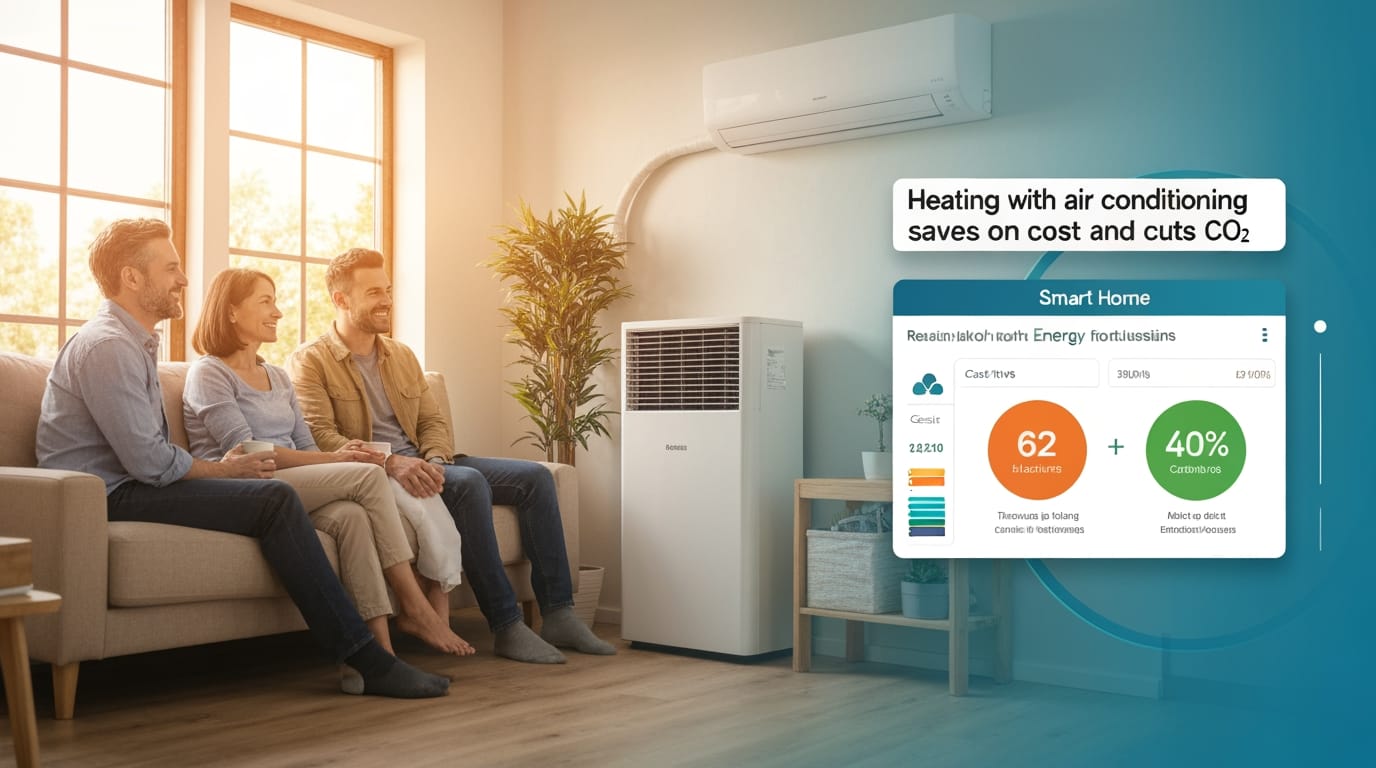
A silent revolution is underway in residential climate control, one that promises to reshape household budgets and significantly curb carbon footprints. The technology, commonly associated with cooling relief during sweltering summers, is proving equally adept at efficiently warming homes in colder months: the heat pump. Functioning much like a reverse air conditioner, these systems are emerging as a dual-purpose solution, offering substantial energy savings and a potent weapon in the fight against climate change by drastically reducing reliance on fossil fuels.
Driven by advancements in efficiency and a growing awareness of environmental imperatives, heat pumps are rapidly gaining traction as a viable, often superior, alternative to traditional heating methods. Their ability to both heat and cool a home using a single, highly efficient system is not only a convenience but a strategic move toward a more sustainable and economically sound future for homeowners and the planet alike.
The Ingenuity of Heat Transfer: How it Works
At its core, a heat pump operates on a principle of transferring heat rather than generating it through combustion. This fundamental difference sets it apart from furnaces and boilers that burn fossil fuels. During the heating season, a heat pump extracts thermal energy from a cooler external environment—be it the outside air or the ground—and transfers it indoors, effectively warming the living space. In essence, it works much like a refrigerator, but in reverse.
The process involves a refrigerant circulating through a closed loop. In heating mode, the refrigerant absorbs heat from the outdoor air as it passes through an evaporator coil, even when temperatures are low. This warmed refrigerant then flows to a compressor, which increases its pressure and temperature. The hot, compressed refrigerant then moves to an indoor coil, where it releases its heat into the home's air distribution system. As the refrigerant cools, it condenses back into a liquid, and the cycle repeats.
This method of heat transfer is remarkably efficient. Modern heat pumps can be two to three times more efficient than most fossil-fuel heating systems, often producing three to four times more heat energy than the electricity they consume. This high efficiency is a key driver of both economic and environmental benefits.
Unlocking Economic Advantages for Households
The financial incentives for adopting heat pump technology are increasingly compelling. For households currently relying on electric resistance heating, fuel oil, or propane, switching to a heat pump can lead to significant reductions in energy bills. A National Renewable Energy Lab (NREL) study indicated that 92 to 100 percent of these 49 million households could lower their energy bills, with typical annual savings ranging from $300 to $650. One documented case saw a household save $535 annually by replacing an oil furnace with a heat pump.
The upfront cost of a heat pump installation can be higher than traditional systems, but government incentives are designed to mitigate this barrier. Federal tax credits, for example, offer homeowners up to 30% of the total cost, capped at $2,000 for qualifying air-source heat pumps, for installations through December 31, 2025. These credits can often be combined with other energy efficiency upgrades, and state or local programs may offer additional rebates, some reaching up to $8,000. Beyond direct savings, installing a heat pump can also increase a property's value.
However, the economic landscape can vary. For homes already using natural gas for heating, the savings may be smaller or, in some instances, even lead to increased costs if local electricity prices are significantly higher than gas prices. A recent survey in the UK suggested that a majority of heat pump owners did not experience bill reductions, with some reporting higher heating costs due to the disparity between electricity and gas prices.
A Powerful Ally in the Climate Crisis
Beyond the financial benefits, heat pumps represent a critical tool in reducing greenhouse gas emissions and combating climate change. Unlike systems that burn fossil fuels, heat pumps use electricity and do not produce on-site emissions. This distinction is crucial; heat pumps can reduce a household's CO2 emissions by up to 70% when powered by renewable electricity. Even when running on the current electricity grid mix, heat pumps significantly lower greenhouse gas emissions compared to fossil fuel boilers, with this advantage growing as electricity grids decarbonize.
Switching to a heat pump can save up to 7.6 tons of carbon emissions per year, contributing to a meaningful impact on the climate as millions of households adopt the technology. Furthermore, heat pumps can cut heating-related fossil fuel use by 40% or more, and studies suggest that 98% of U.S. households could reduce their carbon emissions by installing a heat pump today. The environmental advantages extend to indoor air quality, as heat pumps eliminate the indoor air pollution associated with gas-burning furnaces.
The global transition to heat pump technology is seen as central to achieving secure and sustainable heating. Heating in buildings accounts for 10% of global CO2 emissions annually, equating to 4 gigatonnes. Replacing fossil fuel-based boilers with heat pumps offers a direct path to reducing this substantial contribution.
Navigating the Path to Wider Adoption
Despite their clear advantages, the widespread adoption of heat pumps faces several challenges. The initial capital cost remains a significant barrier for many consumers, with installations potentially costing four times more than a new gas boiler without subsidies. Low-temperature heat pumps, for instance, can be three times more expensive than gas boilers, while high-temperature variants can be up to eight times pricier.
Another hurdle is ensuring homes are adequately insulated, as heat pumps perform optimally in well-sealed and insulated environments. Many older homes may require additional insulation upgrades to maximize efficiency, further increasing the initial investment. The compatibility with existing heating infrastructure is also a consideration; heat pumps operate at lower flow temperatures than traditional boilers, which may necessitate larger radiators or the installation of underfloor heating.
The industry also grapples with a shortage of qualified and experienced installers, which can bottleneck deployment and potentially lead to inefficiencies if installations are not carried out to optimal standards. Moreover, in extremely cold climates, the efficiency of air-source heat pumps can degrade, limiting their energy and emission-saving benefits, though technological advancements are continually improving performance in colder conditions. Policy inconsistencies, shifting regulations, and reduced funding in some regions have also been cited as factors hindering accelerated growth.
A Sustainable Future Powered by Smart Climate Control
The integration of air conditioning technology for heating represents a pivotal shift towards more sustainable and economically sound home energy management. While challenges related to upfront costs, existing infrastructure, and skilled labor persist, the compelling benefits of reduced energy bills and substantial carbon emission cuts are driving innovation and policy support. With ongoing advancements and a concerted effort to address barriers, the heat pump is poised to become the cornerstone of residential climate control, offering a powerful, dual-purpose solution that benefits both household finances and the global environment.