The Shifting Sands of Allegiance: Does Nationality Still Define the Olympic Spirit?
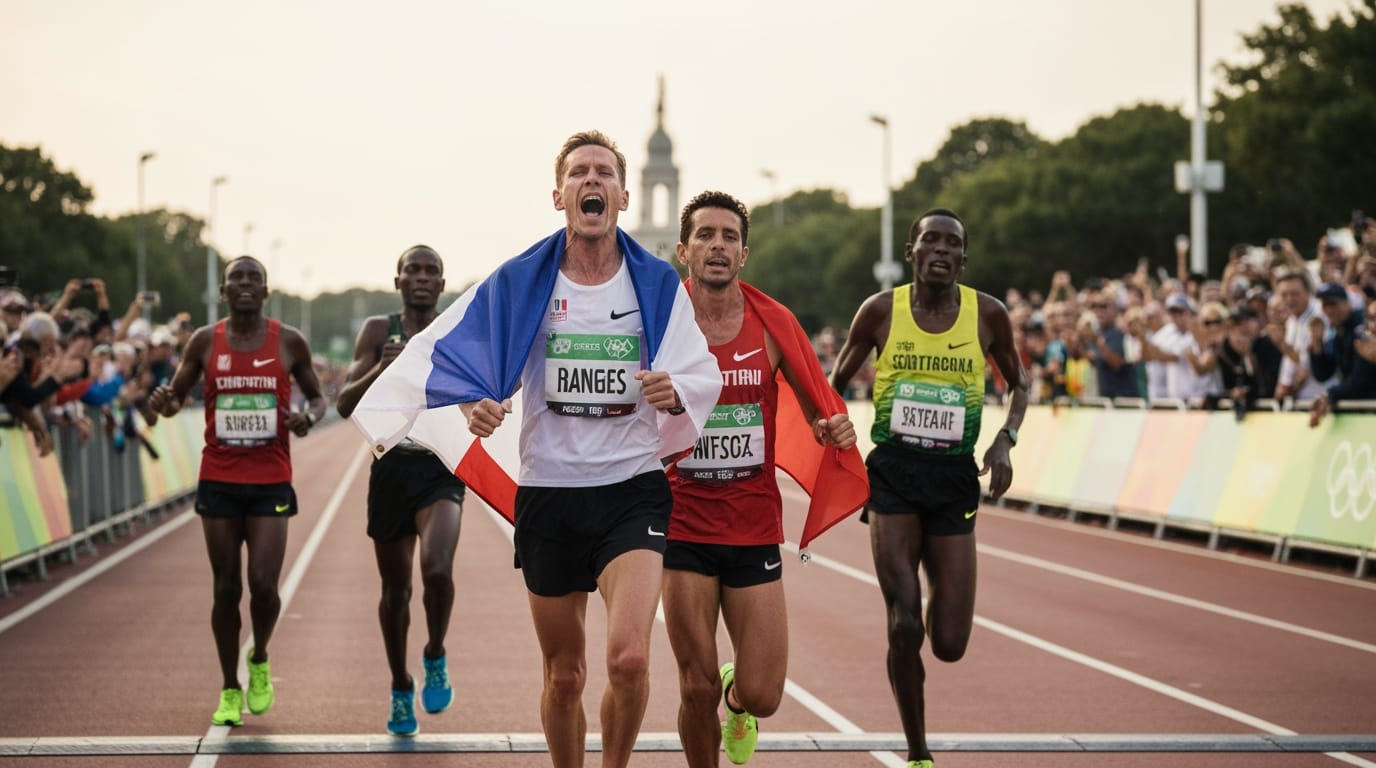
The Olympic Games, a quadrennial spectacle of human endeavor and sporting excellence, have long stood as a powerful symbol of national pride and unity. Athletes march under their nation's flag, anthems play for gold medalists, and countries fiercely track their medal counts. Yet, beneath this seemingly immutable structure of national representation, a complex and evolving reality is taking shape, raising fundamental questions about the role of nationality in an increasingly globalized world. As athletes increasingly navigate dual citizenships, transfers of allegiance, and the pursuit of opportunity across borders, the very essence of what it means to represent a "nation" at the Olympics is being re-examined.
The Enduring Power of the Flag: A Foundation of National Identity
From its modern inception, the Olympic movement has been intrinsically linked to the concept of nation-states. Baron Pierre de Coubertin, founder of the International Olympic Committee (IOC) in 1894, envisioned the Games as a platform for peaceful competition between nations. This vision solidified the role of National Olympic Committees (NOCs), which represent individual nations and are responsible for entering competitors. The Olympic Charter's Rule 41 explicitly states that "any competitor in the Olympic Games must be a national of the country of the NOC which is entering such competitor." This foundational principle taps into a deep well of national and civic pride, a unifying force where citizens often overcome political and social cleavages to rally behind their athletes. A global poll once found that a majority of people in 18 out of 21 countries considered their nation's performance at the 2012 London Olympics "important to their national pride." For many, the sight of their flag being raised and their anthem playing remains the ultimate expression of collective achievement and identity on the world stage.
Navigating a Globalized Arena: Rules, Realities, and Transfers
While the principle of national representation remains, the pathways to achieving it have become increasingly intricate. The IOC's Rule 41 also acknowledges the reality of dual citizenship, allowing athletes holding nationality in two or more countries to choose which nation they will represent. However, once an athlete has represented a country in an Olympic Games or other major international championships, a change of allegiance typically mandates a three-year waiting period before they can compete for a different nation. This period can be reduced or waived if all concerned parties—the IOC, the relevant International Federation (IF), and the NOCs of both countries—agree.
International Federations, governing bodies for individual sports, possess the authority to impose additional, stricter nationality requirements beyond the basic Olympic Charter. For instance, while some sports like swimming and golf largely follow Rule 41, basketball's FIBA imposes more stringent conditions, limiting naturalized players and restricting switches for athletes over 17 years old.
The reasons athletes choose to switch nationalities or leverage dual citizenship are multi-faceted. Often, it is a pragmatic decision driven by the pursuit of opportunity. Intense competition within a birth country can make Olympic qualification an insurmountable challenge, leading athletes to seek an "alternate Olympic home" where their chances of making a national team are higher. Financial incentives, better training facilities, or more robust support systems in another country can also play a significant role. Historically, nationality swapping saw an upward trend after the 1990s, reflecting more liberalized citizenship regimes globally. In some instances, states actively recruit talented athletes, offering citizenship, sometimes through mechanisms referred to as "jus talenti" or the "marketization of citizenship," to bolster their medal counts and global standing. Qatar, for example, notably acquired an entire Bulgarian weightlifting team and recruited Kenyan long-distance runners in the early 2000s by offering them citizenship. More recently, political circumstances, such as the conflict in Ukraine, have prompted a significant number of Russian athletes to change their sporting nationality to continue competing internationally.
The Debate: Integrity, Identity, and "Flags of Convenience"
The increasing fluidity of Olympic nationality has sparked considerable debate and controversy. Critics often decry the practice as "nationality swapping," "flags of convenience," or "athletic mercantilism," arguing it undermines the very integrity of national representation. Concerns are raised about whether athletes genuinely "belong" to the nation they represent, particularly when their ties might seem tenuous beyond sporting eligibility. Some view it as a form of "muscle drain" where wealthier nations or those with more liberal citizenship policies benefit from the talent developed elsewhere. The World Athletics Federation, for example, has voiced concerns about the potential for human trafficking linked to the marketization of citizenship.
Conversely, proponents argue that restricting athlete mobility can be a disservice to individual ambition and the universal spirit of sport. They point out that a blanket ban would unfairly penalize athletes with legitimate familial ties to multiple countries or those seeking a better life and opportunity through their athletic careers. The argument is made that in professional sports, athletes are not typically required to hail from the city they play for, and a similar flexibility should extend to the Olympic stage. Moreover, the IOC itself has tightened requirements for nationality changes in recent years to ensure a "fair strategy," indicating an acknowledgment of the issue while still allowing for legitimate transitions.
The Athlete's Perspective and Human Element
Behind the rules and controversies are individual athletes making profound life choices. For many with dual citizenship, representing a parent's or grandparent's homeland is a deeply personal and meaningful connection, even if they were born and raised elsewhere. Pole vaulter Armand Duplantis, born to an American father and Swedish mother, chose to represent Sweden and became an Olympic gold medalist. Similarly, Eileen Gu, born and raised in the United States, opted to represent China, her mother's birth country.
For others, the decision is one of pure athletic survival and aspiration. Speed skaters like Ted-Jan Bloemen, who switched from the Netherlands to Canada due to fierce competition, found his path to Olympic medals and world records. The challenges in finding compatible partners in sports like figure skating and ice dance also drive nationality changes, as athletes seek out partners globally to compete at the highest level. The dramatic increase in Russian athletes changing nationality underscores the human element of political upheaval intersecting with sporting careers. These athletes, many of whom have immigrant roots, contribute to the diverse tapestry of teams like Team USA, where nearly 17% of athletes have direct immigrant ties, either foreign-born or children of immigrants.
A Nuanced Tapestry of Identity and Ambition
Ultimately, the question of whether nationality truly matters at the Olympics yields a complex, nuanced answer. It undeniably matters as an organizing principle, a source of profound national pride, and a framework for competition. The spectacle of nations competing under their flags remains a powerful draw, uniting populations in shared moments of triumph and disappointment.
However, the rigid definition of nationality is increasingly challenged by the realities of modern migration, dual citizenships, and the individual aspirations of athletes. The Olympic landscape is a fluid one, where rules are continually refined in an attempt to balance national integrity with individual opportunity and fairness. While the flag may wave high and anthems may play, the faces beneath those flags are increasingly diverse, representing a blend of heritage, choice, and the universal pursuit of athletic greatness. The Olympic spirit, in its purest form, strives for unity through competition, and in this evolving environment, the definition of "who belongs where" will continue to be a dynamic and significant part of the Games' ongoing narrative.