The Shifting Sands of Allegiance: Is "Nation-Hopping" Draining German Youth Football?
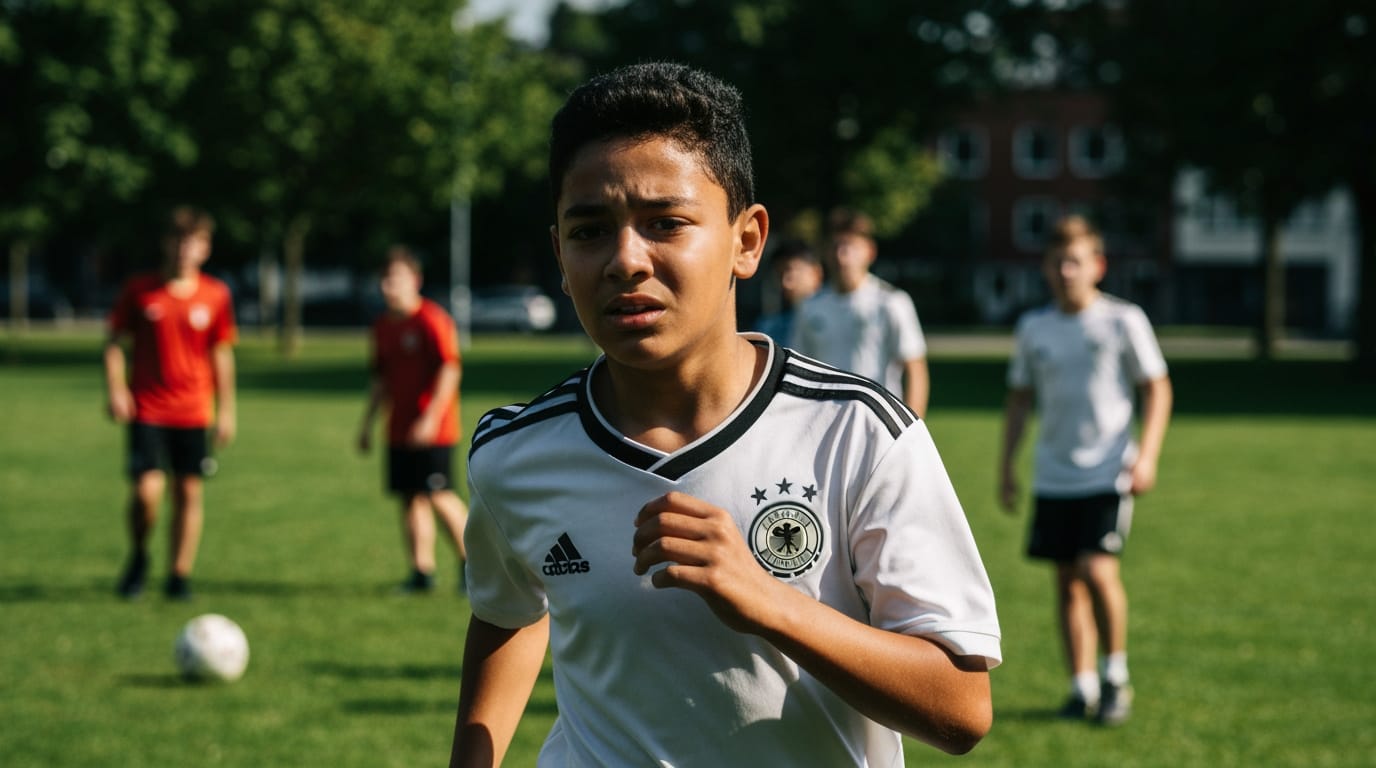
BERLIN – A growing trend of promising young footballers, honed within Germany's highly regarded youth development system, choosing to represent other nations on the international stage is prompting a serious re-evaluation within the German Football Association (DFB). Dubbed "nation-hopping," this phenomenon sees dual-national players, often of immigrant backgrounds, opt for their ancestral homelands, raising concerns about the return on significant investment in talent development and the very identity of Germany's national teams. The DFB is now openly discussing radical solutions, including compensation for lost talent and stricter age limits for national team commitment.
The Rise of Dual Allegiances in Germany's Youth Ranks
The issue of players switching national allegiances is not entirely new to international football, but its prominence in Germany has intensified in recent years. This trend is inextricably linked to Germany's diverse population. DFB managing director Andreas Rettig highlighted the demographic reality, noting that 43% of children under five in Germany hold dual citizenship. This percentage becomes even more pronounced within the DFB's youth squads (U15 to U21), where analysis indicates that seven or eight players in a typical starting eleven may possess dual nationality.
The relaxation of FIFA rules in 2020 further facilitated this fluidity. Under current regulations, a player can switch national teams if they held the nationality of their new association at the time of their first official appearance for their initial national team, played no more than three competitive senior matches before turning 21, and if at least three years have passed since their last senior appearance for the previous national team. This rule change effectively allows players who have come through one country's youth system to represent another at the senior level, even after competitive youth appearances.
Recent high-profile examples underscore the DFB's growing unease. German-born talents such as Juventus forward Kenan Yıldız and Eintracht Frankfurt's Can Uzun have chosen to represent Turkey, their country of origin. Similarly, Ibrahim Maza, now with Bayer Leverkusen, plays for Algeria after featuring in Germany's youth teams, and Nuremberg defender Fabio Gruber has committed to Peru. Reports also suggest that German youth internationals Muhammed Damar and Nicolò Tresoldi are being actively courted by Turkey and Italy, respectively.
The DFB's Stance: Protecting Investment and National Identity
The DFB's concern stems primarily from the substantial resources invested in nurturing these young athletes. Germany boasts one of the world's most lauded youth development systems, with professional clubs mandated to operate their own youth academies, a policy in place for over two decades. This intricate network, from grassroots initiatives to elite academies, represents a significant financial and human capital commitment aimed at producing future stars for German football.
DFB Sporting Director Rudi Völler has been particularly vocal, asserting that "nation-hopping" is "a very bad thing and also undermines the national teams." Völler criticized the current FIFA statutes, stating, "It is unacceptable that players should be able to constantly choose which team they want to play for. That's not right." He argued for a "simple rule," proposing that players should be required to decide which country they will represent by the age of 18 at the latest.
In response to this perceived drain, the DFB is actively exploring a "coaching compensation" model. Andreas Rettig elaborated on the proposal, stating, "It simply makes no sense to me why a player who has been coached primarily at his club for five years but also by the federation as a junior partner should be able to switch national associations for free." While still in the conceptual stage with no official structure or monetary value defined, this idea aims to ensure fairness in talent development and acknowledge the years of training provided by German clubs and the federation. However, such a system would require approval and enforcement by FIFA, a body whose existing training compensation system applies only to club transfers, not national team changes. No other country currently implements or demands such compensation for changes in national allegiance.
The Player's Perspective: Identity, Opportunity, and the Heart's Call
While the DFB focuses on investment and structural integrity, the players' decisions are often rooted in deeply personal factors. For many dual-national athletes, the choice of national team is a complex interplay of cultural identity, family heritage, and emotional connection. Players often speak of a profound feeling or "heart's call" guiding their decisions. Kevin-Prince Boateng, who chose to represent Ghana despite being eligible for Germany, articulated this sentiment, stating he wanted to represent "who I am by playing for my country" and discover his origins.
Furthermore, career opportunities can play a significant role. A player might perceive a clearer path to senior international football with one nation over another, especially if competition for places is intense in Germany. This pragmatic approach, sometimes referred to as "sporting pragmatism," acknowledges the professional ambitions inherent in elite sports.
It is also important to note that the flow of talent is not entirely one-sided. Germany has benefited from the current FIFA rules, with players like Jamal Musiala, who played for England's youth teams, ultimately choosing to represent Germany. Historically, players of immigrant backgrounds such as İlkay Gündoğan, Mesut Özil, Sami Khedira, and Gerald Asamoah have been integral to Germany's national team success, enriching its diversity and contributing significantly to major titles. However, the journey for dual-heritage players in Germany has not always been without challenges, with instances of public criticism and even racial undertones directed at players like Mesut Özil blurring the lines between legitimate performance critique and questioning their loyalty.
Beyond Nation-Hopping: Broader Challenges for German Youth Football
"Nation-hopping" represents one facet of the challenges facing German youth football. A more fundamental concern is the broader decline in youth participation across the country. Germany has witnessed a significant reduction in youth teams, losing nearly 6,000 U19 and U17 men's teams since 2006. This downturn has prompted the DFB to initiate reforms aimed at revitalizing youth engagement by prioritizing fun and development over an exclusive focus on results. Issues such as the rising cost of organized football, the intense pressure on young players, and the increasing appeal of digital platforms are all contributing factors to this decline. This broader context suggests that while "nation-hopping" highlights a particular issue of talent retention at the elite level, the health of German youth football also requires addressing participation rates from the ground up.
A Complex Future for German Football
The debate surrounding "nation-hopping" in German youth football underscores a complex interplay of national identity, globalized sport, financial investment, and individual player choice. While the DFB seeks to safeguard its significant investment in youth development and protect the integrity of its national teams through potential compensation models and stricter commitment rules, the realities of dual citizenship and personal allegiances present a multifaceted challenge. The future of German football will depend on its ability to navigate these intricate dynamics, balancing the imperative to retain its cultivated talent with respecting players' personal connections and adapting to the evolving landscape of international football.