Three-Way Battle for Power in World Chess Concludes as Timur Turlov Wins FIDE Presidency
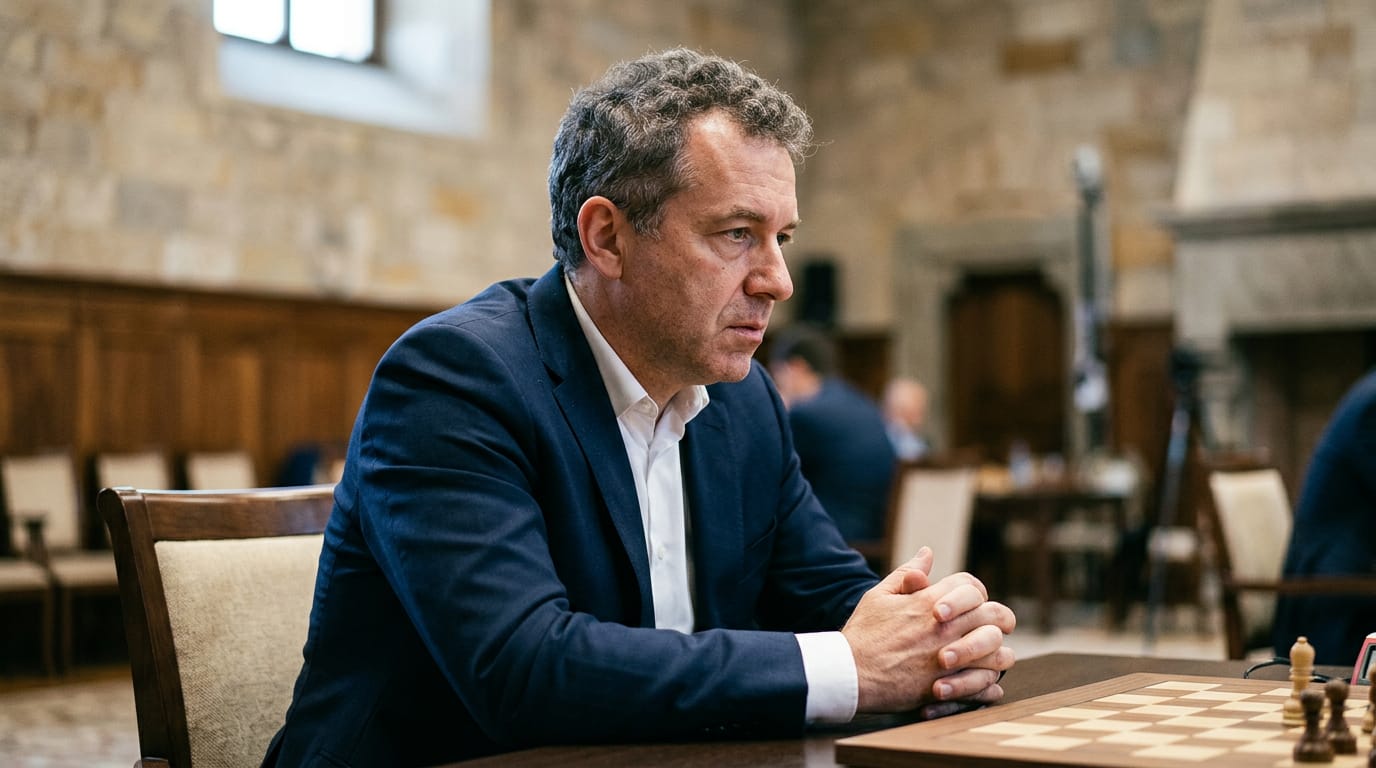
A dramatic three-way contest for control of the International Chess Federation concluded in the ancient Silk Road city of Samarkand, Uzbekistan, reshaping the sport's global governance for the first time in three decades. Delegates from across the globe gathered at the FIDE General Assembly to choose a successor to outgoing president Arkady Dvorkovich, who stepped down earlier this year following European Union sanctions. When the decisive ballots were tallied, Kazakh financier Timur Turlov emerged victorious, securing the leadership of the governing body in a runoff election.
The high-stakes election brought together 196 voting member federations to navigate a fierce ideological struggle between institutional continuity, business-backed expansion, and sweeping corporate reform. Turlov, head of the Kazakhstan Chess Federation and founder of the Nasdaq-listed Freedom Holding Corp., ran alongside five-time world champion Viswanathan Anand. They defeated German entrepreneur Wadim Rosenstein in the second ballot by a vote of 110 to 85, after tech venture capitalist Jan Henric Buettner bowed out in the opening round.
A Fractured Race and a Runoff Showdown
The election quickly transformed from a tripartite race into a tight head-to-head showdown. Of the 196 national delegates who cast ballots during the first round of voting, 192 ballots were confirmed valid, creating a threshold of 97 votes needed for an outright majority. Turlov narrowly missed an immediate victory, securing 96 votes—just one shy of the mark. Rosenstein followed with 76 votes, while Buettner trailed with 20.
With Buettner eliminated, the race turned on rapid behind-the-scenes negotiations. Buettner and his running mate, English International Master Malcolm Pein, threw their support behind Turlov ahead of the runoff. The endorsement came paired with clear policy conditions, including commitments to maintain restrictions on suspended national teams and prevent any single country from dominating more than a quarter of FIDE administrative posts.
Two hours later, the second round confirmed Turlov's victory. At 38 years old, the Kazakh executive becomes the eighth president in FIDE history and the second youngest ever to take the helm of world chess.
Clashing Blueprints for the Global Game
The road to Samarkand highlighted starkly contrasting visions for how chess should be financed and managed. For years, critics have argued that the federation relied too heavily on wealthy patrons who subsidized organizational deficits from their own fortunes or state-linked enterprises.
Buettner, known for developing the Freestyle Chess series, ran on an agenda aimed at dismantling that patronage model. His platform argued that relying on private fortunes leaves the organization vulnerable, advocating instead for professionalized commercial licensing, brand monetization, and media rights.
Rosenstein, campaigning alongside Chinese sports entrepreneur Gordon Tang, framed his ticket around federation independence. He emphasized direct institutional support and greater distribution of central revenues to grassroots federations across Africa, the Americas, and smaller European nations.
Turlov countered by combining immediate financial stability with long-term digital growth. Having already directed tens of millions of dollars into regional federations, international youth programs, and top-tier tournaments through his commercial ventures, Turlov argued that modern chess requires massive upfront investments to compete in the digital entertainment landscape. His running mate Anand provided an elite sporting presence that reassured national delegates wary of pure corporate takeovers.
Geopolitical Shifts and Historic Precedents
Beyond boardroom economics, the assembly in Samarkand marked a historic geopolitical pivot for chess. Russian administrators had held the presidency of FIDE without interruption since 1995, spanning the decades-long tenure of Kirsan Ilyumzhinov followed by Dvorkovich's election in 2018.
The fallout from international conflicts and resulting financial sanctions on Russian entities increasingly strained FIDE's banking relationships and corporate sponsorships. Dvorkovich’s decision to step aside after being placed on the European Union sanctions list created the sudden vacancy that opened the door to outside leadership.
Turlov, who surrendered his Russian citizenship years ago and holds Kazakh nationality, positioned his leadership as a bridge across polarized regions. Even so, the shadow of traditional chess politics remained visible. During the wider assembly proceedings, delegates elected former Russian sports minister Pavel Kolobkov to one of four vice-presidential seats, underscoring that global chess diplomacy remains an intricate balancing act.
Financial Realities and the Path Forward
The new administration inherits a governing body at an operational crossroads. Chess experienced unprecedented participation spikes through online platforms and streaming culture over the past several years, yet FIDE has often struggled to translate that digital popularity into stable institutional revenue.
Member federations in developing countries still depend on central FIDE development funds to send players to international olympiads and run grassroots training academies. The alliance formed between the Turlov and Buettner camps during the runoff suggests that the incoming leadership will face strong pressure to deliver both corporate sponsors and transparent governance.
Turlov's program promises substantial investments in school chess initiatives, modernization of national federation administrative tools, and greater commercial independence for regional bodies. Anand’s transition into the role of deputy president keeps an established sporting icon at the center of relations with top grandmasters, providing stability as the governing body resets its strategy.
A New Chapter for the Board
The battle in Samarkand settled the immediate question of executive authority, closing a chapter defined by traditional patron-led governance and shifting the sport into an era led by international business figures. Turlov takes office backed by an absolute majority of national federations, yet the debate over how to balance private capital, equitable development, and geopolitical neutrality will follow him into the boardroom.
With the leadership vote resolved, the international chess community turns its focus back to the board. The mandate delivered in Uzbekistan offers the sport an opportunity to modernize its commercial foundation while navigating the complex realities of an expanding global game.