Tragedy Strikes Off Comoros Coast: Migrants Drown After Smugglers Abandon Vessel
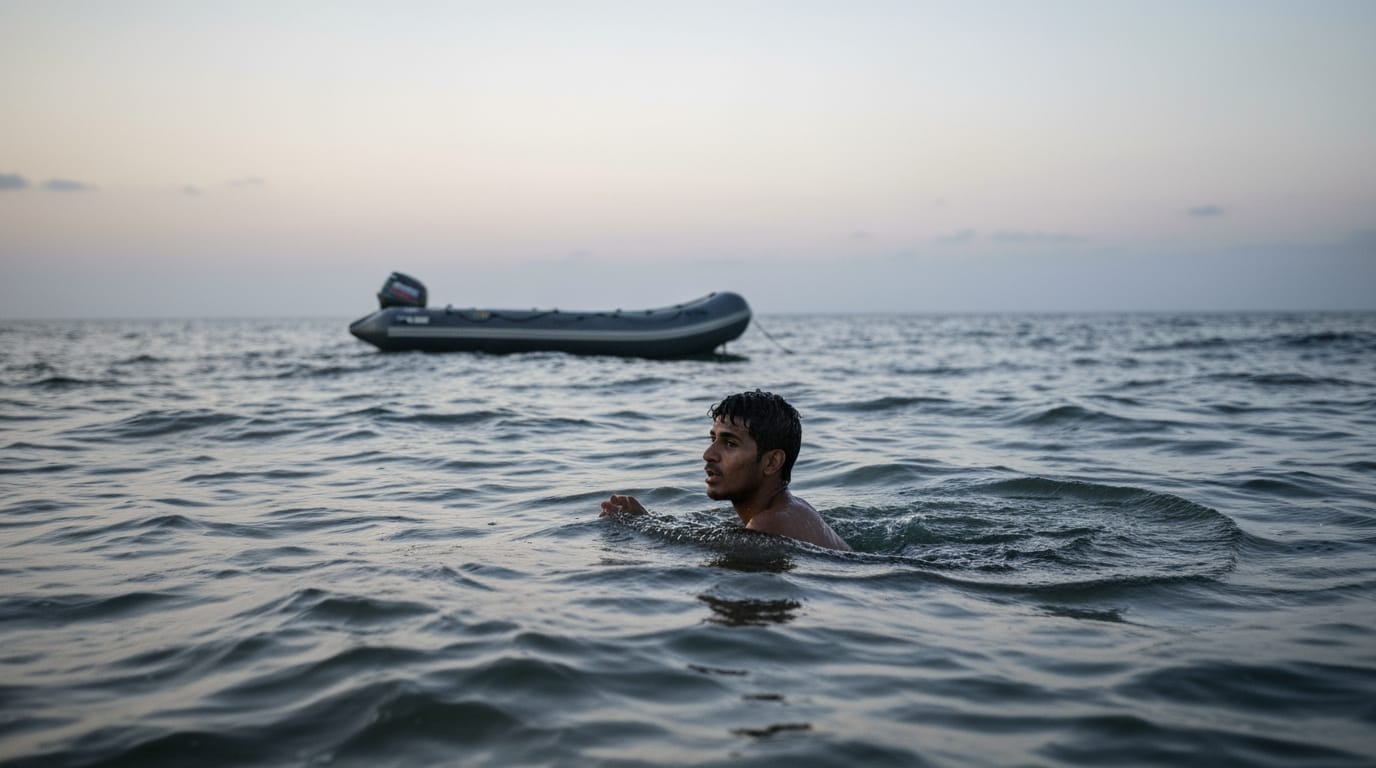
In a harrowing incident underscoring the lethal risks of irregular migration, at least 18 individuals, including a young child, drowned in the waters off Mitsamiouli, Grande Comore, after smugglers abandoned their vessel in the early hours of March 19, 2026. The migrants, primarily from the Democratic Republic of Congo and Burundi, were en route to the French Indian Ocean territory of Mayotte, lured by promises of a better life. This latest tragedy highlights the desperate measures migrants undertake and the predatory tactics of human traffickers, adding to the grim toll of a perilous sea route fraught with deception and danger.
The Deceptive Voyage and Fatal Abandonment
The ill-fated journey began approximately seven days prior in Dar es Salaam, Tanzania, with 51 migrants packed onto a smuggling vessel. After enduring severe shortages of food and water during the extended crossing, survivors reported that the smugglers deliberately deceived them, convincing them they had reached their destination of Mayotte before abandoning them near the northern tip of Grande Comore. Many of those cast adrift reportedly did not know how to swim, contributing to the high death toll. Residents of Mitsamiouli, alerted by cries for help late Wednesday, initiated rescue efforts alongside local authorities, recovering eight bodies overnight. Nine more bodies were found Thursday morning, bringing the confirmed death toll to 17, with a local hospital director later confirming 18 fatalities. Four individuals remained missing as search efforts continued. Around 30 people were rescued alive from the waters, deeply traumatized by the ordeal. The Comoros foreign ministry officially reported 18 deaths, specifying that the victims included 15 Congolese nationals and three Burundians.
Mayotte: A Beacon of Hope Amidst Desperation
The French overseas department of Mayotte, an island geographically part of the Comoros archipelago but politically separate, serves as a powerful magnet for migrants from the economically struggling nations of the region. Despite being the poorest of France's overseas territories, Mayotte offers access to French infrastructure, social services, and European legal protections, presenting a stark contrast to the dire conditions in many of its neighboring countries. This economic disparity fuels a relentless flow of irregular migration, with individuals seeking opportunities and stability that are scarce in their homelands. The complex relationship between Comoros and Mayotte dates back to 1975 when, upon the Comoros' independence, Mayotte voted to remain a French territory—a decision still contested by the Union of the Comoros and recognized by the United Nations and African Union. This historical and political divergence has created a unique migration dynamic, intensifying the desire for many Comorians, and now increasingly other African nationals, to reach the French island.
The Treacherous Sea Route and Smuggler Exploitation
The journey across the narrow stretch of water separating the Comoros from Mayotte is notoriously dangerous. Human smugglers exploit the desperation of migrants, often overloading small, unstable fishing boats known as "kwassa-kwassa" and navigating treacherous waters, typically under the cover of darkness, to evade detection. The routes are often circuitous, adding to the journey's length and danger. Tragically, incidents like the one off Mitsamiouli are not isolated. The International Organization for Migration (IOM) reports that thousands of lives have been lost on this route over recent years, with at least 25 deaths recorded in a similar capsizing incident near Mayotte in 2024. The tactics employed by smugglers are insidious; they often misrepresent the journey's end, abandoning migrants in unfamiliar or dangerous waters, leaving them vulnerable to drowning or exposure. The high fees charged by these criminal networks for such perilous crossings highlight the deep exploitation inherent in the migrant smuggling trade.
A Broader Migration Crisis and Humanitarian Fallout
This recent tragedy is symptomatic of a larger, ongoing migration crisis in the Indian Ocean region. The influx of irregular migrants into Mayotte has strained resources and led to social tensions, prompting the French government to implement stringent measures aimed at controlling migration. Operations such as "Wuambushu," launched in 2023, have involved mass expulsions, the demolition of informal settlements, and increased policing to deter undocumented individuals. While these policies aim to address issues of public safety and manage resources, they have also drawn criticism for targeting individuals of Comorian origin and exacerbating humanitarian concerns. For instance, children born in Mayotte to undocumented parents may not be recognized as French citizens, yet they are not officially Comorian either, potentially rendering them stateless. Such measures, coupled with the dangers of the journey, underscore the systemic challenges faced by both migrants and the region's authorities. Migrants, once in transit or even upon arrival, remain highly vulnerable to exploitation, including forced labor and sex trafficking, at various transit points. The absence of safe and legal pathways to migration continues to push desperate individuals into the hands of criminal smuggling networks, perpetuating a cycle of risk and tragedy.
An Urgent Call for Action and Regional Cooperation
The devastating loss of life off Grande Comore serves as a stark reminder of the urgent need for a comprehensive approach to address irregular migration in the Indian Ocean. While Comorian authorities recently enacted anti-smuggling legislation in July 2024, initiating legal action against traffickers, the incident highlights the persistent strength and pervasive nature of these criminal networks. Effective solutions will require enhanced regional cooperation, coordinated efforts to dismantle smuggling operations, and the establishment of safer, legal avenues for migration where appropriate. Simultaneously, addressing the root causes of migration—such as poverty, instability, and lack of opportunity in countries of origin—remains paramount. Without a multifaceted strategy that combines humanitarian protection with robust law enforcement and development initiatives, the waters between the Comoros and Mayotte will likely continue to bear witness to such heartbreaking tragedies.