Trump Claims U.S. Hit Venezuelan Drug Facility, Sparking Regional Tensions
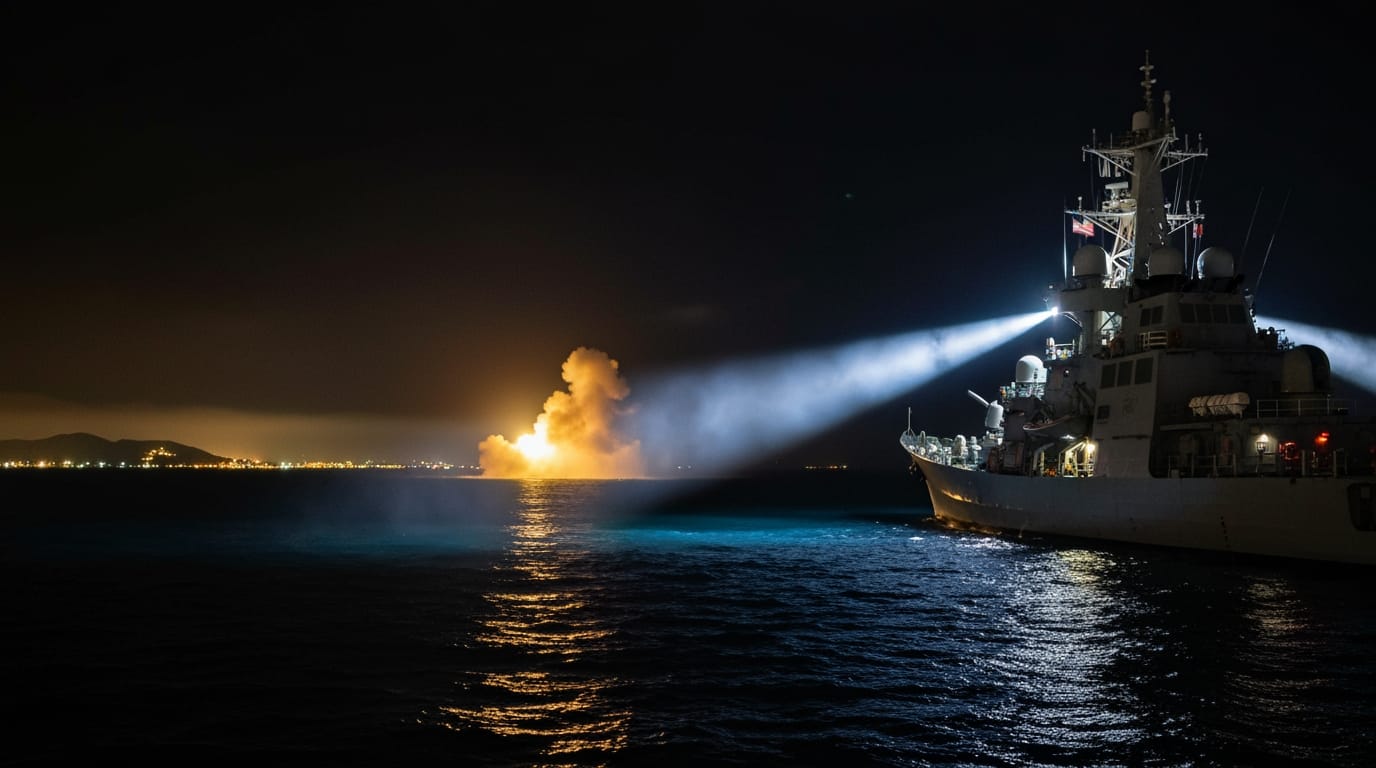
A provocative statement by former President Donald Trump has ignited fresh controversy and heightened speculation regarding clandestine U.S. operations in Venezuela, as he claimed the United States "knocked out" a significant drug boat loading facility. The assertion, made first in a radio interview and later reiterated to reporters, signals a potential shift in the U.S. pressure campaign against the Nicolás Maduro regime, moving from maritime interdiction to direct strikes on land. The claim, however, remains unconfirmed by official U.S. channels and has been met with silence from Caracas, fueling uncertainty and raising critical questions about international law and regional stability.
On Monday, December 29, 2025, former President Donald Trump, speaking from his Mar-a-Lago estate, told reporters that the U.S. had "hit" a facility where drug boats are loaded. He described a "major explosion in the dock area" and stated that the "implementation area" was "no longer around." This followed vague comments he made in a radio interview three days prior, referring to a "big plant or a big facility" that the U.S. had "knocked out" two nights earlier. While Trump did not explicitly name Venezuela as the location of the strike, The New York Times subsequently reported that he was referring to a drug facility within the South American nation. If confirmed, this incident would mark the first known U.S. land-based operation within Venezuela amid Washington's escalating pressure campaign against the Maduro government.
Unconfirmed Operations and Official Silence
Despite the former President's explicit statements, official U.S. government agencies have maintained a tightlipped stance, offering no confirmation or denial of the alleged strike. When questioned, the Pentagon referred inquiries to the White House, which, in turn, did not respond to requests for comment. Both the Central Intelligence Agency (CIA) and the White House declined to elaborate on Trump's remarks. This lack of official transparency has led to questions about the nature of the operation, with Trump himself declining to specify whether the U.S. military or the CIA was responsible for the alleged hit. Adding to the complexity, CNN, citing unnamed sources, reportedly suggested that the CIA had carried out a drone strike on a Venezuelan port facility earlier that month. However, the Venezuelan government has also remained silent on the incident described by Trump, and no independent reports from within Venezuela have emerged to corroborate the explosion or strike.
Escalating Tensions and Broader Context
The former President's claim comes against a backdrop of intensely strained U.S.-Venezuela relations and a persistent U.S. offensive against alleged drug trafficking in the Caribbean. For several years, the Trump administration has ratcheted up pressure on Venezuelan President Nicolás Maduro, accusing him and his government of involvement in drug trafficking and aligning with designated terrorist organizations. This pressure campaign has included an increased U.S. military presence in the region, with naval destroyers, Coast Guard cutters, surveillance aircraft, and Army units deployed for counternarcotics missions since April 2020.
These operations have primarily focused on intercepting suspected drug-carrying vessels in international waters of the Caribbean Sea and the eastern Pacific Ocean. According to U.S. administration figures, these maritime strikes have been numerous, targeting over two dozen boats and resulting in at least 105 to 107 fatalities since September alone. The U.S. government has characterized these actions as part of a "non-international armed conflict" against drug cartels, invoking Article 51 of the United Nations Charter to justify its military deployment. Beyond interdiction, the U.S. has also imposed sanctions, seized Venezuelan oil tankers, and offered a significant reward for Maduro's arrest on narco-terrorism charges. Venezuela, in turn, has consistently denied the allegations and condemned the U.S. military presence and actions as violations of international law and threats to its sovereignty.
Geopolitical Ramifications and Legal Questions
If the U.S. did indeed carry out a land-based strike in Venezuela, it would signify a notable escalation and a strategic shift in Washington's approach. Previously, the U.S. mission largely concentrated on disrupting maritime drug routes. A direct attack on infrastructure within Venezuelan territory would blur the lines between counter-drug operations, covert action, and potentially open conflict, raising profound questions about attribution, proportionality, and the legal basis for such an intervention.
Human rights organizations have already expressed concerns regarding the previous maritime strikes, with the UN High Commissioner for Human Rights stating that the airstrikes on boats, which have led to numerous deaths, may violate international human rights law. The High Commissioner emphasized that countering illicit trafficking is typically a law-enforcement matter, governed by strict limits on lethal force. A land-based strike further complicates these legal and ethical considerations, especially without clear evidence or official acknowledgment. The incident, even if unconfirmed, contributes to an already volatile geopolitical landscape in Latin America, where U.S. actions are viewed by Venezuela as part of a broader campaign for regime change. Such an unverified claim risks fueling skepticism and could prompt reactions from Venezuelan allies like Russia and China, further destabilizing the region.
The former President's remarks underscore the intricate and often opaque nature of international counter-narcotics efforts and foreign policy. Without official U.S. confirmation or independent verification from Venezuela, the alleged strike remains a significant, yet unproven, event that casts a long shadow over an already contentious bilateral relationship. The implications, both legal and geopolitical, of a potential U.S. land-based operation on Venezuelan soil are substantial, promising to further heighten tensions in a region already grappling with political instability, economic hardship, and humanitarian challenges. The incident, regardless of its veracity, solidifies the narrative of an aggressive U.S. posture towards Venezuela and ensures continued scrutiny of covert operations in the Western Hemisphere.


