Trump Declares Historic Agreement for Hamas Disarmament in Gaza, Citing "Board of Peace" Initiative
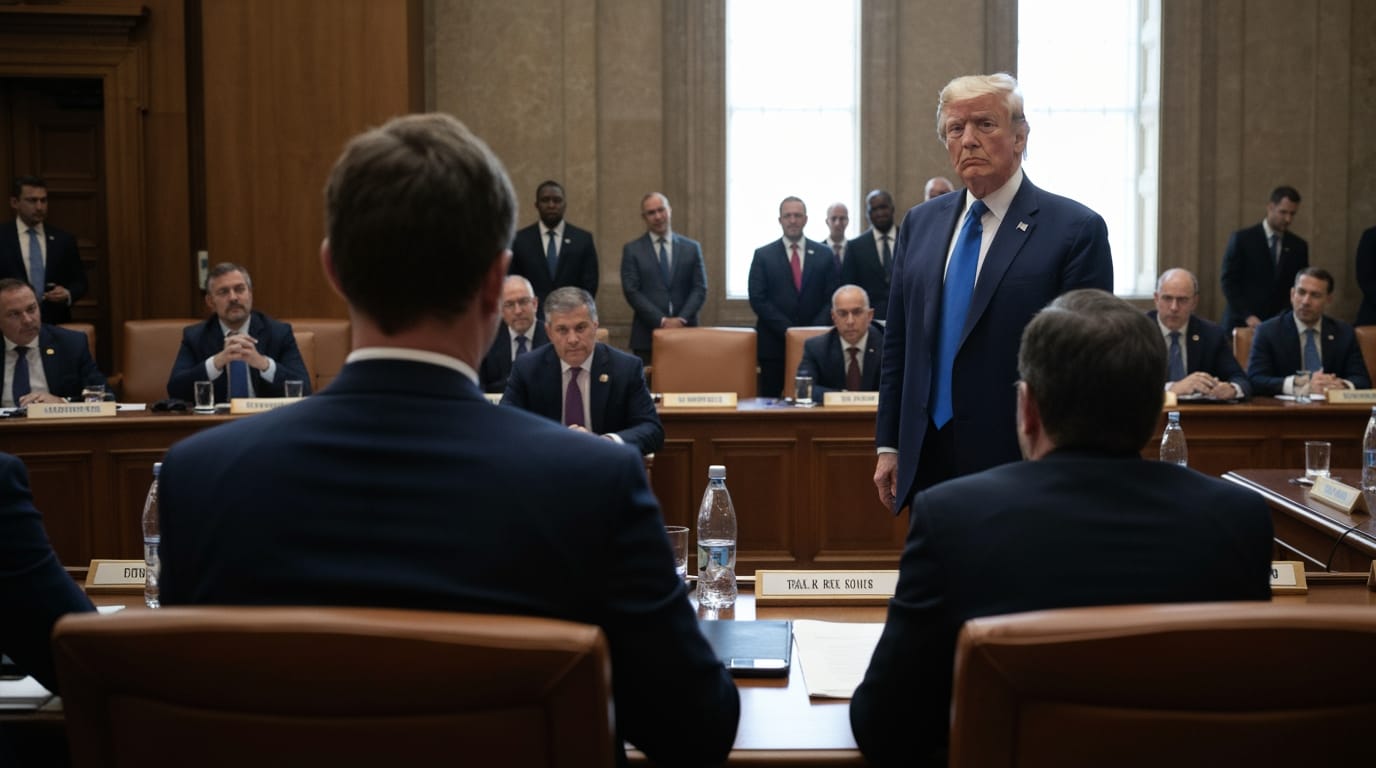
WASHINGTON D.C. — In a dramatic development aimed at reshaping the future of the Gaza Strip, former U.S. President Donald Trump announced Thursday that his self-chaired "Board of Peace" has secured a landmark agreement for the "complete disarmament" of Hamas and other armed factions in the territory. Hailing the accord as a "monumental step toward lasting PEACE and SECURITY" in the volatile region, Trump’s declaration signals a significant push to implement his long-standing peace framework for Gaza, though significant hurdles and skepticism remain.
The Genesis of an Agreement: Trump's Board of Peace Takes Center Stage
President Trump, speaking from his Truth Social platform, outlined the purported breakthrough, attributing it to the efforts of the Board of Peace, an international organization he chairs. Established in January 2026 and initially proposed in September 2025, the Board of Peace was created with the explicit purpose of fostering peacebuilding efforts globally, specifically in response to the protracted Israel-Hamas conflict. The organization is explicitly named in United Nations Security Council Resolution 2803 as the body responsible for overseeing the Gaza peace plan. Its executive board boasts a roster of prominent figures, including former United Nations Special Coordinator for the Middle East Peace Process Nikolay Mladenov, U.S. Secretary of State Marco Rubio, U.S. Special Envoy to the Middle East Steve Witkoff, Jared Kushner, former UK Prime Minister Tony Blair, and World Bank Group President Ajay Banga, among others. The Board, operating under a 2026 Charter, maintains its headquarters at the United States Institute of Peace in Washington, D.C., and is frequently described as a "Trump-owned US company," with the former President acting as its permanent chairman and majority shareholder.
A Phased Path to Disarmament and New Governance
According to Trump's announcement and subsequent reports, the disarmament agreement was formalized in Egypt through negotiations involving representatives from Hamas, the Board of Peace, and key mediating nations including Egypt, Qatar, and Turkey. The accord is positioned as a central pillar of Trump's broader "20-Point Plan" for peace in Gaza, a comprehensive framework unveiled last October.
The proposed disarmament process is envisioned as a carefully structured, multi-phase initiative, with a projected timeline spanning eight months. A crucial element of this plan involves Hamas and other armed groups progressively relinquishing their arsenals to the National Committee for the Administration of Gaza (NCAG). The NCAG, a panel of Palestinian technocrats operating under the oversight of the Board of Peace, is designated to replace Hamas's current governing structure in the Strip. In a move signaling initial compliance, Hamas reportedly dismantled its own government in Gaza earlier this month to pave the way for this new governing body.
As the disarmament phases are completed, Israeli forces are slated to incrementally withdraw from the Gaza Strip. Concurrently, an International Stabilization Force (ISF) will be deployed to collaborate with a newly established Palestinian police force, assuming responsibility for security and stability within Gaza. Further details of the agreement suggest that Hamas is expected to hand over maps of its extensive tunnel networks, as well as locations of weapons factories and depots. These confiscated weapons would then be secured by the new technocratic government and the ISF. In an incentivizing provision, members of Hamas would reportedly receive pardons and be permitted to remain in Gaza, a significant departure from previous demands for their complete expulsion. The ISF, comprising troops from participating nations, is also tasked with training Palestinian security forces within the enclave.
Israeli Reservations and Hamas's Shifting Stance
While the announcement has been met with fanfare by its proponents, immediate reactions from key stakeholders underscore the complex realities on the ground. The office of Israeli Prime Minister Benjamin Netanyahu quickly issued a statement indicating that the Board of Peace's 15-point disarmament proposal did not fully align with Jerusalem's demands for the complete demilitarization of Gaza. Israeli officials have consistently reiterated that any withdrawal of Israel Defense Forces (IDF) from the so-called "Yellow Line" in the Gaza Strip is contingent upon Hamas's full disarmament and the comprehensive demilitarization of the territory. Despite these reservations, Prime Minister Netanyahu reportedly gave a "green light" for the disarmament plan during a recent meeting with President Trump, suggesting a potential willingness to engage with the framework. However, some Israeli officials and Western diplomats maintain a degree of skepticism regarding Hamas's ultimate commitment to fully disarming.
Hamas, for its part, appears to be navigating a complex internal and external landscape. While the group has reportedly dismantled its government in a step toward accommodating the new technocratic panel, its historical position has been one of resistance to disarmament unless it follows the establishment of a Palestinian state. Earlier in March 2026, Hamas rejected a previous five-stage, eight-month disarmament proposal put forth by the Board of Peace's high representative, Nikolay Mladenov, citing ongoing ceasefire violations by Israel and demanding a full Israeli withdrawal as preconditions. However, recent reports suggest a shift, with Hamas now "inclined to accept" the current proposal, recognizing that it could place the onus of further action squarely on Israel. This change in posture is attributed, in part, to persistent pressure from key mediators Egypt, Qatar, and Turkey, who are reportedly urging the group to sign on. Counterbalancing these pressures, some reports indicate that Iran is actively encouraging Hamas to resist signing the agreement, adding another layer of complexity to the negotiation dynamics.
Implications and the Road Ahead
The potential disarmament of Hamas, if successfully implemented, would mark a profound shift in the governance and security landscape of the Gaza Strip, and indeed, the broader Israeli-Palestinian conflict. Trump emphasized the stark contrast to a year ago, when the region was embroiled in "violent raging war, humanitarian crisis and hostages kept in brutal captivity," suggesting that "historic progress" has been made, though acknowledging "much work to do."
The envisioned outcome is a Gaza finally governed by a new Palestinian authority that genuinely serves its people, while simultaneously ensuring Israel's security by preventing the Strip from being used as a launching pad for future attacks. The transition, however, is fraught with challenges. The history of disarming militant groups in conflict zones, such as the Irish Republican Army's disarmament process following the Good Friday Agreement, often demonstrates that such transitions are prolonged and require immense trust-building and robust third-party verification, often extending over many years. The divergent demands from Israeli and Palestinian sides, coupled with internal divisions within Hamas and external pressures from regional powers, underscore the fragility of any agreement. While President Trump's announcement signals a potentially transformative moment, the path to a fully disarmed Gaza and lasting peace remains intricate and uncertain.