Trump Navigates Volatile Middle East with Lebanon Truce and Elusive Iran Peace
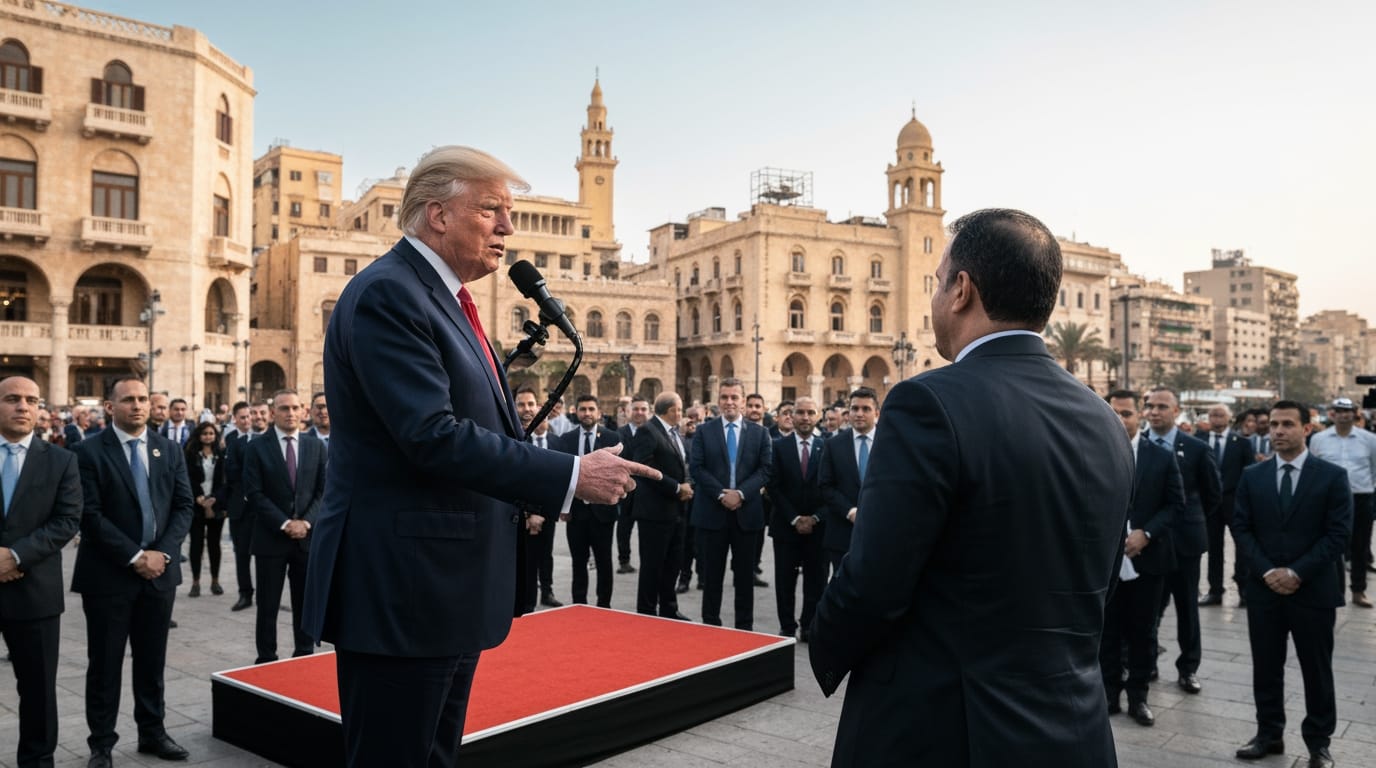
President Donald Trump has positioned himself at the center of a high-stakes diplomatic effort in the Middle East, recently announcing a fresh ceasefire between Israel and Hezbollah in Lebanon while simultaneously pursuing a broader peace agreement with Iran. The intertwined nature of these two critical fronts highlights the delicate balance of power in a region perpetually on edge, with global implications for stability and economic markets. Trump's latest interventions signal a renewed push to de-escalate tensions, yet the path to lasting peace remains fraught with complexities and conflicting demands from all parties involved.
The Diplomatic Tightrope: Lebanon and Iran Intertwined
In a significant development, President Trump declared on Monday, June 1, 2026, that a new truce had been brokered between Israel and the Iran-backed Hezbollah in Lebanon. This announcement followed an earlier ceasefire in April that had quickly unraveled, leading to renewed hostilities. Trump stated that both Israeli Prime Minister Benjamin Netanyahu and representatives of Hezbollah had agreed to cease hostilities. This ceasefire, if it holds, aims to halt what had become a deepening Israeli incursion into Lebanon and sustained rocket attacks by Hezbollah on northern Israeli communities.
Crucially, this diplomatic maneuver in Lebanon is directly linked to the ongoing, fragile peace talks between the United States and Iran. Tehran has consistently insisted that any agreement with Washington must also encompass the situation in Lebanon, where its powerful proxy, Hezbollah, plays a pivotal role. This linkage was underscored by Iran's recent threat to abandon negotiations with the U.S. if Israeli military operations in Lebanon continued. While the U.S. and Israel had previously attempted to delink these conflicts, the Trump administration's recent actions suggest an acknowledgment of Iran's leverage. The decision to rein in Netanyahu's planned strikes on Beirut, as reported by Axios, was a clear signal that Trump does not want the conflict in Lebanon to derail a potential deal with Iran.
The Elusive Iran Deal: Mixed Signals and Red Lines
The broader negotiations for a peace deal with Iran have been characterized by a series of mixed signals and shifting expectations from the Trump administration. President Trump has alternately asserted that talks are "rapidly continuing" and that an agreement has been "largely negotiated." However, these optimistic pronouncements have been met with skepticism and outright contradiction from Iran. Iranian state media recently reported a suspension of talks in protest of Israel's military activities in Lebanon. Furthermore, an Iranian state media report rebutted several key elements of Trump's characterization of the deal, with sources calling his remarks a "mixture of truth and lies" and insisting there was "no final agreement."
Trump has maintained a firm stance on the conditions necessary for any peace agreement with Iran. He insists that Iran must never possess nuclear weapons and that the vital Strait of Hormuz shipping lane must be reopened without tolls and cleared of any mines. He has reiterated that the U.S. will only make a deal that meets all of his conditions. From Iran's perspective, key demands include the immediate release of $12 billion in frozen assets. The ongoing economic pressure on Iran, with reports of 250% inflation and a struggling economy, is seen by Trump as a factor pushing Tehran towards a deal. However, Iranian officials suggest the U.S. is holding up a deal with its approach to the talks. Despite the apparent urgency, Trump has also projected an image of indifference, stating he "couldn't care less" if the peace talks fall apart and that he is not concerned about the upcoming midterm elections influencing the negotiation timeline.
Regional Implications and the Abraham Accords
The current diplomatic push extends beyond the immediate concerns of Lebanon and Iran's nuclear ambitions. President Trump appears to be attempting to integrate a broader regional normalization into any potential peace settlement with Iran, leveraging the Abraham Accords. He has reportedly urged leaders across the Middle East, including Saudi Arabia, the United Arab Emirates, Qatar, and Egypt, to join the 2020 agreements that normalized relations between Israel and several Arab states.
This strategy, while ambitious, is viewed as a "high-risk diplomatic gamble." Tying the Iran deal to the recognition of Israel by more Arab and Muslim nations adds significant layers of complexity to an already fragile negotiation. Saudi Arabia, for instance, has indicated a willingness to join the Accords but only if there is a clear path toward Palestinian sovereignty, a position currently opposed by Israel's far-right government. Critics argue that without addressing the Palestinian question, Iran's security concerns, and regional public sentiment, this approach risks deepening resistance rather than fostering lasting peace. Furthermore, if Israel continues military operations in the region, Iran may see little reason to accept a U.S.-backed agreement without firm guarantees against further Israeli attacks. The situation underscores how deeply intertwined regional security dynamics are, with every actor's move influencing the calculus of others.
Humanitarian and Economic Stakes
The ongoing conflicts and the instability inherent in the fragile peace efforts carry significant humanitarian and economic consequences. Lebanon, already grappling with deep-seated political and economic crises, remains a critical flashpoint. The U.S. has historically viewed Lebanon as a victim of Hezbollah and Iran's "destructive" role, with Trump criticizing the militant group for "plundering the state" and bringing suffering to the Lebanese people. Washington's involvement in Lebanon has consistently intensified during periods of crisis, with a focus on promoting stability and curbing Hezbollah's influence.
Beyond the immediate region, the conflict's ripple effects are felt globally. The intermittent closure and threats to the Strait of Hormuz, a crucial waterway through which approximately a fifth of global oil production flows, have led to significant volatility in energy markets. Oil prices have surged, with Brent crude rising notably after reports of halts in U.S.-Iran talks. Experts warn that the continued disruption to naval navigation through the Strait could precipitate a "global food crisis." The economic strain on everyday citizens in affected countries, coupled with the constant threat of renewed conflict, highlights the profound human cost of prolonged geopolitical tensions.
Conclusion
President Trump's current diplomatic initiatives represent a determined, yet uncertain, effort to reshape the Middle East's geopolitical landscape. By actively intervening in the Israel-Hezbollah conflict in Lebanon and directly linking it to the pursuit of a peace deal with Iran, the administration is engaging in a complex and high-stakes strategy. While the immediate goal of calming tensions in Lebanon has seen some success, the broader objective of a comprehensive peace agreement with Iran remains elusive, mired in conflicting demands, historical grievances, and the intricate web of regional rivalries. The coming weeks will reveal whether this latest round of diplomacy can translate into a durable framework for stability, or if the volatile forces at play will once again push the region closer to widespread conflict.


