Trump's Greenland Claims Face Scrutiny Amid Renewed Interest
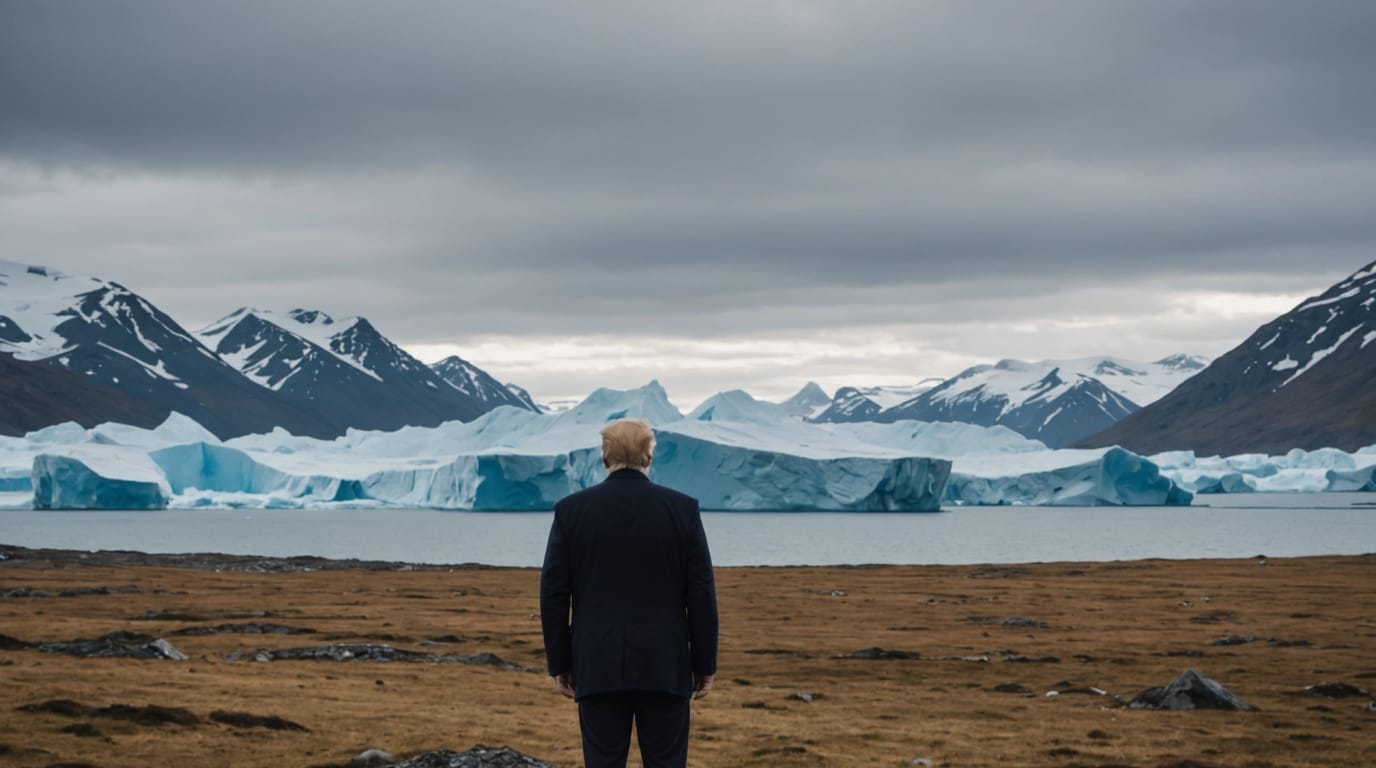
Former President Donald Trump's renewed expressions of interest in acquiring Greenland have sparked debate and prompted fact-checking of his claims regarding the territory. Trump's pursuit of Greenland, which dates back to his first term, has resurfaced as a key geopolitical issue, particularly in light of Greenland's recent elections and its strategic importance in the Arctic.
A History of Interest
Trump's initial attempt to purchase Greenland in 2019 drew widespread attention and criticism. At the time, he cited Greenland's rich mineral resources and strategic location as key reasons for his interest. Denmark swiftly rejected the proposal, asserting Greenland's right to self-determination. Despite the rebuff, Trump has continued to express his desire for the United States to control Greenland, framing it as vital to national security and a way to bolster his legacy.
The notion of the U.S. acquiring Greenland is not new. The U.S. government has considered it multiple times throughout history, including in 1867, 1910, 1946 and 1955.
Greenland's Strategic Significance
Greenland's geopolitical importance stems from its location and its wealth of natural resources. The island sits in a strategically important location in the Arctic, an area of increasing global interest as climate change melts ice and opens new shipping routes. Greenland also possesses vast reserves of minerals, including nickel, cobalt, copper, zinc, rubies and potentially diamonds. These resources have attracted interest from various countries, including China, which has sought to invest in Greenland's mining sector.
Recent Election and Greenland's Future
Greenland's recent parliamentary election saw a surge of support for right-wing opposition parties, including the Demokraatit party, which advocates for gradual independence from Denmark. The election outcome has fueled speculation about the future of Greenland and its relationship with both Denmark and the United States. While the Demokraatit party supports closer relations with the U.S., it opposes Greenland becoming an American territory.
Jens-Frederik Nielsen, leader of the Demokraatit party, stated that the election result should send a clear message to Trump that Greenland is not for sale. He emphasized that Greenlanders want to be independent and build their own country.
Fact-Checking Trump's Claims
Several claims made by Trump regarding Greenland have faced scrutiny. For example, Trump has suggested that the U.S. needs Greenland for national security reasons, particularly in light of perceived threats from China and Russia. While Greenland is largely undefended, some experts argue that the primary motivation behind Trump's interest is the island's rare earth minerals.
Trump has also asserted that the U.S. would be able to "get a deal done" regarding Greenland. However, Greenlandic politicians have expressed strong opposition to becoming an American territory. A recent poll indicated that only a small percentage of Greenlanders support U.S. sovereignty.
Implications and Perspectives
Trump's continued pursuit of Greenland has significant implications for the region and for international relations. His interest has placed Greenland at the forefront of geopolitical discussions and has raised questions about the future of Arctic governance.
Some analysts believe that Trump's focus on Greenland is driven by a desire to secure access to the island's resources and to counter China's growing influence in the Arctic. Others view his pursuit as a manifestation of his expansionist policies.
Danish Prime Minister Mette Frederiksen has repeatedly rejected Trump's suggestions of acquiring Greenland, emphasizing the need to respect the territory and sovereignty of states.
Conclusion
Donald Trump's renewed interest in Greenland has brought the territory's strategic importance and its future into sharp focus. While Trump has framed his pursuit as a matter of national security and economic opportunity, his claims have faced scrutiny and his efforts have been met with resistance from both Denmark and Greenlandic politicians. The future of Greenland remains uncertain, but the island's growing geopolitical significance ensures that it will continue to be a subject of international attention.