Trump's Tariffs Threaten to Cripple Slovakia's Economy
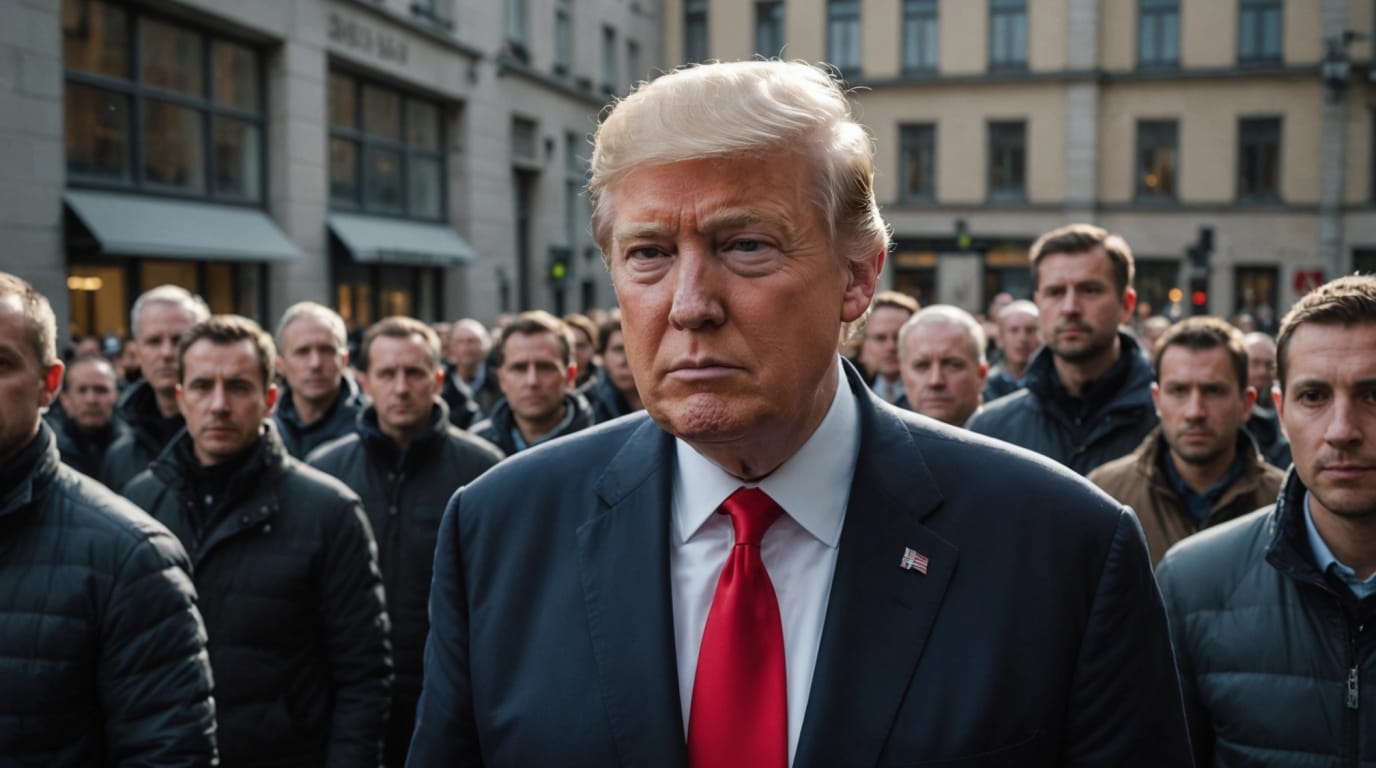
Slovakia, a small Central European nation heavily reliant on its automotive industry, faces a significant economic challenge as the United States imposes new tariffs on imported vehicles and auto parts. These tariffs, a key component of President Donald Trump's trade policy, are raising concerns about potential job losses, reduced exports, and a slowdown in economic growth for the country known as the "Detroit of Europe."
Automotive Industry at Risk
Slovakia's economy is deeply intertwined with the automotive sector, which accounts for approximately 44% of its industrial output. The country produces more cars per capita than any other in the world, exporting a significant portion of its vehicles and auto parts to the United States. In 2023, Slovakia was the joint third-largest exporter of passenger cars to the U.S., alongside Sweden, with exports totaling €4 billion ($4.3 billion). Over 73% of Slovakia's exports to the U.S. consist of vehicles and auto parts, making the nation particularly vulnerable to the newly imposed U.S. tariffs.
The tariffs, which include a 25% levy on imported vehicles and additional tariffs on auto parts, are expected to make Slovakian-made cars more expensive and less competitive in the American market. This could lead to a decline in sales and production, potentially impacting the livelihoods of the more than 250,000 people directly and indirectly employed by the automotive industry in Slovakia.
Alexander Matusek, president of the Slovak Automotive Industry Association, has warned that as many as 20,000 jobs could be at risk due to the tariffs. Peter Hron, CEO of Auto-Impex, a leading car dealership in Slovakia, has already observed a slowdown in new car sales, with registrations dropping by over 25% as customers express uncertainty about their financial future.
Economic Impact and GDP Losses
Analysts predict that Trump's tariffs could lead to substantial GDP losses in Central Europe. Erste Group estimates a cumulative negative impact of up to 0.8 percentage points for Hungary and Slovakia's GDPs over the next few years. Slovakia's losses could be even steeper, with projections reaching as high as 1.5 percentage points due to its concentrated reliance on automotive exports. The broader EU economy is also expected to suffer, with an estimated EUR 85 billion decline in exports to the U.S., hitting Germany, Hungary, and Slovakia hardest.
The Slovak Spectator reported that the Association of Industrial Unions and Transport (APZD) warned that the automotive sector could see a loss of up to €300 million a year if the tariffs are implemented. They also highlighted the threat of job losses in the domestic economy. Matej Horňák, an analyst at Slovenská Sporiteľňa, stated that Slovak GDP growth could be lower by about 0.2 percentage points in 2025 and by about 0.5 points in 2026 due to the tariffs.
Challenges and Limited Options
The Slovak government faces limited options in responding to the U.S. tariffs. As a member of the European Union, Slovakia's trade policy is largely dictated by the EU. While Prime Minister Viktor Orbán of Hungary has openly supported Trump, Hungary cannot strike independent trade agreements outside EU frameworks. Slovakia, while expressing concern, remains constrained by limited options for immediate action.
Vladimir Vaňo, chief economist at the Bratislava-based think tank Globsec, previously described the potential impact of the tariffs on Slovakia as 'worrisome,' noting the country's limited ability to respond effectively in the short term.
The Slovak government is urging EU leaders to negotiate with Washington to find a solution to the trade dispute. However, the effectiveness of these negotiations remains uncertain.
Potential Mitigation Strategies
Despite the challenges, some factors could potentially mitigate the negative impact of the tariffs on Slovakia's economy.
- Lower Production Costs: Slovakia's lower production costs compared to Germany may offer an incentive for companies like Volkswagen and Stellantis to maintain their operations there, especially for internal combustion engine (ICE) models. This could mean the export impact on Slovakia may be partially offset by reduced output elsewhere in Europe.
- Trade Diversification: The Slovak government is actively seeking to strengthen trade relations with other countries, including the United States. The Slovak Agency for Investment and Trade Development (SARIO) is opening an office in the USA and has appointed a Special Envoy for Trade and Investment to support Slovak companies, attract strategic investments, and build business partnerships between Slovakia and the US.
- EU Response: The European Commission is expected to respond gradually to higher U.S. tariffs. The EU may reinstate previously suspended tariffs on steel and aluminum and implement retaliatory tariffs on sector-specific U.S. exports. A depreciation of the euro could also help maintain European competitiveness despite U.S. trade restrictions.
Broader Implications and Uncertain Future
The imposition of U.S. tariffs on Slovakian automotive exports highlights the vulnerability of small, export-oriented economies to shifts in global trade policy. The tariffs not only threaten Slovakia's economic stability but also raise broader questions about the future of transatlantic trade relations and the rules-based multilateral trade order.
The situation is further complicated by the potential for a wider trade war between the U.S. and the EU. If the U.S. were to impose broad tariffs on all EU goods, the impact on Slovakia's economy could be even more severe.
As the tariffs take effect, Slovakia faces a period of uncertainty and adjustment. The country's ability to weather this storm will depend on its ability to adapt to the changing global trade landscape, diversify its export markets, and work with the EU to find a resolution to the trade dispute with the United States. The coming months will be critical in determining whether Slovakia can maintain its position as a major automotive hub and safeguard the livelihoods of its citizens.