U.S. Expels South Africa's Ambassador Amid Rising Tensions
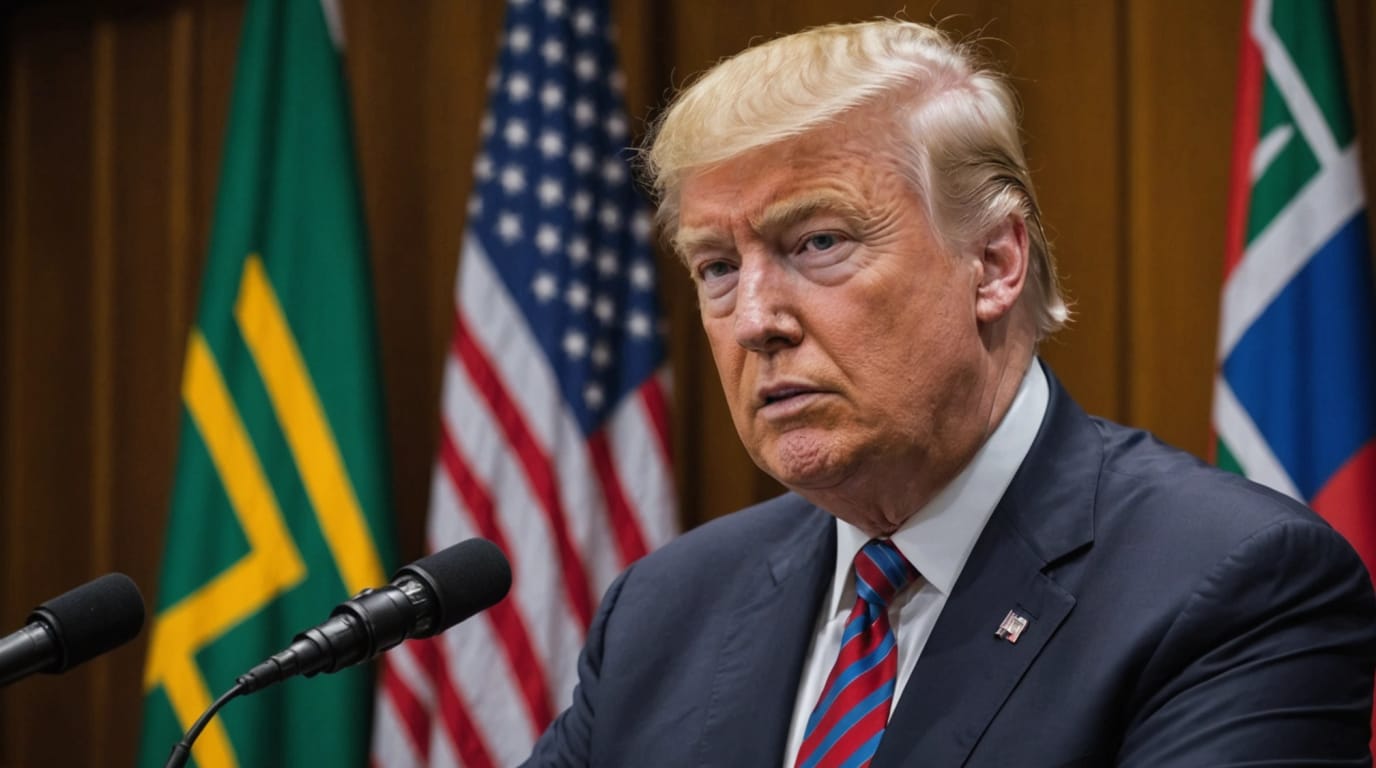
In a move signaling a sharp deterioration in relations, the United States has expelled South Africa's ambassador to Washington, D.C., Ebrahim Rasool. The expulsion, announced Friday by Secretary of State Marco Rubio, accuses Rasool of harboring animosity towards the U.S. and former President Donald Trump. This unprecedented action underscores escalating disagreements between the two nations on issues ranging from land reform policies in South Africa to international legal proceedings.
The decision to declare Rasool "persona non grata" follows a series of escalating tensions between the Trump administration and the South African government. Rubio conveyed the message via social media platform X, stating that Rasool was "no longer welcome" in the U.S., further labeling him a "race-baiting politician who hates America and hates @POTUS." The State Department has not yet released further details regarding the specific actions or statements that prompted the expulsion.
Accusations and Reactions
The accusations against Rasool stem from alleged criticisms of Trump made during a public forum earlier on Friday. While details of the speech remain limited, sources suggest Rasool voiced concerns regarding Trump's policies and rhetoric. The South African government has yet to issue an official response to the expulsion. Rasool's personal views have long been a subject of scrutiny, given his history as an anti-apartheid activist and his outspoken stance on social justice issues.
The move has already drawn strong reactions from political analysts and international relations experts. Some view the expulsion as an overreaction, arguing that it sets a dangerous precedent for diplomatic relations. Others maintain that the U.S. has the right to determine who it deems acceptable as a foreign representative within its borders. The incident is likely to further strain relations between the two countries, potentially impacting trade, security cooperation, and diplomatic efforts on shared global challenges.
Background of U.S.-South Africa Relations
The expulsion comes against a backdrop of already strained relations between the U.S. and South Africa. In February, the Trump administration froze U.S. aid to South Africa, citing concerns over a law that the U.S. alleges could lead to the seizure of land from white farmers without compensation. This law, intended to address historical inequalities in land ownership stemming from the apartheid era, has been a point of contention between the two nations.
Land ownership remains a sensitive and complex issue in South Africa, where a significant portion of farmland is still owned by white individuals, decades after the end of apartheid. The South African government has been under pressure to implement land reform policies to address these historical imbalances, but its efforts have faced criticism both domestically and internationally.
Trump's Stance and Elon Musk's Influence
Trump has been vocal in his criticism of South Africa's land reform policies, echoing concerns about the potential for unjust treatment of white farmers. He even suggested that South African farmers seeking to flee the country due to safety concerns would be welcomed into the United States with a "rapid pathway to Citizenship."
Adding another layer to the complex dynamic is the influence of Elon Musk, the South African-born billionaire and CEO of Tesla and SpaceX. Musk, a vocal ally of Trump, has accused South African President Cyril Ramaphosa's government of enacting "openly racist ownership laws." His comments have amplified the controversy surrounding land reform and further fueled tensions between the U.S. and South Africa.
Implications for Future Relations
The expulsion of Ambassador Rasool marks a significant turning point in U.S.-South Africa relations. It remains to be seen how the South African government will respond to this unprecedented action. The incident could lead to a reciprocal expulsion of the U.S. ambassador to South Africa, further escalating the diplomatic crisis.
Beyond the immediate diplomatic fallout, the expulsion could have broader implications for the two countries' cooperation on a range of issues. South Africa has been a key partner of the U.S. in areas such as counterterrorism, public health, and trade. The deterioration in relations could jeopardize this cooperation, potentially undermining efforts to address shared global challenges.
The future of U.S.-South Africa relations now hangs in the balance. Whether the two countries can find a way to bridge their differences and restore a more constructive dialogue remains to be seen. The expulsion of Ambassador Rasool serves as a stark reminder of the challenges facing international diplomacy in an era of increasing political polarization and diverging national interests.