U.S. to Withdraw 5,000 Troops from Germany Amid Widening Rift with Berlin Over Iran Conflict
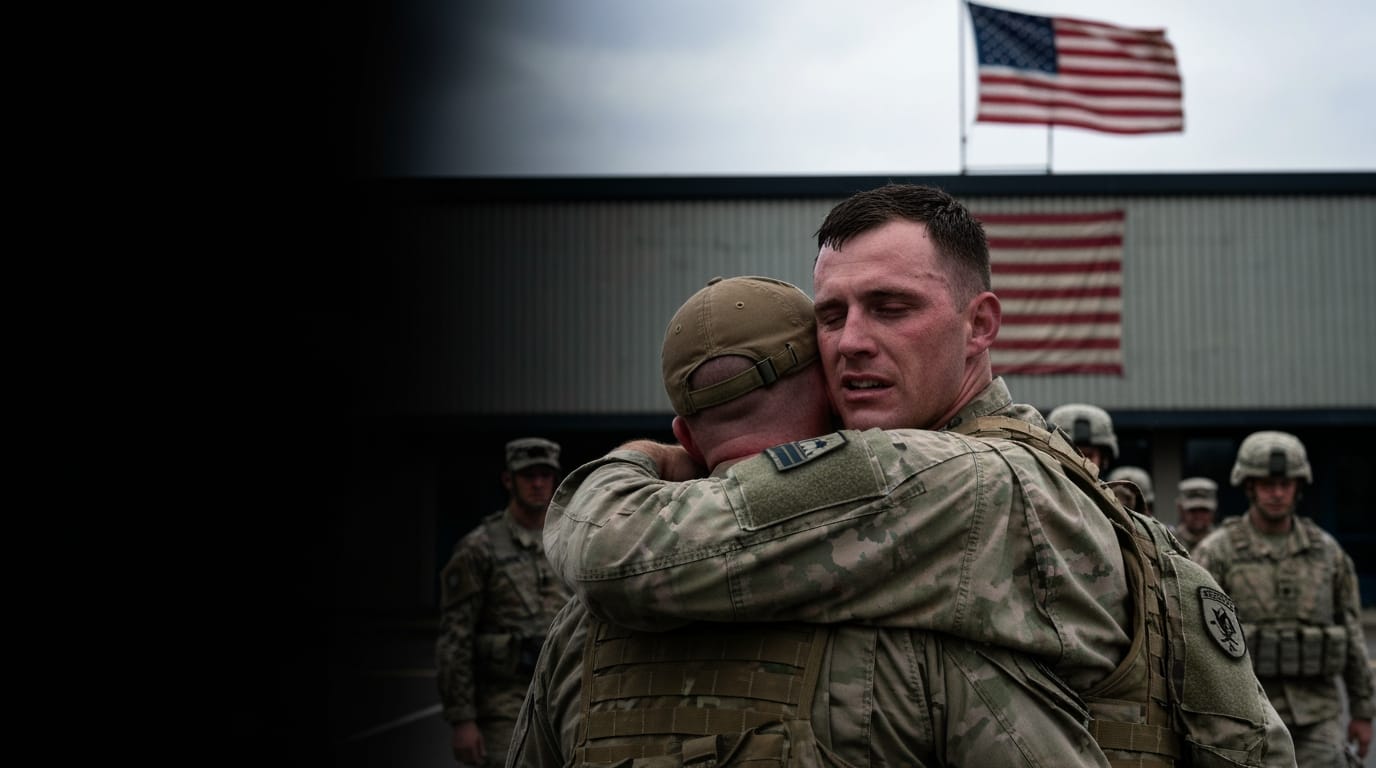
Washington, D.C. — The United States Pentagon announced Friday its intent to withdraw approximately 5,000 troops from Germany, a significant reduction that signals a deepening fracture in transatlantic relations, primarily fueled by disagreements over the ongoing U.S. war in Iran. The decision, confirmed by Pentagon spokesman Sean Parnell, is expected to unfold over the next six to twelve months and directly impacts a standing Army brigade combat team and a long-range fires battalion previously slated for deployment to Germany.
This latest development comes after a spiraling public feud between U.S. President Donald Trump and German Chancellor Friedrich Merz, who has openly criticized Washington's strategy in the two-month-old conflict with Iran, alleging that the U.S. is being "humiliated" by Tehran. Senior Defense Department officials, speaking on condition of anonymity, characterized Merz's remarks as "inappropriate and unhelpful," asserting that the troop withdrawal is a direct response to such "counterproductive" rhetoric.
The Escalating Rift and the Pentagon's Directive
The Pentagon's announcement, made on May 1, 2026, details a plan to pull 5,000 service members, roughly 14 percent of the approximately 36,000 U.S. troops currently stationed in Germany. This includes the withdrawal of an Army brigade combat team already deployed within the country and the cancellation of plans to deploy a long-range fires battalion that the Biden administration had intended to send to Germany later this year. The stated timeframe for completion is between six and twelve months.
The immediate catalyst for this abrupt reduction appears to be Chancellor Merz's strong disapproval of the U.S.-led military operations in Iran, which commenced in late February with U.S.-Israeli strikes. Merz publicly contended that the U.S. was being outmaneuvered and "humiliated" in the conflict, questioning Washington's lack of a clear strategy. This criticism resonated poorly with President Trump, who had also threatened to withdraw troops from Italy and Spain for their perceived lack of assistance in reopening the Strait of Hormuz, a critical chokepoint for global oil shipments that has remained virtually shut.
Defense Secretary Pete Hegseth's order to withdraw the troops follows a "thorough review of the Department's force posture in Europe," according to Pentagon spokesman Sean Parnell, and is framed as a recognition of "theater requirements and conditions on the ground." However, the swiftness of the decision and the explicit link to the diplomatic spat suggest a punitive measure, further straining an already tense relationship.
A Legacy of Presence, A History of Threats
The American military footprint in Germany is a profound legacy of World War II, initially serving as an occupation force before evolving into a bulwark against the Soviet Union during the Cold War. At its peak during the Cold War, U.S. troop numbers in Germany soared to over 250,000, with hundreds of thousands of family members creating "Little Americas" around military bases. These bases, including key installations like Ramstein Air Base, Landstuhl Regional Medical Center, and the headquarters for U.S. European Command (EUCOM) and U.S. Africa Command (AFRICOM) in Stuttgart, have historically been vital for projecting U.S. power globally and supporting operations across Europe, Africa, and the Middle East.
Following the collapse of the Berlin Wall in 1989 and the end of the Cold War, troop numbers saw significant reductions, declining to around 94,000 by 1995 and stabilizing around 34,000-40,000 in recent years. However, the current withdrawal marks a departure from the strategic rationale that has guided U.S. presence for decades.
This is not President Trump's first threat to significantly reduce U.S. troop levels in Germany. During his first term, he announced plans in 2020 to withdraw 9,500 troops, citing Germany's insufficient defense spending and its support for the Nord Stream 2 pipeline. That planned withdrawal, which would have cut troop levels to 25,000, was not fully implemented and was formally halted by Democratic President Joe Biden shortly after he took office in 2021. The current announcement therefore represents a renewed push to reduce forces, now under a different set of immediate geopolitical circumstances.
Geopolitical Drivers and Stated Rationales
The Trump administration's rationale for the present withdrawal extends beyond the immediate spat with Chancellor Merz. A senior Defense Department official indicated that the planned reduction aligns with the administration's broader desire to "shift attention away from Europe and toward priorities in the Western Hemisphere and Indo-Pacific region." This reflects a continuing re-evaluation of global force posture, aiming for greater flexibility and responsiveness to perceived emerging threats outside the traditional European theater.
Historically, President Trump has also consistently criticized Germany for not meeting NATO's defense spending targets, arguing that European allies should bear a greater share of the collective security burden. While the current withdrawal is explicitly tied to Germany's stance on the Iran war, the underlying sentiment about equitable burden-sharing within NATO remains a persistent theme in Washington's approach to its European allies. The Pentagon's statement, referencing "theater requirements and conditions on the ground," implicitly acknowledges these evolving strategic considerations.
Some analysts suggest that the move is largely a political one, intended to send a strong message to Germany and other allies perceived as not fully aligning with U.S. foreign policy objectives. Critics argue that such withdrawals, driven by bilateral disputes, could weaken NATO's collective defense posture and embolden adversaries.
Ripples Across the Alliance and Economic Concerns
The withdrawal of 5,000 U.S. troops carries significant implications for Germany, NATO, and the broader geopolitical landscape. For Germany, the immediate impact includes potential economic repercussions for host communities that have long benefited from the presence of American service members and their families through direct employment and local spending. Beyond economics, the reduction could be seen as diminishing a visible commitment to Germany's defense, even if the primary role of U.S. troops has shifted from frontline defense to a logistical and training hub.
Within NATO, the decision raises concerns about alliance cohesion and readiness. Germany is the largest basing location for the U.S. military in Europe, and any significant reduction could disrupt logistical chains and training capabilities vital for rapid deployment across the continent and beyond. Eastern European allies, particularly those bordering Russia, may view the withdrawal with apprehension, fearing a weakening of the alliance's deterrent posture at a time of heightened regional tensions. The move might also push Europe to take on more responsibility for its own security, a long-standing U.S. demand, but potentially in a manner that creates disunity rather than strength.
The announcement has already sparked discussions about whether other European allies might face similar withdrawals if they do not align with U.S. foreign policy. President Trump's previous threats against Italy and Spain regarding the Strait of Hormuz underscore this possibility. The long-term implications for transatlantic security cooperation remain uncertain, but the current withdrawal undoubtedly marks a pivotal moment in the evolving relationship between the U.S. and its European partners.
Conclusion
The Pentagon's directive to withdraw 5,000 U.S. troops from Germany is more than a simple force posture adjustment; it is a profound diplomatic and strategic statement. Stemming from a contentious disagreement over the U.S. war in Iran and Germany's critical stance, the decision highlights the fragilities within the transatlantic alliance. While the U.S. administration cites strategic reorientation and German rhetoric as justifications, the move is widely perceived as a politically charged signal from Washington.
As the withdrawal unfolds over the coming months, its full impact on Germany's defense, local economies, and NATO's collective strength will become clearer. This latest chapter in U.S.-German relations underscores a period of significant geopolitical flux, challenging established norms and forcing a re-evaluation of long-held security partnerships in an increasingly complex global environment. The future trajectory of transatlantic cooperation, particularly in the face of ongoing conflicts and shifting power dynamics, will be heavily influenced by how these immediate tensions are managed and the precedent this withdrawal sets for the alliance.


