Ukrainian Farmers Confront Dual Crisis: War and Drought Trap Harvest, Threaten Global Food Security
KYIV, Ukraine – Ukrainian farmers face a catastrophic confluence of challenges this harvest season, as relentless wartime disruptions, compounded by a severe drought, leave vast quantities of their vital agricultural produce stranded and their livelihoods on the brink of collapse. The ongoing conflict has crippled export infrastructure, while adverse weather has diminished yields, creating an unprecedented crisis that imperils not only Ukraine's economy but also global food supplies, particularly in import-dependent nations.
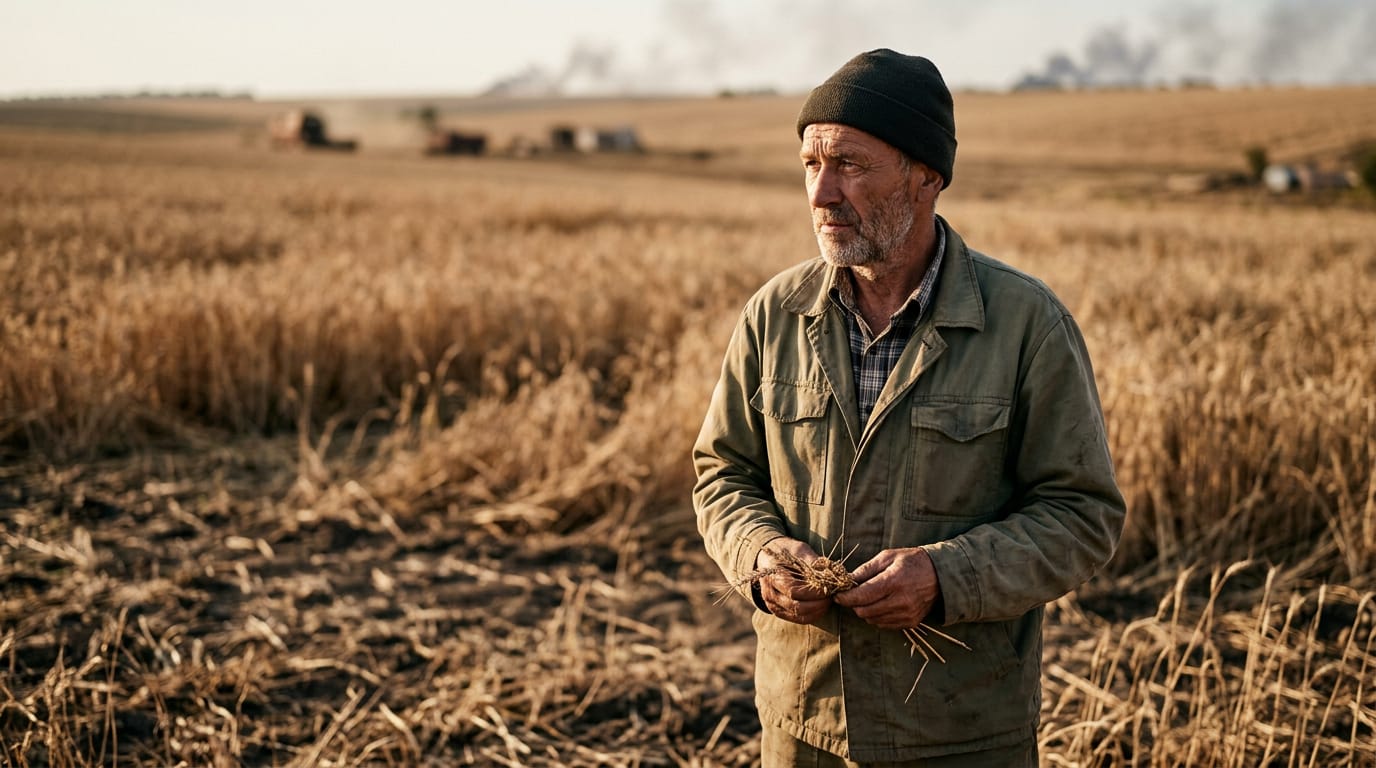
Before the full-scale invasion, Ukraine stood as a global agricultural powerhouse, responsible for significant portions of the world's wheat, corn, and sunflower oil exports. Today, however, its fields of plenty have become fields of peril. Farmers navigate territories scarred by shelling and littered with mines, facing labor shortages as many workers have joined the military or fled. Adding to the devastation, unfavorable weather conditions this year have significantly reduced harvest forecasts, with corn yields projected to be down by 21%, barley by 15%, and wheat and sunflower by 10% compared to the previous year. This double blow means that even a diminished harvest struggles to reach market, deepening the humanitarian and economic crisis.
Fields of Peril and Scarce Yields
The immediate and long-term impacts of the war on agricultural production are profound. Large swathes of fertile land, particularly in eastern and southern regions like Luhansk, Donetsk, Zaporizhia, and Kherson, have been directly affected by the conflict, with approximately 40% of Ukraine's total agricultural output coming from these areas. Russian forces have reportedly appropriated and exported millions of metric tons of grain from these occupied regions. Farmers operating near the front lines face daily threats from shelling and drone attacks, with infrastructure, equipment, and processing facilities frequently targeted and destroyed. The presence of landmines further complicates farming, rendering fields unsafe and often uncultivable. These dangers not only reduce the arable land available but also instill a pervasive fear among those attempting to work it, as evidenced by reports of farmers being injured or killed by mines.
Beyond the direct consequences of war, Ukrainian agriculture has grappled with significant climatic pressures. The severe drought experienced across many regions has exacerbated the situation, leading to reduced crop development and lower yields. Power cuts, a common occurrence due to infrastructure attacks, further hinder agricultural operations, impacting everything from irrigation systems to storage facilities. This combination of man-made and natural disasters creates a dire outlook for the current harvest, with farmers producing less under increasingly hazardous conditions.
The Blockaded Lifeline and Logistical Labyrinth
The inability to transport harvested crops to market represents perhaps the most critical bottleneck. Over 90% of Ukraine's agricultural exports traditionally moved through its Black Sea ports. However, a renewed Russian blockade and intensified attacks on port infrastructure in the Odesa region have brought maritime export logistics to a near-total halt. International shipping companies have withdrawn vessels from the area due to escalating security risks, effectively closing these vital routes. These disruptions have significantly curtailed export volumes, with grain exports plunging by 75% year-on-year in the first two weeks of August.
Attempts to establish alternative export corridors have been met with substantial challenges. While Ukraine has developed its own maritime corridor along the western Black Sea coast, passing through Romanian and Bulgarian waters, its capacity remains limited and vulnerable to attack. Rail transit to ports like Constanța in Romania, a frequently discussed alternative, has proven unworkable due to structural constraints, including Ukraine's broad-gauge rail network, which necessitates costly transshipment at the border. Overland routes through neighboring EU countries also face limitations due to quotas and infrastructure constraints, unable to absorb the massive volumes previously shipped by sea. Low water levels in the Danube River further restrict barge loading, adding another layer of logistical complexity and increasing freight costs.
The result is a growing logjam of unsold grain within Ukraine. Storage facilities are rapidly filling, and the country faces a potential storage shortfall of 8 million to 11 million metric tons by November. Farmers, with their silos nearing capacity even before the corn harvest begins, have nowhere to store new crops, risking spoilage and financial ruin.
A Harvest Trapped, Livelihoods Threatened
The inability to export translates directly into devastating economic consequences for Ukrainian farmers and the national economy. Domestic grain prices have plummeted due to the oversupply and lack of export channels, often falling below production costs. Many farmers find themselves unable to cover expenses, service loans, or even pay for fuel and wages for the upcoming autumn sowing season. Financial reserves, which helped farmers weather initial disruptions, are now largely depleted.
For individuals like Serhiy Rybalko, a farmer in the Zhytomyr region, the situation is a "complete disaster." He lost two-thirds of his land to occupation and now finds no buyers for his current harvest, highlighting a widespread problem where "finances have ground to a halt. Revenue streams have dried up. There are no exports". The National Bank of Ukraine estimates that the country could lose as much as $2.5 billion in hard currency revenues this year due to the export blockade, threatening widespread bankruptcies among farmers and a significant dent in the nation's fragile wartime economy. Farming accounts for nearly 60% of Ukraine's export revenues, underscoring its critical role in the country's economic stability. The agricultural sector's wartime losses have already exceeded $90 billion since 2022, with arable land shrinking by nearly a quarter due to combat and mining.
Global Ripples and Calls for Aid
The crisis in Ukraine's agricultural sector extends far beyond its borders, posing a significant threat to global food security. Ukraine is a major supplier of staples like wheat (6% of global supply) and corn (11% of global supply). Disruptions to these exports can trigger price spikes and exacerbate food insecurity in vulnerable regions, particularly in the Middle East and North Africa, which heavily rely on Ukrainian grain. Experts warn of potential famine in some import-dependent countries unless supplies can be secured.
In response to this multifaceted crisis, both the Ukrainian government and international organizations have initiated various support programs. The Ukrainian government has launched new initiatives to aid farmers, including non-repayable grants for purchasing Ukrainian-produced fertilizers, increased compensation for land reclamation (especially in frontline areas), and partial reimbursement for the cost of domestically made agricultural machinery. Efforts are also underway to compensate for lost crops, support relocated producers, and provide payments for land occupied by fortifications. Access to financing is being expanded by allowing agricultural land lease rights to be used as collateral for agrarian notes.
Internationally, organizations such as USAID, the World Bank, the Food and Agriculture Organization (FAO), and the World Food Programme (WFP) have provided substantial aid, mobilizing hundreds of millions of dollars for agricultural production, export capacity, and direct farmer support. The "Grain from Ukraine" humanitarian program, launched by President Volodymyr Zelenskyy, aims to deliver Ukrainian grain to countries facing acute food shortages in Africa and Asia. However, the scale of the challenges often overwhelms these efforts. For instance, a recent request from Ukraine's Ministry of Agrarian Policy for €220 million in non-refundable aid for farmers was effectively refused by the European Commission, which cited existing mechanisms for support. While these initiatives offer some relief, their reach and effectiveness are often limited by geographical constraints, security concerns, and bureaucratic hurdles, particularly in frontline regions.
A Precarious Future
The current harvest season underscores the severe and interconnected challenges facing Ukraine's agricultural sector. Caught between the destructive force of war and the vagaries of climate, farmers are fighting not only to cultivate their land but also to survive economically. The inability to sell their produce due to blocked export routes and plummeting domestic prices threatens to decimate rural communities and leave a lasting scar on Ukraine's economic landscape.
The ramifications extend globally, with critical supplies of food trapped within Ukraine, risking increased food insecurity and humanitarian crises in distant lands. While national and international efforts offer some lifelines, the sheer scale of the disruption demands more robust, coordinated, and sustainable solutions. Without a clear path to safely and efficiently export its harvest, Ukraine's breadbasket status remains precarious, holding profound implications for its own future and the stability of global food systems. The human cost, measured in the despair of individual farmers and the potential hunger of millions, serves as a stark reminder of the urgent need for a resolution to this multifaceted crisis.