UN Affirms US 'Legal Obligation' Amid Trump Administration's Funding Withdrawals
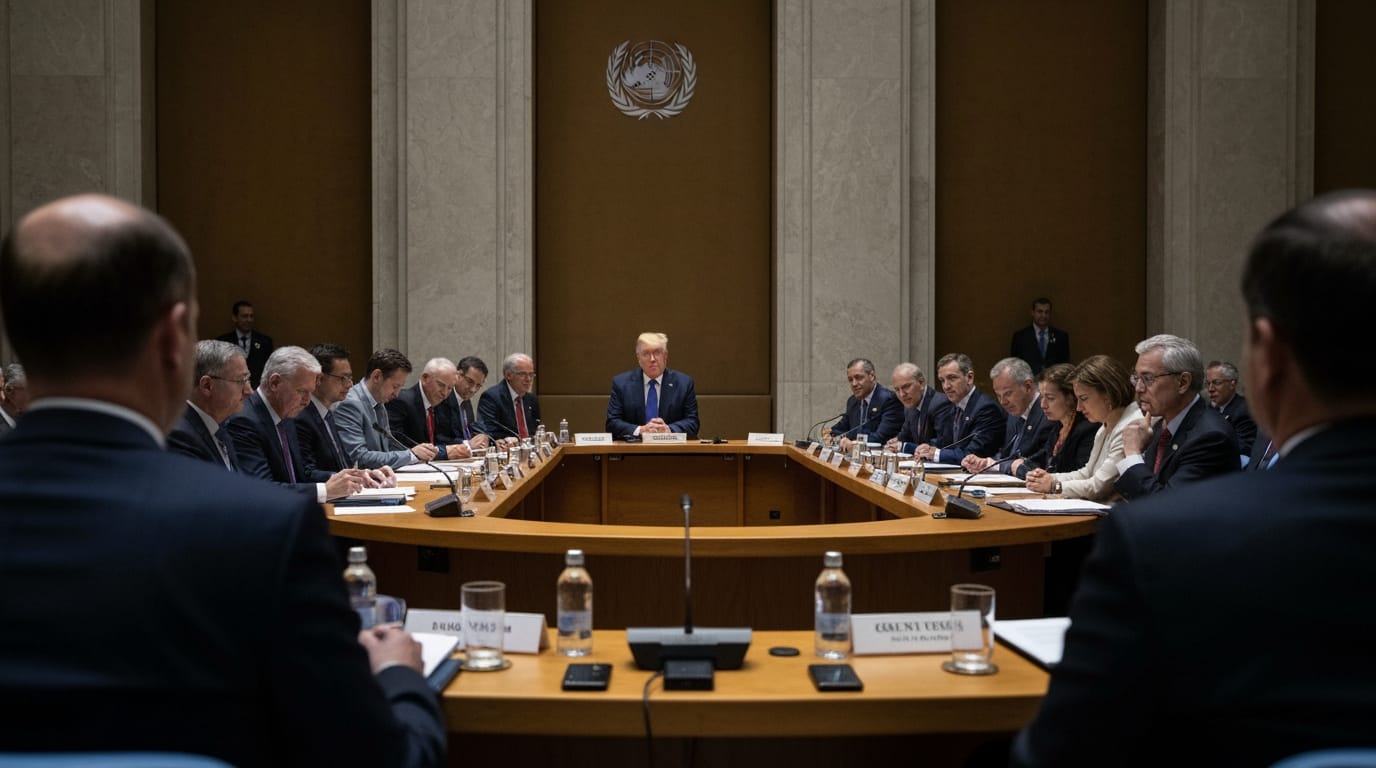
United Nations Headquarters, New York – The United Nations has unequivocally stated that the United States carries a "legal obligation" to fulfill its financial commitments to the international body, a declaration issued as the Trump administration announced a significant withdrawal of support from numerous UN-related agencies and initiatives. This firm stance from the UN Secretary-General’s office underscores a deepening chasm between the world organization's financial stability and the "America First" foreign policy of the current U.S. administration, setting the stage for profound implications for global diplomacy and humanitarian operations.
The dispute centers on assessed contributions, which the UN maintains are mandatory under its foundational Charter. Stephane Dujarric, spokesperson for Secretary-General Antonio Guterres, emphasized that "assessed contributions to the United Nations regular budget and peacekeeping budget, as approved by the General Assembly, are a legal obligation under the UN Charter for all Member States, including the United States". This statement came in response to the White House's decision to cease funding for more than 30 UN-affiliated entities and dozens of other international programs, a move that the UN and many affected agencies reportedly learned about through public channels rather than formal communication.
The Trump administration's policy, characterized by an "America First" ideology, has consistently sought to redefine the United States' engagement with multilateral institutions. Following a year-long review of its participation in and funding for international organizations, President Trump signed an executive order suspending American support for 66 distinct groups, agencies, and commissions. Many of these targeted entities are UN-related, focusing on critical areas such as climate change, labor standards, and migration, issues the administration has often categorized as catering to global rather than direct U.S. interests. This posture reflects a belief that the U.S., as the world's richest nation, has unfairly borne a disproportionate financial burden within global bodies. The administration's actions have been portrayed as a drive to cut perceived waste and inefficiency, aligning with its broader strategy of recalibrating international commitments based on perceived national advantage.
The financial ramifications of the U.S. withdrawals are substantial and threaten to significantly impair UN operations worldwide. As the world's largest economy, the U.S. is typically responsible for 22% of the UN's regular budget and 25% of its peacekeeping budget. For the 2025 UN budget, which exceeded $3.5 billion, the U.S. share was approximately $800 million. However, the Trump administration has indicated it would pay only about half of its $1.4 billion dues to the UN peacekeeping department for 2025, contributing $682 million, and leaving a substantial shortfall. Beyond the current year, the U.S. also owes an additional $1.58 billion in peacekeeping arrears. The total outstanding obligations, including arrears from previous years and unpaid peacekeeping expenses, now exceed $3 billion. This deficit has forced the UN to anticipate drastic measures, including a projected 25% reduction in troops and personnel for peacekeeping missions globally.
The impact extends beyond financial figures to the core mission of the UN. While UN entities targeted by the U.S. withdrawal have affirmed their commitment to continue their work, the loss of a major funding source inevitably strains resources and operational capacity. The UN Charter stipulates a penalty for member states whose arrears exceed the amount owed for the preceding two years: the loss of voting rights in the General Assembly. Dujarric underscored the inviolability of the Charter, stating, "The charter is not à la carte. We're not going to renegotiate the charter". This stern reminder highlights the potential diplomatic consequences for the U.S., which, despite its vocal criticisms, remains a foundational member of the organization.
Historically, tensions over U.S. contributions to the UN are not unprecedented. Similar disputes arose in the late 1990s when Senator Jesse Helms notably withheld U.S. funds to pressure the UN into enacting reforms. The current administration's actions are part of a broader pattern of disengagement from various multilateral agreements and organizations, including the Human Rights Council, the World Health Organization, and UNESCO. This trend has seen the U.S. isolated on several international fronts, notably concerning its stance on Palestine, where many key allies have recognized Palestinian statehood. Such moves signal a deliberate shift from established multilateralism, contributing to an environment where the U.S. is increasingly viewed as both a prominent critic and the largest financial defaulter of the global body. In contrast, the previous administration under Joe Biden saw the U.S. pay $13 billion overall for the UN umbrella group in 2023, illustrating a different approach to international financial responsibilities.
The ongoing confrontation between the United Nations and the Trump administration over financial dues represents a critical juncture for international cooperation. The UN continues to assert the binding nature of its Charter and the legal obligations of its member states, emphasizing the collective responsibility for maintaining global peace and addressing shared challenges. Meanwhile, the U.S. administration's decisions reflect a prioritiziation of national interests and a re-evaluation of its role in global governance, leading to significant financial shortfalls and operational challenges for the UN. As the world watches, this dispute underscores the delicate balance between national sovereignty and the imperative for sustained international collaboration in an increasingly interconnected world.


