Unearthing the Past: The Complex Quest to Understand Family History in Nazi Germany
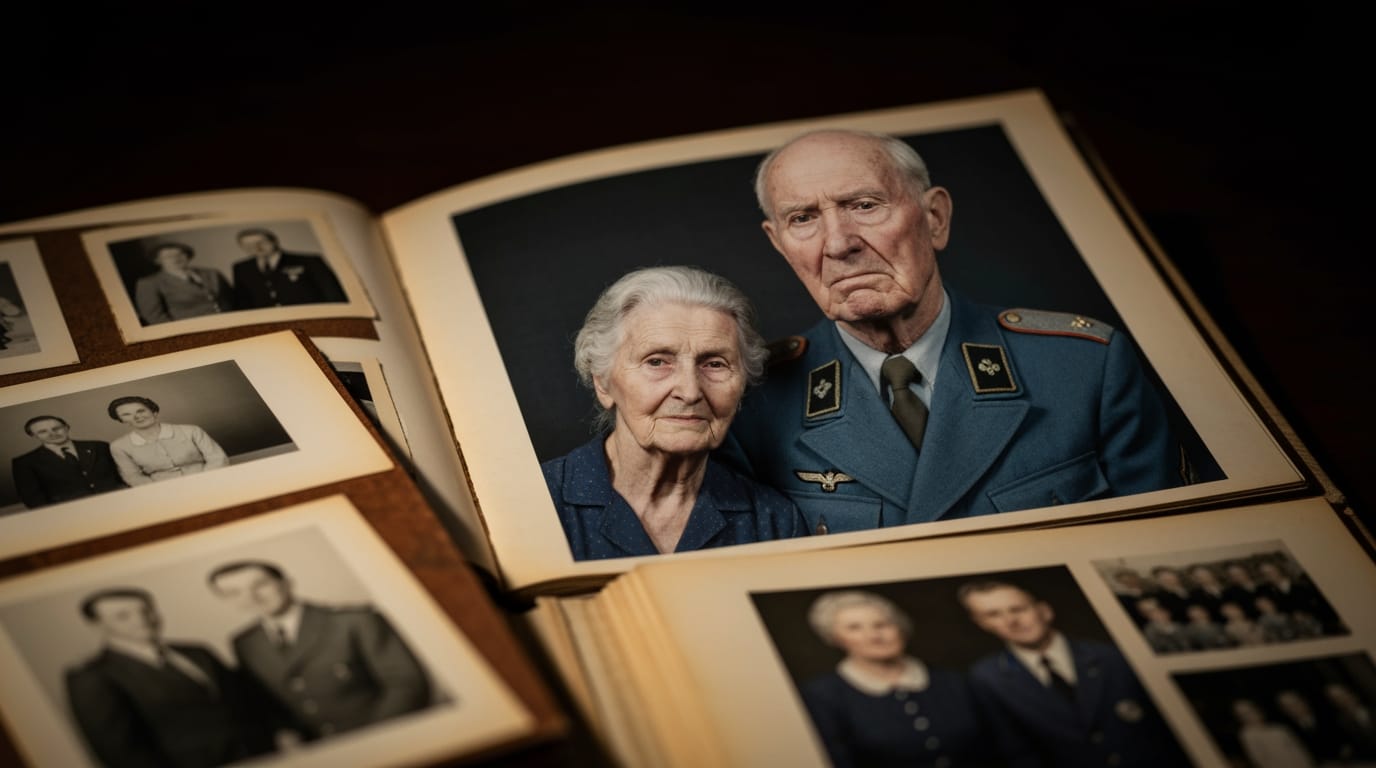
For many descendants of individuals who lived through the tumultuous era of Nazi Germany, a profound and often unsettling question lingers: What was the true extent of my ancestors' involvement with the Third Reich? This inquiry, often driven by a desire for historical clarity and a reckoning with a painful legacy, leads countless individuals on a complex genealogical and ethical journey. The answers, when found, rarely fit into simple categories of "good" or "evil," instead revealing the nuanced and often coercive realities of life under a totalitarian regime.
The Uncomfortable Question: Confronting a Traumatic Legacy
The pursuit of one's family history during the Nazi period is far more than a simple genealogical exercise; it is a deeply personal confrontation with one of history's darkest chapters. Generations removed from the events, descendants grapple with the emotional weight of potential discovery, seeking to understand the choices their relatives made, or were forced to make, between 1933 and 1945. This quest often stems from a societal push, particularly within Germany, known as "Vergangenheitsbewältigung," or "coming to terms with the past." This ongoing effort seeks to analyze, digest, and learn from history, specifically the atrocities of the Holocaust and the broader crimes committed in the name of the German people. The silence that often shrouded these experiences in post-war families has created a generational "gap," leaving descendants to piece together fragmented narratives and confront what some historians describe as a "moral insanity" that afflicted many during that time.
Navigating the Archives: A Genealogical Quest for Truth
Researchers embarking on this delicate journey have several avenues for investigation, though each presents its own set of challenges. Key institutions like the U.S. National Archives and Records Administration (NARA) and Germany's Bundesarchiv (Federal Archives) serve as primary resources. NARA houses a significant collection of seized German records, including "Ahnentafeln" (ancestor charts) that were often required for proving Aryan lineage, particularly for members of the SS. These documents can contain vital records, medical information, and biographical details, some tracing back to the mid-1700s.
Germany's Bundesarchiv, conversely, holds extensive records on individuals who served in the judicial system, resisted the Nazi regime, were of Jewish descent, became victims of euthanasia programs, belonged to Sinti or Roma communities, or were members of the National Socialist German Workers' Party (NSDAP), especially the SS, or worked in the cultural sector. Military records for soldiers who served in the Wehrmacht are primarily housed in the Bundesarchiv's military department in Freiburg, though a significant portion of these records were destroyed during the war, making comprehensive searches difficult.
Accessing these records often requires specific information such as names, dates, and places of birth, and proof of kinship for personal records, especially those still subject to privacy laws. Furthermore, many records are in German and may not be indexed, necessitating specialized skills for effective research. Testimonies from living relatives, while valuable, can be unreliable, filtered by personal experience, emotion, and loyalty, thus requiring corroboration with historical facts.
Beyond Membership Cards: Nuances of Involvement
The question of whether an ancestor was a "Nazi" is rarely a straightforward yes or no. Membership in the NSDAP itself varied greatly in its implications. The party experienced rapid growth, from approximately 850,000 members in 1933 to about 6 million by 1939, and an estimated 8.5 million by 1945. However, even at its largest, party members constituted only about 11 percent of the total German population.
Joining the party required individuals to prove their "Aryan" ancestry, undergo interviews, and provide character references. Membership often brought privileges, including enhanced job opportunities, networking advantages, and social standing, effectively creating a tiered society where party members held a distinct advantage. The party structure was hierarchical, with ranks from local "Blockleiter" and "Zellenleiter" up to regional "Gauleiter" and national "Reichsleiter," each carrying different levels of responsibility and authority.
Beyond formal party membership, civilian life under the Nazi regime was characterized by pervasive state control and indoctrination. Propaganda saturated daily life, and participation in Nazi-affiliated organizations was often mandatory or highly pressured for specific professions and for youth, who were enrolled in the Hitler Youth. While some actively embraced the ideology, others collaborated out of fear or opportunism, benefiting from the regime's initial economic successes. Dissent, however minor, could lead to severe consequences, fostering a climate of fear and surveillance where neighbors might report on one another. This spectrum of involvement, from fervent ideologue to reluctant conformist, complicates any simple categorization of individuals.
The Echoes of Silence: Generational Impact and Reconciliation
The legacy of the Nazi era profoundly shaped post-war German society and continues to influence subsequent generations. The "Vergangenheitsbewältigung" process, which gained significant momentum in the late 1950s and early 1960s, sought to confront the nation's collective guilt and prevent a recurrence of such atrocities. This has manifested in comprehensive history education, the establishment of memorials at former concentration camps, and public discussions about the past.
Within families, however, open dialogue about the Nazi past was often suppressed. Many survivors and perpetrators alike maintained a profound silence, finding it too painful or shameful to recount their experiences. This silence, while perhaps a coping mechanism for the immediate post-war generation, left subsequent generations with unanswered questions and a complex inheritance. Discovering a family member's involvement, even as a "Mitläufer" (one who goes along with the current), can be deeply unsettling, forcing individuals to reconcile personal affection with historical culpability. The challenge lies in understanding the context of the time without excusing the actions, fostering a culture of honesty and responsibility essential for democratic maturity.
Conclusion
The quest to determine "Were Grandma and Grandpa Nazis?" is a journey into the moral ambiguities and stark realities of history. It requires meticulous research, careful interpretation of documents, and a willingness to confront uncomfortable truths. While official party membership numbers reveal that a minority of Germans formally joined the NSDAP, the pervasive influence of the regime meant that nearly everyone was touched by its ideology and policies. Understanding this intricate past, in all its complexity, is not about judgment from a modern vantage point, but about fostering a deeper comprehension of how ordinary people lived within, perpetuated, or resisted an extraordinary evil. This ongoing engagement with history remains crucial for learning from the past and safeguarding the future.