US Military Strike in Caribbean Kills Four, Intensifying Controversial Anti-Drug Campaign
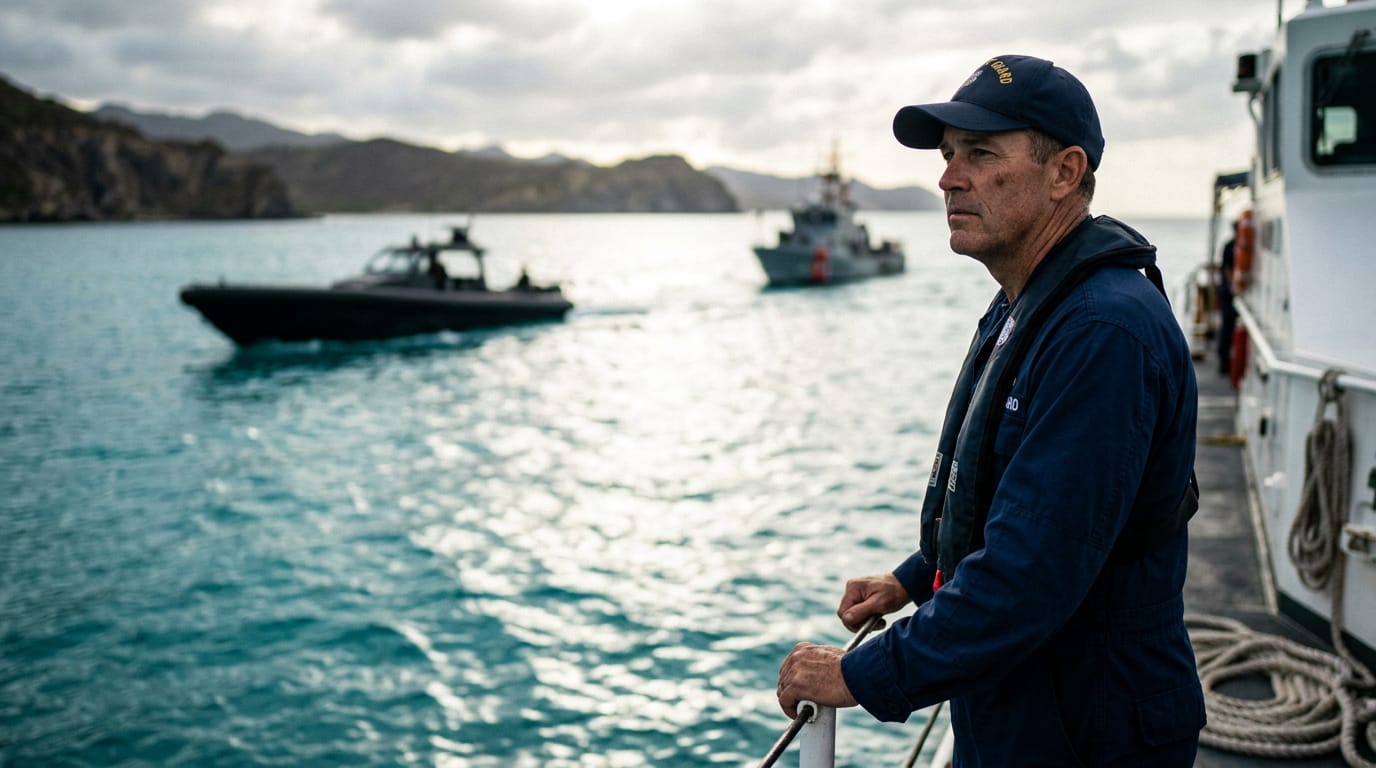
The United States military conducted a "lethal kinetic strike" on a suspected drug trafficking vessel in the Caribbean Sea on Tuesday, resulting in the deaths of four individuals. The operation marks a continued escalation in the Trump administration's aggressive, monthslong campaign against alleged "narco-terrorists" in Latin America, an initiative that has drawn both support for its stated aims and sharp criticism from human rights advocates.
Escalation in Maritime Interdiction
The recent incident saw Joint Task Force Western Hemisphere, operating under the U.S. Southern Command (SOUTHCOM), target what it described as a "go-fast vessel" navigating established drug trafficking routes in the Caribbean. SOUTHCOM asserted that "Confirmed intelligence revealed the vessel's active involvement in narco-trafficking" and characterized the deceased as "narco-terrorists." A video shared by SOUTHCOM on X (formerly Twitter) reportedly showed the moving vessel followed by a flash after the strike. However, military officials did not publicly release evidence to substantiate the claim that the vessel carried illicit drugs or provide the identities of those killed.
This Caribbean strike occurred just two days after the U.S. military carried out a similar operation in the Eastern Pacific Ocean, which also resulted in the deaths of two individuals accused of drug trafficking. These recent actions follow a brief two-month pause in the broader U.S. campaign targeting alleged smugglers, signaling a renewed vigor in the administration's efforts.
The Broader "Narco-Terrorism" Offensive
Tuesday's strike contributes to a mounting death toll in a campaign that began nearly a year ago. The U.S. military has now killed at least 227 people across 68 separate boat strikes since the Trump administration initiated its offensive against groups it labels "narco-terrorists." Other estimates indicate at least 221 deaths as of June 2026, including 17 presumed dead, or 61 fatalities across dozens of airstrikes since September 2025.
President Donald Trump has publicly declared the United States to be in an "armed conflict" with cartels in Latin America, articulating that these aggressive tactics are a necessary escalation to curb the influx of drugs into the U.S. and combat the rising number of fatal drug overdoses. The administration's rhetoric frequently frames drug cartels as direct national security threats, justifying the use of military force beyond traditional law enforcement roles. In a further expansion of this strategy, the administration is reportedly seeking agreements with allied nations to extend its anti-drug operations onto land across various Latin American countries. Defense Secretary Pete Hegseth indicated during a recent visit to Panama that Colombia, Guatemala, and Honduras had consented to joint military operations against criminal organizations on their soil, though Guatemala has since denied reaching such an accord. Ecuador commenced similar missions with U.S. cooperation in March.
The Caribbean's Enduring Role in Global Drug Routes
The Caribbean Sea has long served as a critical nexus in the international drug trade, facilitating the movement of cocaine from South American production zones to consumer markets in Europe and the United States. Its intricate geography, characterized by numerous islands and expansive maritime spaces, offers traffickers a multitude of routes and transport methods, making interdiction a complex challenge. Venezuela, with its extensive coastline and porous border with Colombia, functions as a primary transshipment point for these illicit shipments before they fan out across the Caribbean toward destinations like the ABC islands (Aruba, Bonaire, Curaçao), Trinidad and Tobago, and the Dominican Republic.
The U.S. military's involvement in drug interdiction efforts dates back to the 1980s, with its role significantly expanding after 1988 when the Department of Defense was designated as the lead agency for detecting and monitoring aerial and maritime transit of illegal drugs into the United States. Alongside the military, the U.S. Coast Guard remains a pivotal force in these operations, actively seizing narcotics and disrupting smuggling networks across the Western Hemisphere.
Mounting Legal and Ethical Concerns
The aggressive nature of these military strikes has ignited substantial debate and criticism, particularly from international human rights organizations such as Human Rights Watch and Amnesty International, as well as independent UN experts. These groups have publicly denounced the attacks, labeling them as "unlawful extrajudicial killings." Critics point to the military's failure to provide public evidence of drug cargo or the identities of those killed as contributing to these concerns.
The legal framework governing such operations, particularly the Rules of Engagement (ROE), dictates when, where, and how military force can be employed. While ROE are policies rather than laws, they must adhere to international and domestic legal principles. The military's authority to conduct operations targeting individuals outside U.S. territory for drug offenses is a complex legal area. The classification of targeted groups as "narco-terrorists" by the administration also plays a crucial role in how ROE are applied, potentially shifting the basis for engagement from demonstrated hostile acts to the declared status of the force. This distinction raises questions about accountability and the adherence to due process in situations where lethal force is deployed without judicial proceedings or clear declarations of war by Congress.
A Complex and Contentious Strategy
The latest U.S. military strike in the Caribbean underscores the complex and often contentious nature of the ongoing campaign against drug trafficking in Latin America. While proponents argue that aggressive military action is essential to disrupt powerful cartel networks and protect American lives from illicit drugs, human rights organizations and legal experts continue to raise significant concerns regarding the transparency, legality, and ethical implications of using lethal force without public accountability. The human cost of this prolonged conflict, now tallying hundreds of lives, along with the persistent questions surrounding its effectiveness and adherence to international norms, ensure that the debate over this strategy will continue.