Venezuela Charts New Course: Oil Industry Opens to Private Investment in Historic Reversal

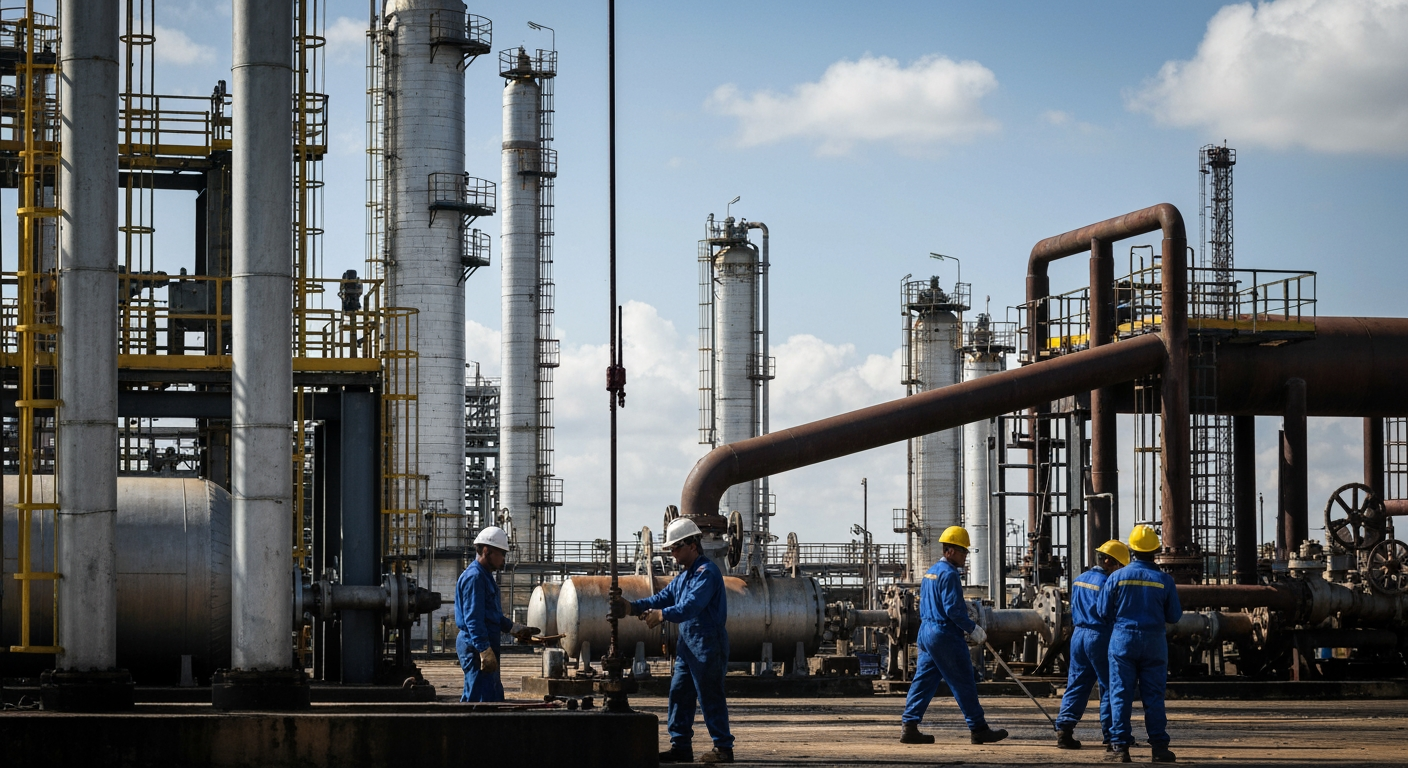
CARACAS, Venezuela – In a seismic shift that signals a profound reorientation of its economic policy, Venezuela has begun to dismantle decades of state control over its vast oil industry, opening the door wide to private and foreign investment. This historic reversal, spearheaded by an interim administration and encouraged by the United States, aims to resuscitate a sector that has suffered a catastrophic decline, offering a potential lifeline to Venezuela's beleaguered economy. The legislative changes, approved in January 2026, represent the most significant overhaul of the nation's hydrocarbons laws since the nationalization era, promising greater autonomy for private operators and a more investor-friendly environment.
Once a powerhouse of global oil production, Venezuela’s state-owned Petróleos de Venezuela S.A. (PDVSA) presided over the world’s largest proven oil reserves. However, years of mismanagement, corruption, politicization, and crippling international sanctions have driven production to historic lows. Now, with a new legal framework in place and a selective easing of U.S. sanctions, the country is betting on private capital and expertise to unlock its immense subterranean wealth and chart a path toward economic recovery.
The Long Shadow of Nationalization and Decline
Venezuela’s oil journey has been marked by pronounced shifts between foreign control and state ownership. While the modern oil era began in 1914, leading to significant foreign investment, the industry was officially nationalized on January 1, 1976, ushering in the era of PDVSA. For a time, PDVSA was hailed as a model state-run company, demonstrating technical expertise and efficiency. However, the early 2000s under President Hugo Chávez saw a deepening of state control, with foreign operators often forced into minority positions within joint ventures or seeing their assets expropriated. This period marked a critical turning point, as PDVSA began to prioritize political and social projects, leading to a neglect of core operational functions, a mass exodus of skilled technical staff, and rampant corruption.
Oil production, which peaked at 3.4 million barrels per day (bpd) in the late 1990s, plummeted dramatically. By the 2020s, it hovered around 800,000 bpd, a stark indicator of the industry's decay. The situation was further exacerbated by a series of stringent U.S. sanctions, particularly from 2017 and 2019, which targeted PDVSA, restricting its access to international financial markets and prohibiting oil exports to the United States, a key market. These sanctions, while aimed at pressuring the Maduro administration, also profoundly hindered the industry's ability to import essential refining materials and attract necessary technology and investment.
A New Chapter: Legislative Reforms and U.S. Engagement
The catalyst for the current transformation appears to be a confluence of internal economic imperatives and external diplomatic pressures. Following the capture of Nicolás Maduro by U.S. forces in early January 2026 and the subsequent installation of an interim government led by Acting President Delcy Rodríguez, the trajectory of Venezuela's oil policy shifted decisively.
In an expeditious process, Venezuela's National Assembly approved a sweeping reform of the Organic Hydrocarbons Law. This new legislation signals a radical departure from the Chávez-era framework, which mandated that PDVSA maintain controlling interests in all significant ventures. Key provisions of the reform include:
- Enhanced Private Control: The law now permits private companies to independently operate, explore, produce, and commercialize hydrocarbons, moving beyond the previous requirement for state-majority joint ventures with PDVSA. Minority shareholders in joint ventures with PDVSA are also granted the ability to manage operations, bank accounts, and directly market their share of production.
- Fiscal Incentives: The new framework introduces a more flexible taxation and royalty system. While a 30% royalty rate remains standard, it can be reduced to 15% or 20% for projects deemed less economically viable at higher rates, such as those in mature or extra-heavy oil deposits. Several prior taxes and contributions have been consolidated or repealed, aiming to create a more attractive system for investors.
- Legal Security: Crucially for foreign investors, the reforms permit arbitration, including outside of Venezuela, for dispute resolution, addressing a long-standing concern about the impartiality of local courts.
Coinciding with these legislative changes, the U.S. Treasury Department began easing sanctions on Venezuelan oil, a move directly linked to Washington's push for the opening of the sector to foreign private investment. This shift allows U.S. energy companies greater ability to operate and expand within Venezuela, with US officials actively encouraging investment in the country's energy infrastructure.
Challenges and Opportunities for a Revitalized Sector
The initial response from the international energy community has been cautious but discernible. While some companies like ExxonMobil, which previously considered Venezuela "uninvestable," are now dispatching delegations to explore opportunities, others such as Chevron have already signed agreements to expand operations, particularly in the Orinoco Belt. Repsol, a Spanish company, has also announced plans to triple its production in Venezuela. This renewed interest is reflected in the country's rising production figures, reaching 1.09 million bpd in September 2025 and 1.1 million bpd by April 2026. Projections suggest production could reach 1.2-1.3 million bpd in a base scenario, with optimistic forecasts exceeding 1.4 million bpd.
However, significant hurdles remain. The Venezuelan oil industry requires massive investment—estimates suggest over $180 billion would be needed to reach 3 million bpd by 2040. Decades of underinvestment have left infrastructure in disrepair, and the long-term impact of the exodus of skilled labor still poses a challenge. Furthermore, the global oil market faces an existing glut, and the history of contract instability in Venezuela, particularly the expropriations under Chávez, makes many foreign investors wary. Ensuring legal and political security for investments will be paramount to attracting the sustained capital and technical expertise needed for a full recovery.
Envisioning Venezuela's Future
The opening of Venezuela's oil industry represents a crucial juncture for a nation desperately seeking economic stability and growth. Proponents argue that a revitalized oil sector could generate much-needed export revenues, create jobs, and foster broader economic improvement after years of hardship during which a significant portion of the population emigrated. The interim government has emphasized that the goal is to attract investment to rebuild the country's collapsing economy.
However, critics voice concerns about the potential for renewed foreign dependence and the need to ensure that the wealth generated genuinely benefits the Venezuelan populace and supports national development, rather than primarily serving foreign strategic interests. The ultimate success of this ambitious transition will hinge not only on attracting foreign capital but also on establishing a stable political and legal environment that fosters long-term trust and ensures equitable distribution of the newfound prosperity. The path forward remains complex, but Venezuela's decision to embrace private investment in its most critical industry marks a definitive break with the past, holding the promise of a dramatically different economic future.
Sources
- theguardian.com
- bakermckenzie.com
- intellinews.com
- curacaochronicle.com
- thejournal.ie
- jdsupra.com
- discoveryalert.com.au
- marketscreener.com
- theendofhistory.net
- bakerinstitute.org
- aspeniaonline.it
- resourcegovernance.org
- wola.org
- bakerinstitute.org
- trtworld.com
- table.media
- sana.sy
- discoveryalert.com.au
- realinstitutoelcano.org