Viral Act of Defiance: Woman Burning Khamenei Photo Not in Iran, Highlights Global Dissent and Disinformation Challenges
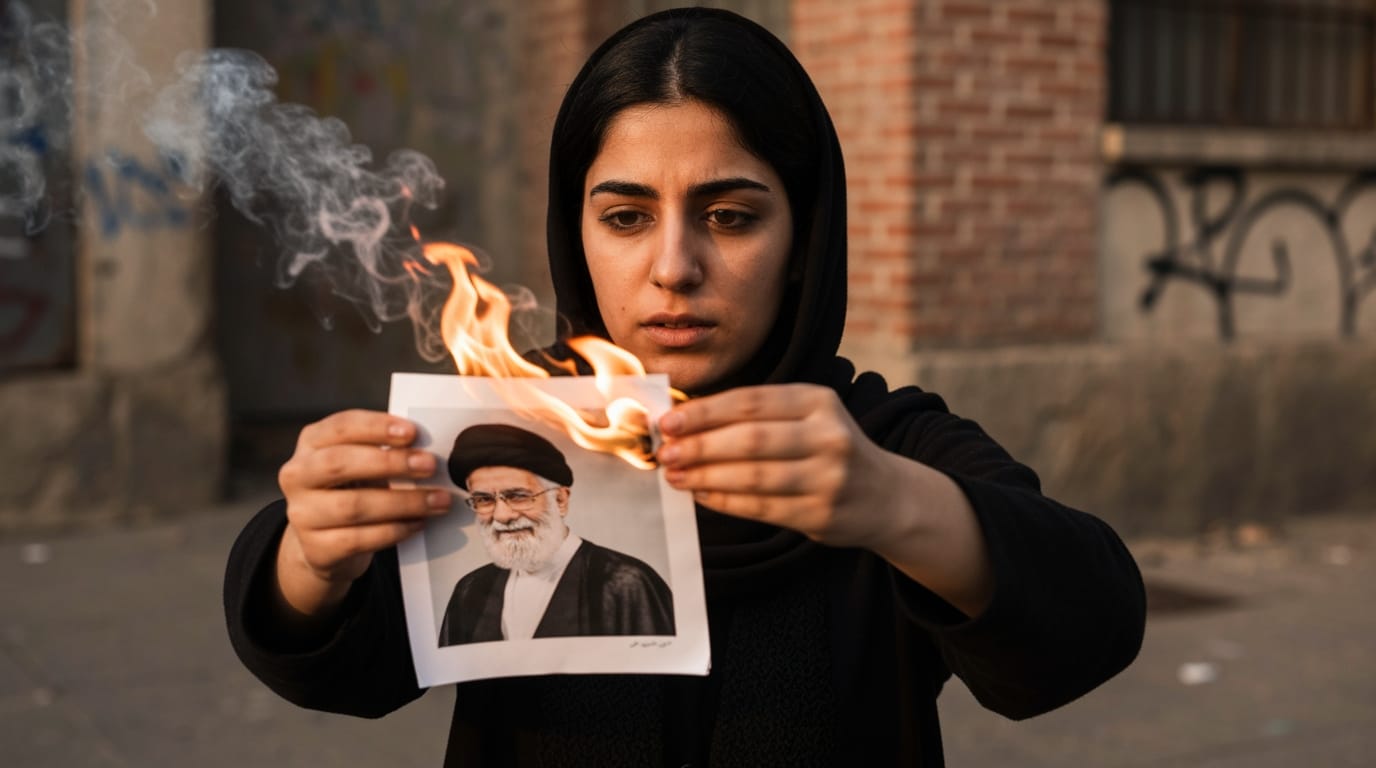
A powerful image of a woman using a burning portrait of Iran's Supreme Leader Ayatollah Ali Khamenei to light a cigarette circulated widely across social media platforms, quickly becoming a potent symbol of defiance against the Iranian regime. Initial claims often suggested the act occurred within Iran, amid widespread anti-government protests. However, diligent fact-checking has revealed that the video was filmed outside the Islamic Republic, specifically in Richmond Hill, a town near Toronto, Canada, raising important questions about the spread of information and the nature of global dissent in the digital age.
The viral video, first posted on X on January 9, 2026, depicts a woman, who identifies herself as an Iranian refugee, deliberately setting fire to Khamenei's image. She then uses the flame to light a cigarette, making a defiant gesture that resonated with many observers. This act, fraught with symbolic weight, gained rapid traction online, fueling narratives of courageous resistance from within Iran's borders. The woman, who posts under the handle Morticia Addams and is 25, later confirmed her location and stated she never claimed to be in Iran, having fled the country in March 2025.
The Spark that Ignited a Symbol
The image of a woman burning the Supreme Leader's photo and lighting a cigarette from it quickly became iconic. This particular act carries multiple layers of defiance against the strictures of the Iranian government. In Iran, burning a photograph of the Supreme Leader is considered a grave crime, potentially punishable by death. Furthermore, the act of a woman smoking is often discouraged or limited in many parts of the country, and her visible lack of a hijab in the video also constitutes a transgression against Iran's compulsory dress laws.
The combination of these actions created a visually striking and emotionally charged statement. It symbolized a rejection of political authority, religious fundamentalism, and rigid social restrictions. Many interpreted it as a direct challenge to the clerical system that has governed Iran since the 1979 Islamic Revolution. The gesture resonated deeply with those sympathetic to the Iranian protest movement, both inside and outside the country, becoming a shorthand for resistance and the desire for freedom. Its impact was such that Iranians abroad began staging similar symbolic recreations in solidarity during demonstrations in various countries.
Fact-Checking the Narrative: Unmasking the Location
The widespread assumption that the protest occurred within Iran was quickly debunked by fact-checkers. Through meticulous analysis, including geolocation techniques, investigators determined that the video was filmed in a parking lot in Richmond Hill, Canada. Background elements visible in the footage corresponded to Google Street View imagery of the Canadian town. The woman in the video, who posts on X in Persian and uses the pre-1979 'Lion and Sun' Iranian flag in her display name, further corroborated the findings in an interview with a Portuguese news agency.
This incident highlights the critical role of independent fact-checking in an era of rapid digital dissemination. While the act of protest itself remains powerful and authentic to the protester's intentions, the misattribution of its location could significantly alter public perception and the narrative surrounding the ongoing unrest in Iran. The immediate assumption that it was filmed within Iran amplified its perceived immediacy and risk, a notion that, while understandable given the context of Iranian protests, was factually incorrect.
The Broader Context of Iranian Protests and Disinformation
The video emerged amidst a backdrop of escalating anti-government protests across Iran. These demonstrations, initially fueled by economic grievances such as rising food prices and inflation, have evolved into a broader challenge against the clerical establishment. Reports indicate that Iranian authorities have responded with crackdowns, internet blackouts, and restrictions on communication, making it difficult to verify events on the ground. Amnesty International has criticized these measures, suggesting they aim to conceal human rights violations during the suppression of dissent.
In this charged environment, the spread of both authentic and misattributed content becomes a significant concern. The incident of the woman burning Khamenei's photo is not isolated; other videos and images have also been falsely claimed to be from Iran. This phenomenon is not exclusive to anti-regime content; even the office of Supreme Leader Khamenei has been accused of using old photographs from 2020 to depict recent pro-regime rallies, suggesting a broader struggle for narrative control through visual media.
The ease with which images and videos can be shared globally, often stripped of their original context, underscores the challenges faced by both media organizations and the public in discerning truth from fiction. While the symbolic power of the woman's protest remains undiminished, the accurate reporting of its context is crucial for a nuanced understanding of the multifaceted struggle for human rights and political change in Iran.
Conclusion: Navigating Truth in a Digital Landscape
The viral video of an Iranian woman burning a portrait of Ayatollah Ali Khamenei to light a cigarette captivated audiences worldwide, serving as a powerful emblem of dissent. While initially believed by many to have occurred within Iran, fact-checking efforts conclusively placed the event in Canada, underscoring the complexities of information dissemination in the digital age. This case exemplifies how symbolic acts of protest, even when performed outside a country's borders, can deeply resonate with and galvanize movements within that nation and among its diaspora.
However, the rapid spread of misinformation, whether intentional or accidental, highlights a persistent challenge for journalism and public discourse. The incident serves as a stark reminder of the imperative for rigorous verification and critical media literacy. In an era where information travels instantaneously across borders and narratives are easily manipulated, the distinction between a protest conducted under the direct threat of state repression and one undertaken in a country offering refuge, while both legitimate acts of defiance, remains a crucial detail for accurate reporting and public understanding.


