World Cup 2026 Marred by U.S. Travel Restrictions, Dampening Historic Moments for Cape Verde and Iran
The grandeur of the FIFA World Cup 2026, unfolding across North America, has been met with significant off-field challenges, particularly for nations navigating the stringent U.S. visa system. Amidst thrilling matches and historic debuts, the tournament has been shadowed by the personal anguish of Cape Verdean hero Vozinha, whose mother was barred from witnessing his stellar performance, and the operational disarray faced by the Iranian national team due to widespread visa denials for its essential support staff and restrictive travel protocols. These incidents underscore a growing tension between the celebratory spirit of global sports and the complex geopolitical realities of hosting an international event.
A Mother's Absence: Vozinha's Bittersweet Triumph
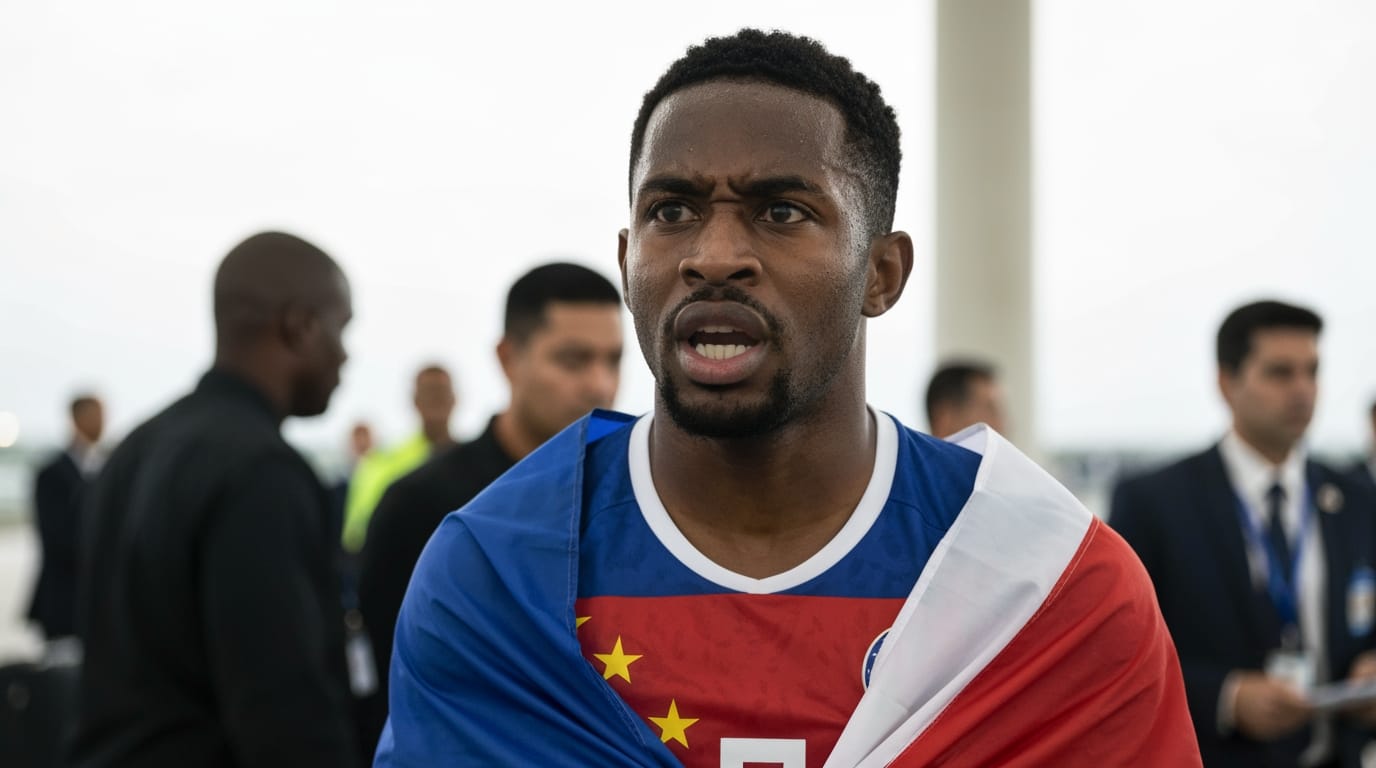
The 2026 World Cup has already delivered its share of memorable moments, none more poignant perhaps than Cape Verde's goalless draw against European giants Spain. At the heart of this unexpected upset was 40-year-old goalkeeper Josimar Jose Evora Dias, affectionately known as Vozinha. His seven crucial saves earned him man-of-the-match honors, transforming him into an instant national hero and social media sensation. Yet, as the final whistle blew and his teammates mobbed him in celebration at Atlanta's Mercedes-Benz Stadium, Vozinha was overcome with emotion, tears streaming down his face.
His post-match comments revealed the bittersweet nature of his triumph. "I cried after the game because I grew up with my grandparents when I was a kid, and they could not be there," Vozinha told reporters, referencing his deceased grandparents. "My mum could not be here either for a visa issue, and the money we had to pay for it. We did not manage to do this in time". The personal sacrifice and the inability of his closest family members to share in his career-defining moment cast a somber note over what should have been an unadulterated celebration for the veteran goalkeeper, who made his World Cup debut as the second-oldest player in tournament history. His story has resonated widely, bringing a human face to the broader concerns surrounding entry barriers for participants and fans from certain countries at the North American-hosted event.
Iran's Diplomatic Minefield: Visas Denied Amidst Geopolitical Tensions
While Cape Verde grappled with a deeply personal visa issue, the Iranian national team has faced a systemic and politically charged battle to ensure its full delegation could participate in the tournament. Even before their opening fixture against New Zealand in Los Angeles, the team's preparations were severely impacted by the U.S. government's denial of visas to a significant portion of their non-playing staff.
Reports indicated that "a large portion of the managerial and executive staff, technical advisers, and others who are an integral part of any national football team" were denied entry. Among those affected was Mehdi Taj, the president of the Iranian soccer federation, whose past association with Iran's Islamic Revolutionary Guard Corps (IRGC), designated as a terrorist organization by the U.S., reportedly played a role in the denial. The Iranian embassy publicly accused the U.S. of "politically-biased interference in sport" and "deliberate and discriminatory treatment" against its national team. In response, a U.S. administration official stated that while visas for players and necessary support staff had been issued, the U.S. would "not allow the Iranian team to abuse this system to sneak terrorists into the United States under false pretenses." This exchange highlighted the deep-seated diplomatic tensions between the two nations, which have lacked formal diplomatic relations since 1980. Even two of Iran's media staff members were unable to secure U.S. visas, threatening to slow down official updates from the team during the tournament.
Operational Hurdles and Team Frustration
Beyond the visa denials for key personnel, the Iranian team's operational logistics have been severely hampered. Initially, Iran planned to establish its base camp in Tucson, Arizona. However, escalating visa issues and security concerns forced a last-minute relocation to Tijuana, Mexico. This shift meant that the Iranian squad could not process visa documents at home, instead relying on the American Embassy in Ankara, Turkey, and Mexican visas secured through diplomatic efforts between the Mexican Embassy and Iran's ambassador to Turkey.
The most significant operational hurdle, and a major point of contention for the Iranian squad, is the strict travel regimen imposed by the U.S. authorities. The team is permitted to enter the U.S. only on matchdays and is required to return to its Tijuana base immediately after each game. This unprecedented restriction prevents standard recovery protocols, pre-match obligations, and the vital continuity typically afforded to competing teams. Following their 2-2 draw with New Zealand, coach Amir Ghalenoei voiced his profound frustration. He described his side as "perhaps the most oppressed team at the World Cup," claiming they were denied recovery time and ordered out of the U.S. immediately. Captain Mehdi Taremi echoed these sentiments, stating, "Everything is like a disaster, actually, for us... I think FIFA have to help us more than this." These logistical constraints, forced upon the team due to ongoing geopolitical conflict and visa complexities, undoubtedly impact their physical and mental preparation, potentially affecting their performance on the world stage.
Broader Implications and FIFA's Stance
These incidents involving Cape Verde and Iran are not isolated; they spotlight wider concerns about the feasibility and fairness of hosting global sporting events in nations with complex or restrictive visa policies. The expansion of the World Cup to 48 teams naturally increases the diversity of participating nations, many of whom may come from countries with challenging diplomatic relationships with host nations. FIFA, as the governing body of international football, found itself in a difficult position.
Despite Iran's requests to relocate its group stage matches to co-hosts Mexico or Canada, FIFA stood firm on its original schedule, rejecting these appeals. This decision suggests that while FIFA aims for global inclusivity, the practicalities of host nation sovereignty and security concerns can take precedence, potentially at the expense of equitable treatment for all participating teams and their supporters. The situations faced by Cape Verde and Iran highlight how political realities, even for seemingly apolitical events like a football World Cup, can introduce significant barriers and emotional distress, affecting athletes and their communities.
Conclusion
The 2026 FIFA World Cup, designed to be a festival of global unity and sporting prowess, has been complicated by the harsh realities of international relations and national visa policies. For Cape Verde's Vozinha, an individual's moment of heroic achievement was tinged with the profound sadness of family absence, a direct consequence of the U.S. entry system. For the Iranian national team, the challenges have been more pervasive, affecting the very integrity of their World Cup campaign, from visa denials for critical staff to restrictive travel mandates that disrupt athletic preparation and recovery. These contrasting narratives, one personal and heartbreaking, the other systemic and politically charged, both underscore a critical challenge: how can global sporting events truly embody their ideals of inclusion and fair play when geopolitical tensions and stringent immigration policies erect significant barriers? As the tournament progresses, the experiences of nations like Cape Verde and Iran will serve as a stark reminder that the game extends far beyond the pitch, often into the complex and emotionally charged arena of international politics and human connection.