Zelenskyy Addresses EU Leaders Amidst Shifting Geopolitical Landscape
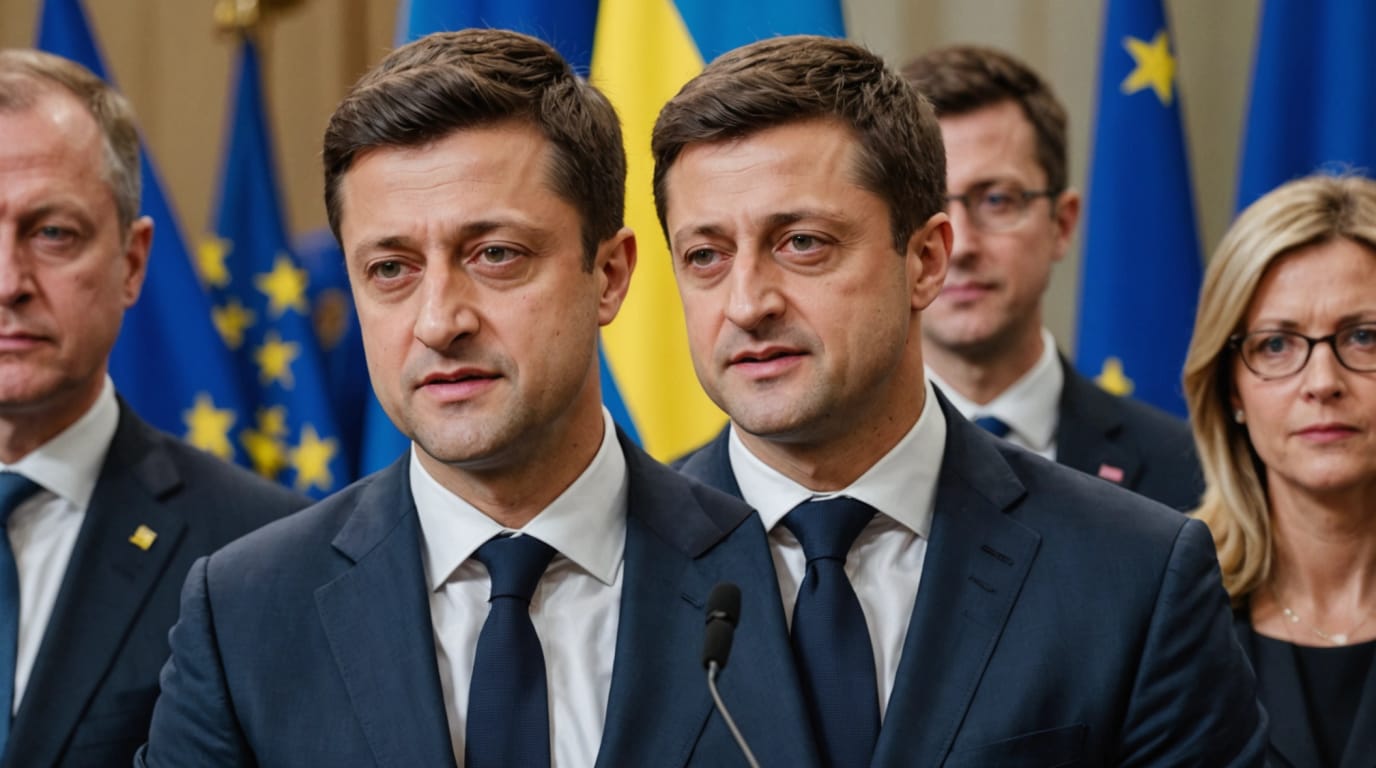
BRUSSELS – Ukrainian President Volodymyr Zelenskyy addressed European Union leaders in Brussels on Thursday, urging continued support for his country as it faces ongoing challenges from Russian aggression and a shifting geopolitical landscape marked by wavering U.S. commitment. The address came during a critical European Council meeting focused on bolstering EU defense capabilities and reaffirming solidarity with Ukraine.
A Plea for Unity and Continued Assistance
Zelenskyy's visit to Brussels underscores the importance of European support for Ukraine, particularly in light of recent developments in the United States. The Ukrainian President expressed gratitude to European leaders for their unwavering assistance since the beginning of the war, emphasizing that Ukraine is not alone in its fight. He acknowledged the "strong signal" sent to the Ukrainian people, highlighting the tangible impact of European solidarity.
However, Zelenskyy also stressed the urgent need for continued and increased support. He specifically called for the acceleration of financial assistance to bolster Ukraine's military and defense capabilities, as well as the implementation of new sanctions against Russia. He also urged the EU to move forward with plans to admit Ukraine into the bloc by 2030.
EU's Response: Defense Boost and Reaffirmation of Support
European leaders responded to Zelenskyy's plea with a renewed commitment to supporting Ukraine and strengthening the EU's own defense capabilities. European Council President António Costa assured Zelenskyy that the EU would stand by Ukraine when peace negotiations commence, "at the moment you deem appropriate."
The EU has pledged to continue providing enhanced political, financial, economic, humanitarian, military, and diplomatic support to Ukraine and its people. The EU has already made available billions in financial, humanitarian, and military assistance to Ukraine. The EU has also launched a support mechanism for 2024-2027 that will provide Ukraine with up to €50 billion in stable and predictable financial support.
Concerns Over U.S. Commitment
Zelenskyy's visit to Brussels occurred against the backdrop of growing concerns about the United States' commitment to Ukraine. The recent suspension of U.S. military aid and intelligence-sharing with Ukraine by the Trump administration has raised fears among EU leaders that the U.S. is changing course and could leave Europe vulnerable to Russian aggression.
Several EU leaders have expressed concern over the potential consequences of a diminished U.S. role in supporting Ukraine. French President Emmanuel Macron stated that Russia is no longer just threatening Ukraine but is also potentially now a serious threat to Europe.
Internal Divisions Within the EU
Despite the overall show of support for Ukraine, internal divisions within the EU remain a challenge. Hungary's Prime Minister Viktor Orbán has consistently opposed EU sanctions against Russia and has been critical of the EU's support for Ukraine.
During the recent EU summit, Orbán vetoed the leaders' statement on Ukraine, meaning that the final agreement to arm Ukraine was endorsed by only 26 of the 27 member states. This highlights the ongoing challenges in achieving complete unity within the EU on issues related to Ukraine and Russia.
Economic Implications for Europe
The war in Ukraine has had significant economic consequences for Europe. Disruptions to trade, rising energy prices, and increased inflation have all weighed on the European economy. The European Investment Bank estimates that real economic growth in the EU could fall well below 3% in 2025 due to the war.
The conflict and resulting sanctions have disrupted exports from the region for commodities like metals, food, oil, and gas, pushing up inflation to levels not seen in decades. The slowdown in growth is particularly pronounced in countries in close proximity to Ukraine, like Poland and Hungary, which are also hosting large numbers of Ukrainian refugees.
The Path to EU Membership
Despite the ongoing challenges, Ukraine remains committed to its path toward EU membership. The EU aims to fast-track Ukraine's membership bid, with the goal of opening two negotiating "clusters" by mid-2025.
Becoming a member of the EU would be a major achievement for Kyiv, which also aspires to join NATO. The EU has already made significant progress in integrating Ukraine into its economy and political system, and further steps are planned to support Ukraine's accession process.
Conclusion: A Critical Juncture for Ukraine and Europe
Zelenskyy's address to EU leaders in Brussels comes at a critical juncture for both Ukraine and Europe. As Ukraine continues to fight for its sovereignty and territorial integrity, the country relies heavily on the continued support of its European partners. At the same time, the EU faces the challenge of strengthening its own defense capabilities and maintaining unity in the face of internal divisions and a shifting geopolitical landscape. The coming months will be decisive in determining the future of Ukraine and the role of Europe in ensuring peace and stability on the continent.