Zelenskyy in Cyprus: Ukraine's European Path Takes Center Stage as Island Nation Begins EU Presidency
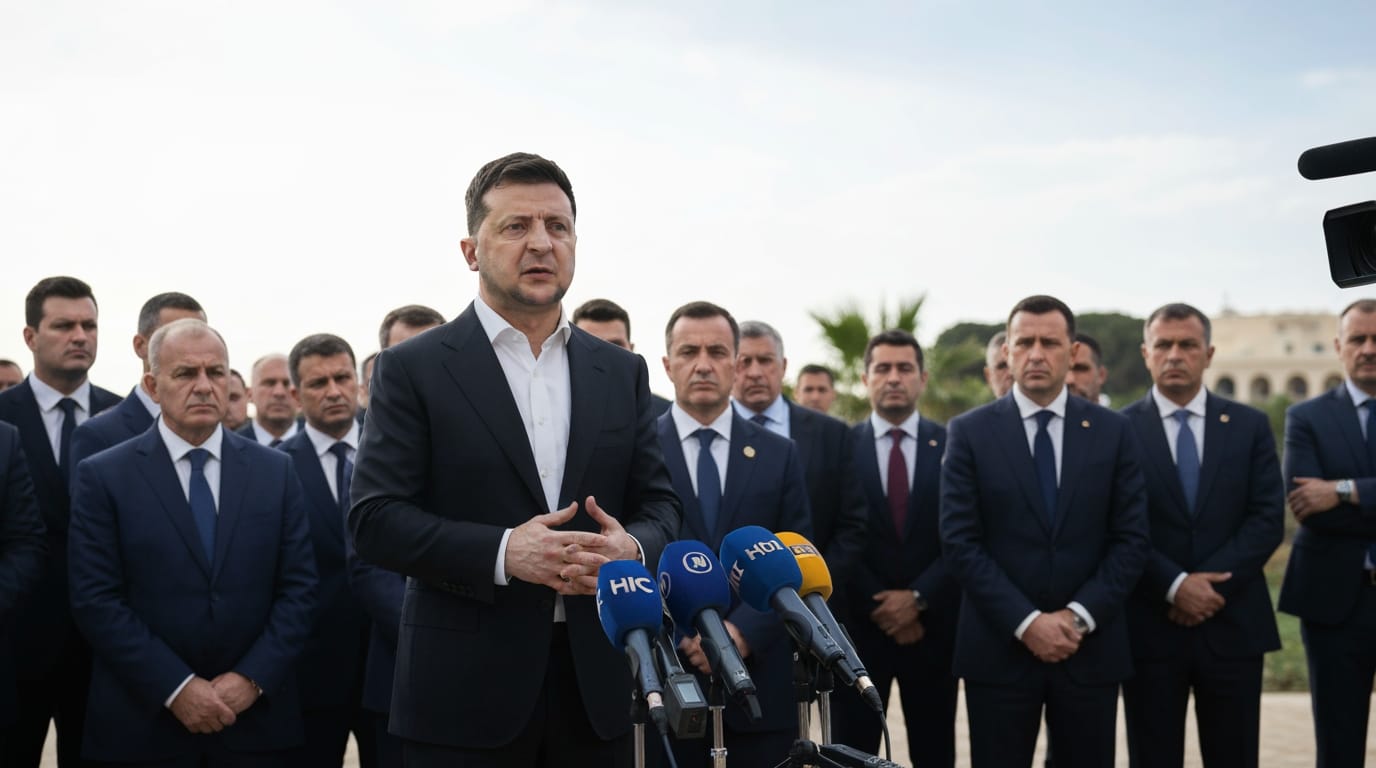
Nicosia, Cyprus — Ukrainian President Volodymyr Zelenskyy arrived in Cyprus today for a high-stakes visit, underscoring the critical importance of European unity and support as the island nation formally commenced its six-month rotating presidency of the Council of the European Union. Zelenskyy's presence at the inauguration ceremony, alongside top EU officials, signals a pivotal moment for Ukraine's aspirations for deeper European integration, even as the conflict with Russia enters its fifth year. The visit highlights Cyprus's commitment to prioritizing Ukraine's cause, drawing parallels to its own historical experiences with invasion and occupation.
A Strategic Visit to a New EU Leader
President Zelenskyy's itinerary in Nicosia included a series of crucial meetings designed to strengthen bilateral ties and garner further support for Ukraine's defense and European trajectory. He held discussions with Cypriot President Nikos Christodoulides, Archbishop Georgios III of Cyprus, and participated in a joint meeting with European Council President António Costa and European Commission President Ursula von der Leyen. The Ukrainian leader's engagement at the official launch of Cyprus's EU Council Presidency on January 7, 2026, marked a strong political gesture of continued European backing for Kyiv. Sources from the Office of the President of Ukraine confirmed that the discussions would focus on Ukraine's interactions with European institutions and the EU's sustained assistance.
Cyprus Prioritizes Ukraine's European Future
Cyprus assumed the EU Council presidency from Denmark on January 1, 2026, with a clear declaration of its primary objectives. President Christodoulides has emphatically stated that support for Ukraine will be a "central priority" of the Cypriot presidency, a commitment echoed by Cypriot Foreign Minister Constantinos Kombos. This strong stance is rooted in Cyprus's own history, with President Christodoulides noting, "As a country that still lives with the consequences of illegal invasion and ongoing military occupation, we fully understand what is at stake." This shared experience is expected to drive Nicosia's efforts to advance Ukraine's cause within the EU.
The Cypriot presidency has outlined a broader agenda centered on achieving an "autonomous European Union," built upon five key pillars: security and defense, competitiveness, global openness, shared values, and a robust budget. Within this framework, Ukraine's war and its implications for European security will remain at the forefront. Cyprus aims to make progress on financial support for Kyiv, building on the European Union's provision of a €90 billion loan to Ukraine, and intends to promote reforms to enhance the European economy's competitiveness.
Advancing Ukraine's EU Accession Journey
A significant focus of President Zelenskyy's visit was to accelerate Ukraine's path toward full membership in the European Union. He expressed optimism that the Cypriot presidency would facilitate substantial steps forward, particularly regarding the opening of negotiation clusters for EU accession. Ukrainian officials view EU accession not merely as a political goal but as a crucial security guarantee for the nation.
Cypriot Foreign Minister Kombos previously indicated that his country would propose a "new approach" to accession talks with Ukraine during its presidency, signaling a proactive stance on the matter. Furthermore, Cyprus has shown interest in deepening defense cooperation with Ukraine, exploring areas such as unmanned systems and artificial intelligence, potentially offering practical support beyond political rhetoric.
Broader Geopolitical Implications
The confluence of Zelenskyy's visit and the start of Cyprus's EU presidency carries broader geopolitical significance. Cyprus, strategically located in the Eastern Mediterranean, seeks to enhance its role as a bridge between Europe and the Middle East. The presence of Middle Eastern leaders at the presidency launch ceremony underscored this ambition.
The emphasis on strengthening Europe's security architecture and defense readiness by the Cypriot presidency reflects a growing recognition within the EU of the need for greater strategic autonomy, particularly in light of ongoing international challenges. As the war in Ukraine persists, the EU's ability to maintain a united front and provide sustained, comprehensive support will be continuously tested. Cyprus's leadership during this critical period will be instrumental in shaping the bloc's response and solidifying its commitment to its eastern partner.
Conclusion
President Zelenskyy's timely visit to Nicosia as Cyprus embarks on its EU Council presidency has underscored the unwavering commitment of both nations to Ukraine's European future. With Cyprus pledging to make Ukraine a central priority, the next six months are poised to be critical for advancing accession talks and reinforcing European solidarity. The strategic alignment between Kyiv and Nicosia, driven by a shared understanding of sovereignty and territorial integrity, sets a determined course for Ukraine's journey toward full integration into the European Union.


