2.4 Million Afghan Girls Barred from Education, UNESCO Warns of Deepening Crisis
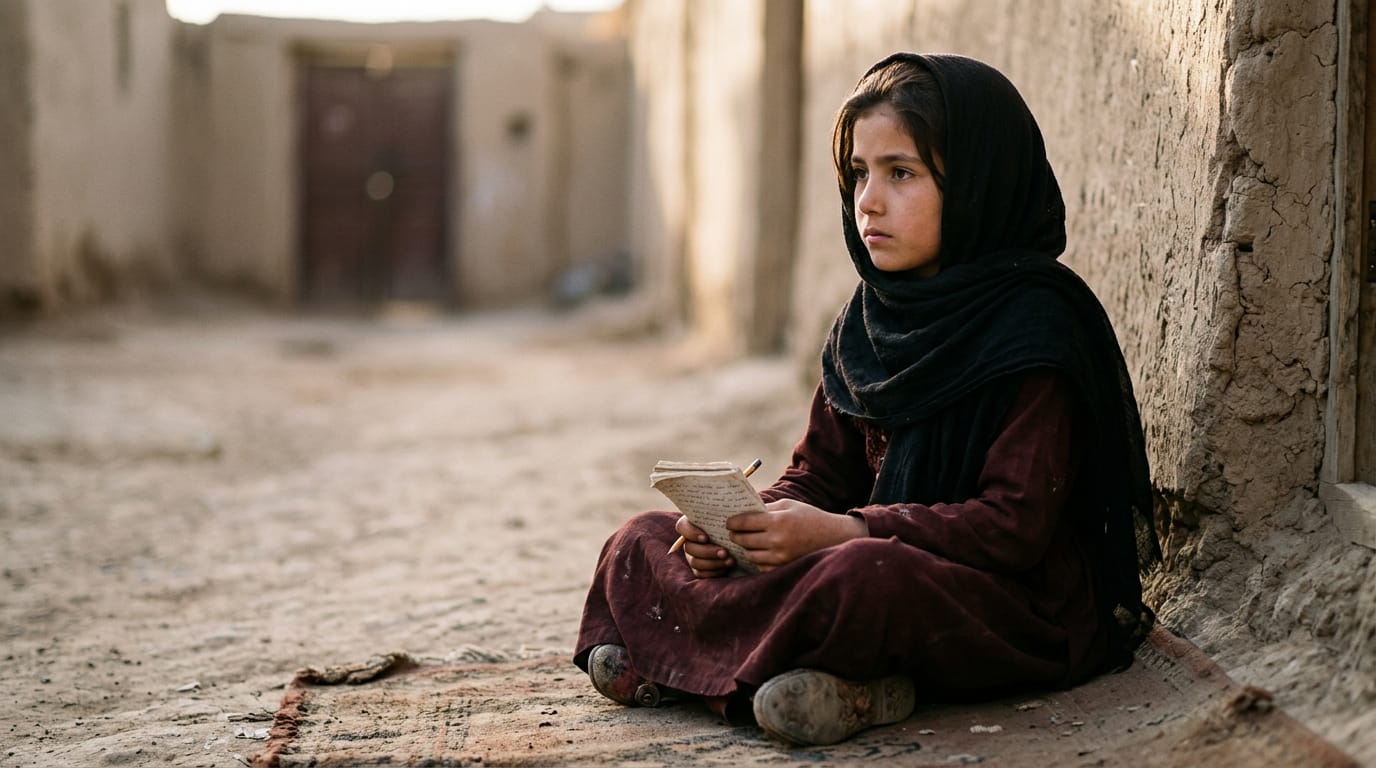
KABUL – A staggering 2.4 million girls in Afghanistan remain systematically excluded from secondary education, a figure that has escalated since the Taliban's return to power in 2021 and threatens to condemn the nation to a future of profound societal and economic hardship, the United Nations Educational, Scientific and Cultural Organization (UNESCO) reported Tuesday. Afghanistan stands as the only country globally where girls and women are formally prohibited from accessing secondary and higher education, a policy that has sparked international condemnation and reversed two decades of hard-won progress in female literacy and empowerment.
The educational blockade, enforced under the Taliban's interpretation of Islamic law, has not only robbed millions of girls of their fundamental right to learn but also cast a long shadow over Afghanistan's development prospects, exacerbating poverty and severely impacting public health. International bodies continue to press for the immediate and unconditional restoration of girls' and women's access to all levels of education, highlighting the catastrophic human cost of the ongoing restrictions.
The Broadening Educational Chasm
Since the Taliban regained control in August 2021, the landscape of education in Afghanistan has been dramatically altered for its female population. Initially, in September 2021, girls were banned from attending secondary schools, a restriction that was further extended to universities in December 2022. This abrupt cessation of formal learning pathways has resulted in an alarming increase in the number of girls out of school. UNESCO's latest assessment reveals that the number of girls deprived of secondary school has risen by 200,000 in the past year alone. If the current trajectory continues, nearly four million girls could be barred from education by 2030, signifying an entire generation lost to the classroom.
Prior to the Taliban's takeover, Afghanistan had made significant strides in female education. By 2021, nearly one million girls were enrolled in secondary education, a testament to two decades of concerted national and international efforts to expand access to learning for all. However, the current policies have systematically dismantled this progress, with UNESCO's program coordinator for education in emergencies, Hoda Jaberian, noting that "Five years is not a temporary interruption in a child's education. It is clearly almost an entire secondary school cycle."
A Troubled History and a Stalled Future
The struggle for girls' education in Afghanistan has a complex history, marked by periods of progress and severe setbacks. While King Amanullah's reign in the early 20th century saw initial pushes for modern education, including for women, conservative factions often resisted such advancements. The period between 2001 and 2021, following the initial overthrow of the Taliban, represented a significant era of expansion, with millions of girls gaining access to primary and secondary schooling, and women comprising a third of university students by 2021.
The current ban, however, echoes the Taliban's previous rule from 1996 to 2001, during which female students were completely deprived of educational opportunities, forcing some to resort to secret schools at great personal risk. The reversal of these gains is not merely an educational crisis but a profound undoing of societal development. The absence of girls from classrooms not only impacts their individual potential but also severely depletes the future workforce, particularly in critical sectors.
Catastrophic Human and Economic Repercussions
The exclusion of girls and women from education carries devastating consequences that ripple across Afghanistan's social fabric and economic stability. The United Nations has characterized the Taliban's policies as "gender apartheid," highlighting the systematic discrimination against women and girls.
Economically, the ban is projected to cause staggering losses. UNESCO estimates that the continued exclusion could lead to $9.6 billion in cumulative income losses by 2066 and force 600,000 Afghan women out of the workforce. UNICEF further warns that the ban has already resulted in a 0.5% drop in the country's gross domestic product, weakening the human capital base and jeopardizing future growth. Beyond the financial toll, the lack of education fuels a critical shortage of skilled professionals. Projections indicate that Afghanistan could lose up to 20,000 women teachers and 5,400 healthcare workers by 2030, leading to a deficit of over 11,000 qualified female teachers. This is particularly problematic in a country where cultural norms often dictate that male teachers cannot instruct girls beyond primary levels, and female healthcare providers are essential for women's access to medical care.
The social and human costs are equally alarming. The bans are projected to increase child marriage by 25%, childbearing among adolescent girls by 45%, and maternal mortality by at least 50%. The psychological and emotional impact on Afghan girls is immense, fostering despair and a sense of lost hope, tragically underscored by instances of suicide among young women grappling with the enforced limitations on their lives.
International Appeals and Sustained Support
In the face of these severe restrictions, the international community, led by organizations like UNESCO and UNICEF, continues its unwavering advocacy for the right to education for all Afghans. UNESCO has repeatedly called for the immediate and unconditional restoration of girls' and women's access to secondary and higher education, emphasizing that this right is "not negotiable."
Despite the formal ban, UNESCO has maintained its presence and support in Afghanistan since 1948, working directly with communities to ensure the continuity of learning. Through community-based literacy and skills development programs, UNESCO reaches tens of thousands of individuals, with women comprising 73% of beneficiaries in some initiatives. These programs, often conducted in informal settings with the knowledge of local authorities, provide crucial alternative learning pathways and vocational training in areas such as tailoring and agriculture, aiming to bolster economic empowerment and resilience. UNICEF also remains active, supporting primary education for millions of children and running community-based learning initiatives for hundreds of thousands, two-thirds of whom are girls.
The European Union and other international donors have partnered with UNESCO to fund initiatives aimed at strengthening education systems and expanding access to quality learning in crisis-affected regions, including Afghanistan. These efforts seek to mitigate the devastating effects of the ban and preserve some semblance of educational opportunity for a generation facing unprecedented challenges.
Conclusion
The continued exclusion of 2.4 million Afghan girls from secondary education represents a profound human rights violation and a tragic squandering of human potential. The Taliban's policies not only erase two decades of progress but also threaten to entrench poverty, destabilize public health, and inflict lasting psychological damage on a generation of women. While international bodies like UNESCO and UNICEF persist in their efforts to provide alternative learning opportunities and advocate for the restoration of educational rights, the urgent need for a reversal of the ban remains paramount. The future prosperity and stability of Afghanistan are inextricably linked to the education and empowerment of all its citizens, particularly its girls and women, whose potential remains locked behind classroom doors.


