A Century of Wonder: Sir David Attenborough Marks 100 Years as Earth's Enduring Voice
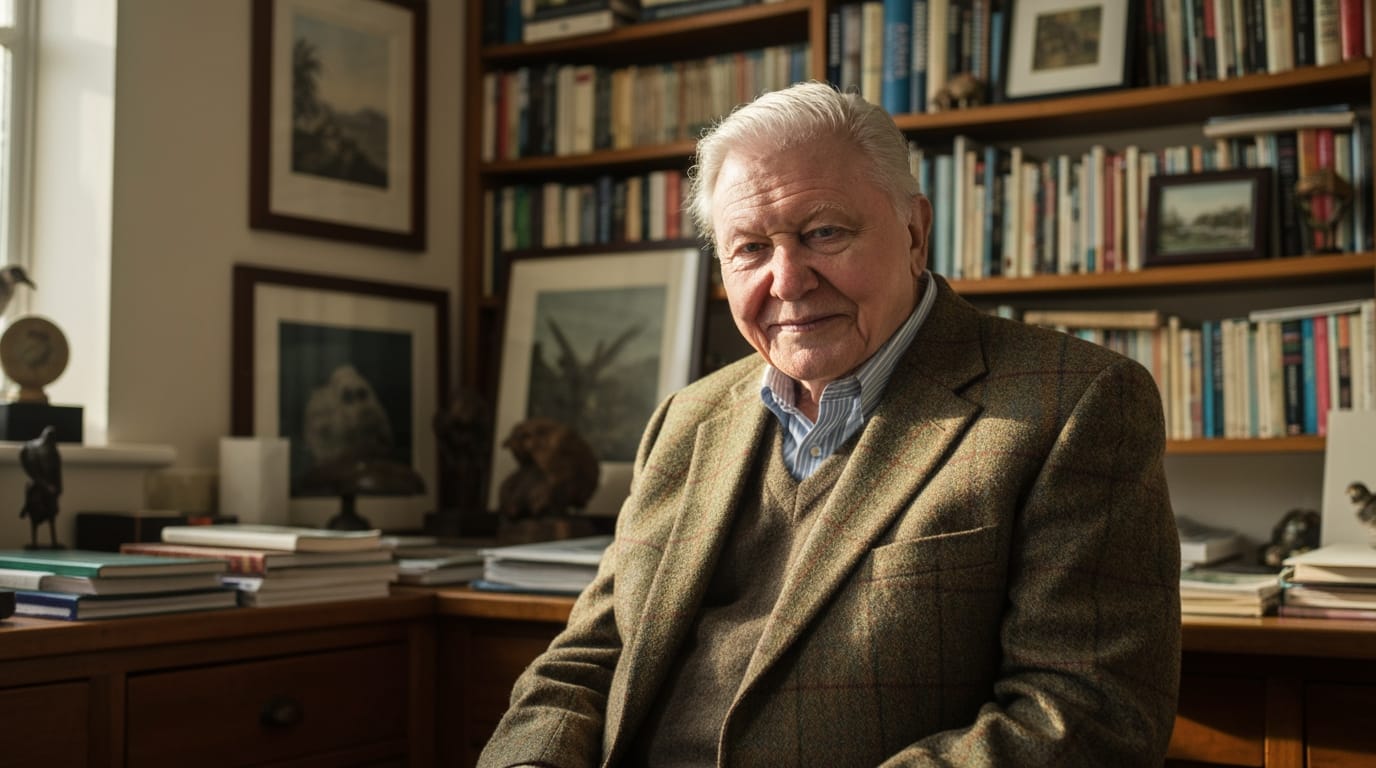
Sir David Attenborough, the beloved naturalist and broadcaster whose distinctive voice has guided generations through the planet's most spectacular ecosystems, celebrates his 100th birthday on May 8, 2026. This extraordinary milestone marks a lifetime dedicated to unveiling the wonders of the natural world and, increasingly, sounding an urgent call for its protection. His journey from an eager young explorer to a global icon has profoundly shaped public understanding of biodiversity and climate change, leaving an indelible mark on science, television, and conservation.
From Early Fascination to BBC Pioneer
Born David Frederick Attenborough in London on May 8, 1926, his early life was steeped in an environment that fostered his burgeoning interest in the natural world. He grew up in Leicester, England, where his father served as the principal of the University College, Leicester, providing young David with direct access to academic surroundings. From a tender age, Attenborough was captivated by nature, meticulously collecting fossils and natural specimens. His academic pursuits led him to Clare College, Cambridge, where he studied geology and zoology, earning an accelerated master's degree in natural sciences in 1947.
Attenborough's illustrious career with the British Broadcasting Corporation (BBC) began in 1952, following a brief stint in educational publishing. Initially deemed unsuitable for on-screen work due to his teeth, he quickly proved his mettle as a trainee producer. His early breakthrough came with the groundbreaking series Zoo Quest, which premiered in 1954. Co-created with Jack Lester of the London Zoo, this series revolutionized wildlife filmmaking by presenting live animals filmed in their natural habitats, introducing television audiences to previously unseen parts of the world, such as Sierra Leone and Borneo. Zoo Quest's immense popularity laid the foundation for modern nature documentaries and led to the establishment of the BBC's renowned Natural History Unit in Bristol in 1957.
Attenborough's influence extended beyond natural history programming. He ascended through the BBC's ranks, serving as Controller of the newly launched BBC Two in 1965 and later as Director of Programmes for BBC Television from 1969 to 1972. During his tenure, he played a pivotal role in shaping British broadcasting, notably overseeing the first color television broadcasts in Europe. Despite his significant administrative role, the lure of fieldwork and direct storytelling proved too strong, prompting his resignation from a full-time position in 1973 to return to filmmaking.
Crafting the "Life" Series and Redefining Natural History Television
Attenborough's return to hands-on program creation ushered in an era of unparalleled natural history documentaries, beginning with his ambitious "Life" series. The seminal Life on Earth, broadcast in 1979, was the culmination of three years of intensive filming across 40 countries, documenting over 600 species. The 13-part series captivated an estimated 500 million viewers worldwide, a truly global phenomenon that transformed public perception of the natural world. Memorable moments, such as his intimate encounter with a family of mountain gorillas in Rwanda, have been consistently voted among the greatest television moments of all time.
This success paved the way for a remarkable sequence of award-winning documentaries that would define the genre. Series like The Living Planet (1984), The Blue Planet (2001), and Planet Earth (2006) showcased advancements in filmmaking technology, from macro photography to high-definition filming, bringing viewers closer to wildlife than ever before. Attenborough's calm, inquisitive, and authoritative narration became synonymous with the natural world itself, making complex scientific concepts accessible and fostering a deep sense of wonder in audiences across the globe. His dedication to showing, rather than merely telling, created an immersive experience that connected millions emotionally to the planet's diverse ecosystems.
From Wonder to Warning: A Champion for Conservation
While Attenborough's early work largely celebrated the beauty and richness of life on Earth, operating with an implicit confidence in nature's resilience, his perspective and the tone of his documentaries evolved significantly as scientific evidence of environmental degradation mounted. Over recent decades, his narratives have increasingly incorporated a powerful and urgent message about the perils facing the planet, addressing critical issues such as climate change, biodiversity loss, plastic pollution, and deforestation.
His 2000 series State of the Planet directly confronted the environmental crisis, a theme he revisited with The Truth about Climate Change in 2006. The 2020 documentary David Attenborough: A Life on Our Planet served as his personal "witness statement," reflecting on the devastating changes he had observed during his lifetime and offering a vision for a sustainable future. Attenborough has leveraged his global platform to advocate for environmental action on the international stage, addressing the United Nations and world leaders at climate summits like COP26 in Glasgow. His ability to communicate complex scientific realities in an understandable and compelling manner has been crucial in mobilizing public and political attention towards environmental protection. In recognition of his profound contributions, the United Nations Environment Programme awarded him the Champion of the Earth Lifetime Achievement Award in 2022.
His impact is also honored through the natural world itself, with over 20 species and genera, both living and extinct, named after him. Furthermore, the research vessel RRS Sir David Attenborough, operated by the British Antarctic Survey, carries his name, embodying his legacy of discovery and documentation.
An Enduring Legacy and Continuing Influence
As Sir David Attenborough celebrates his centenary, his influence shows no signs of waning. Even at 100, he remains an active and passionate voice in both broadcasting and conservation. In 2025, he released the feature-length documentary Ocean with David Attenborough, focusing on marine ecosystems and solutions for their safeguarding. Early in 2026, he presented Wild London, a poignant return to his home city, exploring the unexpected wildlife thriving in urban environments. He also recently explored animal communication through sound in 2024's Secret World Of Sound.
His 100th birthday is being marked by extensive celebrations globally. The BBC is spearheading a week of dedicated programming, culminating in a live event at London's Royal Albert Hall on May 8, titled "David Attenborough's 100 Years on Planet Earth." This special event will feature dramatic wildlife stories, live music from his famous programs, and reflections from public figures and leading conservationists. The Australian Museum is also celebrating the milestone by offering free entry to an exhibition, acknowledging his role as their Lifetime Patron and his decades of support.
Sir David Attenborough’s remarkable longevity, which he humbly attributes to "sheer darn luck," has allowed him to witness and document nearly a century of profound change on Earth. His work has continuously bridged the gap between scientific knowledge and public awareness, transforming how millions perceive and interact with the natural world. He has not only showcased Earth's breathtaking beauty but has also instilled a sense of collective responsibility for its future. His enduring legacy lies in the emotional connection he has forged between humanity and nature, inspiring countless individuals to become stewards of the planet he has so lovingly explored and championed.