A New Dawn? Turkey and PKK Embark on Fledgling Path Toward Lasting Peace
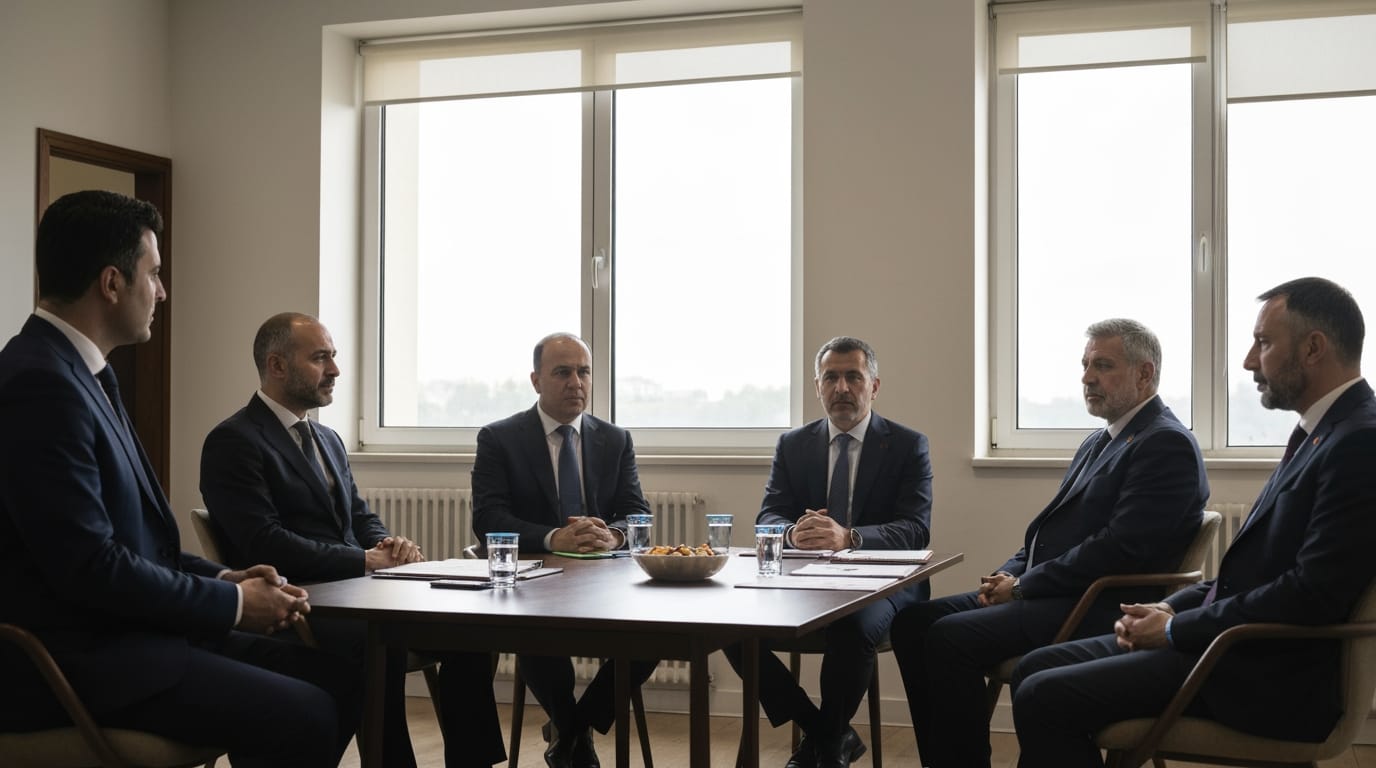
After decades of conflict that have claimed tens of thousands of lives and scarred a nation, a glimmer of hope has emerged in the protracted struggle between Turkey and the Kurdistan Workers' Party (PKK). Following a series of unprecedented developments in late 2024 and early 2025, including a direct call from imprisoned PKK leader Abdullah Öcalan, the militant group announced its dissolution in May 2025, signaling a potential paradigm shift towards a political resolution. While the path to peace remains fraught with historical mistrust and complex demands, this latest initiative represents the most significant movement toward ending one of the world's longest-running insurgencies, prompting cautious optimism about the prospect of a future free from armed conflict.
The Long Shadow of Conflict: A Four-Decade Insurgency
The modern Kurdish-Turkish conflict, primarily between the Turkish state and the Kurdistan Workers' Party (PKK), dates back to 1984. Founded by Abdullah Öcalan in 1978 with Marxist-Leninist roots, the PKK launched an armed resistance aiming initially for an independent Kurdish state, later shifting its primary demand to greater autonomy and cultural rights for Kurds within Turkey. The ensuing insurgency plunged Turkey's predominantly Kurdish southeastern regions into a state of near civil war, characterized by intense clashes, human rights abuses from both sides, and widespread displacement.
The human cost has been devastating. Over 40,000 people have died since the conflict began, a grim tally that includes Turkish security forces, PKK militants, and a significant number of civilians. Cities and towns in the southeast have endured destruction, and countless individuals have been uprooted from their homes. Turkey, the United States, and the European Union have long designated the PKK as a terrorist organization, a classification that has profoundly shaped international perceptions and domestic policy.
Cycles of Hope and Heartbreak: The 2013-2015 Peace Process
Efforts to resolve the conflict peacefully have surfaced periodically, often spurred by periods of intense violence or shifting political landscapes. One of the most significant attempts was the "Solution Process" initiated by then-Prime Minister Recep Tayyip Erdoğan in 2013. This period saw direct negotiations between Turkish intelligence services and Öcalan, resulting in a unilateral ceasefire declared by the PKK in March 2013 and a subsequent withdrawal of its fighters from Turkey into northern Iraq.
However, this fragile truce ultimately collapsed in July 2015, plunging the region back into renewed hostilities. The reasons for its failure are multi-faceted and widely debated. Factors cited include the escalating Syrian civil war next door, which intensified cross-border dynamics and Ankara's fears of growing Syrian Kurdish autonomy, particularly regarding the People's Protection Units (YPG), a Syrian Kurdish group with ties to the PKK. Domestic political considerations also played a crucial role; the success of the pro-Kurdish Peoples' Democratic Party (HDP) in the June 2015 elections, which denied Erdoğan's AK Party an absolute majority, reportedly fueled a shift toward a more nationalist stance by the Turkish government. Furthermore, a lack of institutionalization and a clear legal framework for the peace process, coupled with deep-seated mistrust and mutual accusations of opportunism, ultimately undermined the initiative. The period following the collapse was marked by a brutal escalation, with urban clashes erupting in Kurdish-majority cities and increased Turkish military operations in both domestic and cross-border territories.
A New Chapter Unfolds: The 2025 Dissolution and Its Aftermath
After years of heightened military activity, a fresh peace initiative began to take shape in late 2024. This unexpected turn was notably triggered by Devlet Bahçeli, leader of the far-right Nationalist Movement Party (MHP) and a key government coalition partner, who in October 2024 publicly called for Öcalan to urge the PKK to lay down its arms.
This surprising overture paved the way for Öcalan, still imprisoned, to issue a groundbreaking statement in February 2025. In his message, delivered via a delegation from the pro-Kurdish Peoples' Equality and Democracy Party (DEM Party), Öcalan urged the PKK to disarm and dissolve, embracing democratic political means. The PKK responded swiftly. On March 1, 2025, the group declared a unilateral ceasefire, pledging to refrain from armed actions. This was followed by an even more significant announcement on May 12, 2025: after its 12th Congress held in the Qandil mountains of Iraqi Kurdistan, the PKK formally declared its dissolution, committing to end its armed struggle and cease all activities under the PKK name. A symbolic weapons-burning ceremony in northern Iraq marked this historic step.
The group's statement indicated that the struggle had brought the Kurdish issue to a point of resolution through democratic politics, and that the implementation of the dissolution process would be managed under Öcalan's guidance. This monumental decision has shifted the focus toward establishing a legislative framework for the disarmament of PKK members, determining their legal status, and facilitating their reintegration into civilian and political life.
Hurdles on the Horizon: Demands, Distrust, and Regional Complexities
Despite the optimism surrounding the PKK's dissolution, the road to a comprehensive and sustainable peace remains challenging. A critical point of contention revolves around the demands of Kurdish political actors. Öcalan, supported by the DEM Party, has reiterated the need for a legal foundation that addresses "mutual sensitivities" and guarantees democratic rights and protections for the Kurdish people in Turkey. These demands include ensuring cultural autonomy, language rights, political representation, and pathways for the safe reintegration of former PKK fighters, potentially involving amnesty for lower-ranking militants and relocation options for senior leadership.
The Turkish government, while acknowledging the PKK's dissolution and emphasizing the need for verified disarmament, has not yet publicly committed to concrete steps regarding Öcalan's release or a general amnesty for fighters. This lack of a clear roadmap fuels skepticism among Kurdish communities and opposition groups, who remain wary given the failures of past negotiations and continued political repression.
Complicating matters further are regional dynamics, particularly the unresolved questions surrounding the PKK's ties to Kurdish groups in Syria, such as the YPG and the broader Syrian Democratic Forces (SDF). Turkey has consistently viewed the YPG as an extension of the PKK, launching military operations against them. The disbandment of the PKK raises questions about how this will impact these Syrian Kurdish factions and whether Turkey's security concerns in the region can be reconciled with their aspirations for self-governance. The potential for PKK-linked splinter groups to operate in northern Iraq or Syria also remains a concern.
Forging a Future: Implications and the Path Ahead
A genuine peace with the Kurds holds transformative potential for Turkey. It could significantly improve the country's international standing and human rights record, potentially reviving its stalled European Union accession bid and bolstering its soft power and credibility as a stable, pluralistic democracy. Domestically, resolving the conflict could free up vast resources and consolidate political stability, potentially offering President Erdoğan a strategic advantage after recent electoral setbacks. Beyond its borders, it could foster improved security in Iraqi Kurdistan and open avenues for diplomatic engagement with Syrian Kurdish authorities, moving away from military confrontation.
However, the legacy of decades of violence and deeply entrenched mistrust cannot be easily overcome. The effectiveness of this new peace initiative hinges on the Turkish government's willingness to engage meaningfully with Kurdish political demands and establish robust legal and democratic reforms. International monitoring and support for a bilateral ceasefire, as well as assistance in the disarmament, demobilization, and reintegration (DDR) process for former combatants, could play a crucial role in building confidence and ensuring accountability.
As of July 2026, the declared dissolution of the PKK marks a profound moment in the complex narrative of the Turkish-Kurdish conflict. While the promise of peace is palpable, its realization will require sustained political will, transparent negotiations, and a genuine commitment from all sides to build a more inclusive and democratic future for Turkey. The challenges are immense, but the opportunity to finally transcend decades of bloodshed offers a compelling incentive for perseverance.