France Deploys 70,000 Police Officers Ahead of Nationwide Demonstrations
The mass mobilization follows destructive weekend riots across French cities as the country faces social tensions six months before a presidential election.
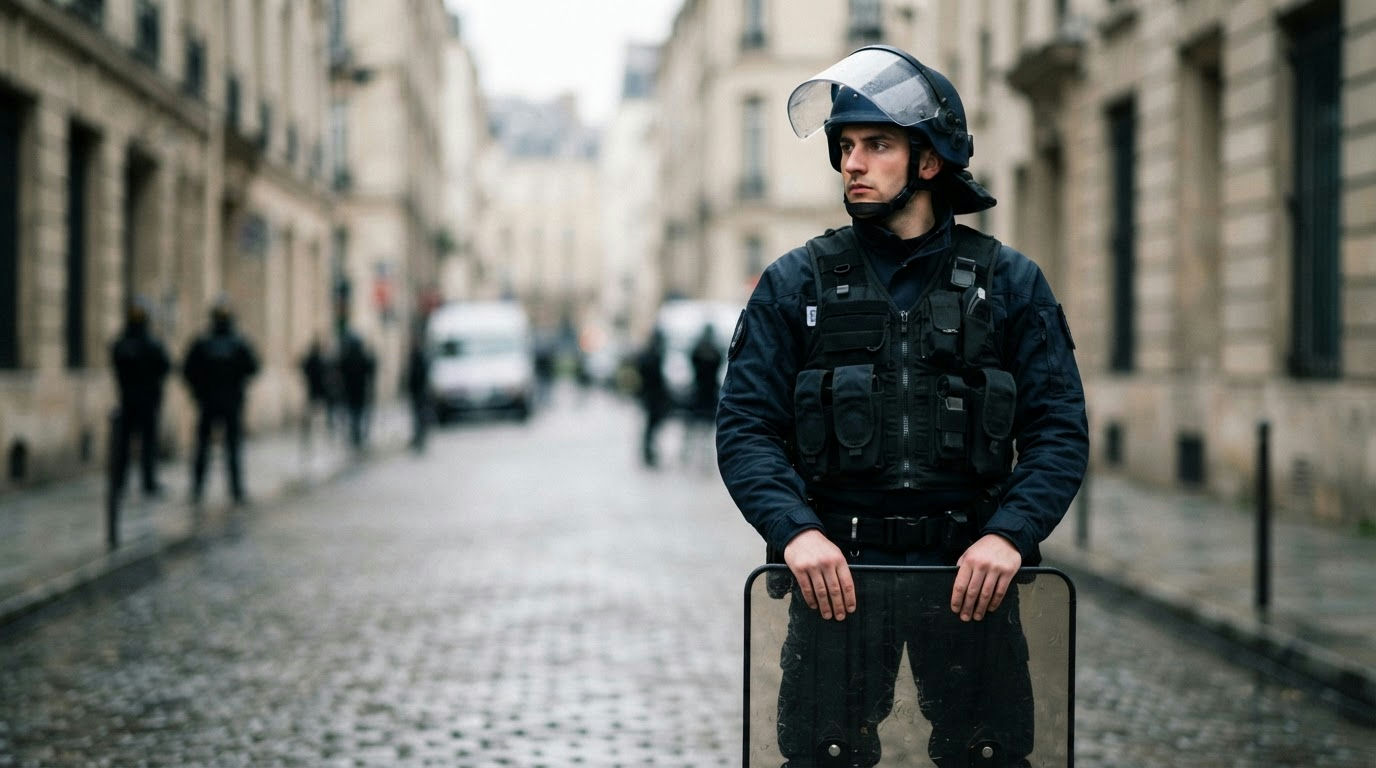
French authorities deployed approximately 70,000 police officers and gendarmes across France on Saturday, Oct. 24, 2026. The government ordered the mass mobilization to stop civil unrest during planned nationwide demonstrations over the rising cost of living.
The security operation included elite tactical and counter-terrorism units, armored vehicles, water cannons, drones, and helicopters. In Paris, major cultural institutions closed to protect staff, visitors, and art. The Musée du Louvre closed Saturday, and Art Basel Paris canceled its weekend public programming at the Grand Palais.
Interior Minister Laurent Nuñez ordered security forces to operate with high mobility to counter rioters quickly. Nuñez stated on Friday that authorities would show no leniency to people who attack infrastructure, vandalize property, or loot. He added that specialized units guarded public buildings and tracked online calls for violence.
Student unions, labor organizations, and demonstrators linked to the yellow vest movement organized the rallies. The General Confederation of Labour and the National Union of Students of France joined the mobilization. Officials banned demonstrations in several municipalities, though authorities in the Bouches-du-Rhône department permitted a single march in Marseille.
The National Union of Students of France announced that its members would march regardless of local bans. Marylise Léon, leader of the French Democratic Confederation of Labour, accused President Emmanuel Macron of abusing power by outlawing assemblies. Organizers of Art Basel Paris stated that protecting participants and visitors was their absolute priority.
The measures followed severe unrest during the previous weekend, when clashes, looting, and vandalism struck Paris, Lyon, and Marseille. Rioters in Limoges burned and partly destroyed the town hall. The French government publicly acknowledged that it had temporarily lost control of the street violence during those events.
The current student demonstrations began as high school strikes over decaying campus buildings and national teacher shortages. The unrest also forced Macron to postpone an official state visit to Senegal and Nigeria to manage the domestic situation.
Authorities established rapid-processing judicial desks across all departments and at the Paris Police Prefecture to process detained protesters quickly. Meanwhile, several unions and opposition parties are challenging the rally bans in administrative courts across France. Far-right National Rally leader Marine Le Pen is scheduled to hold weekend campaign events focused on security concerns.