Abdul El-Sayed Secures Contentious Michigan Senate Primary Amid Deep Democratic Divides
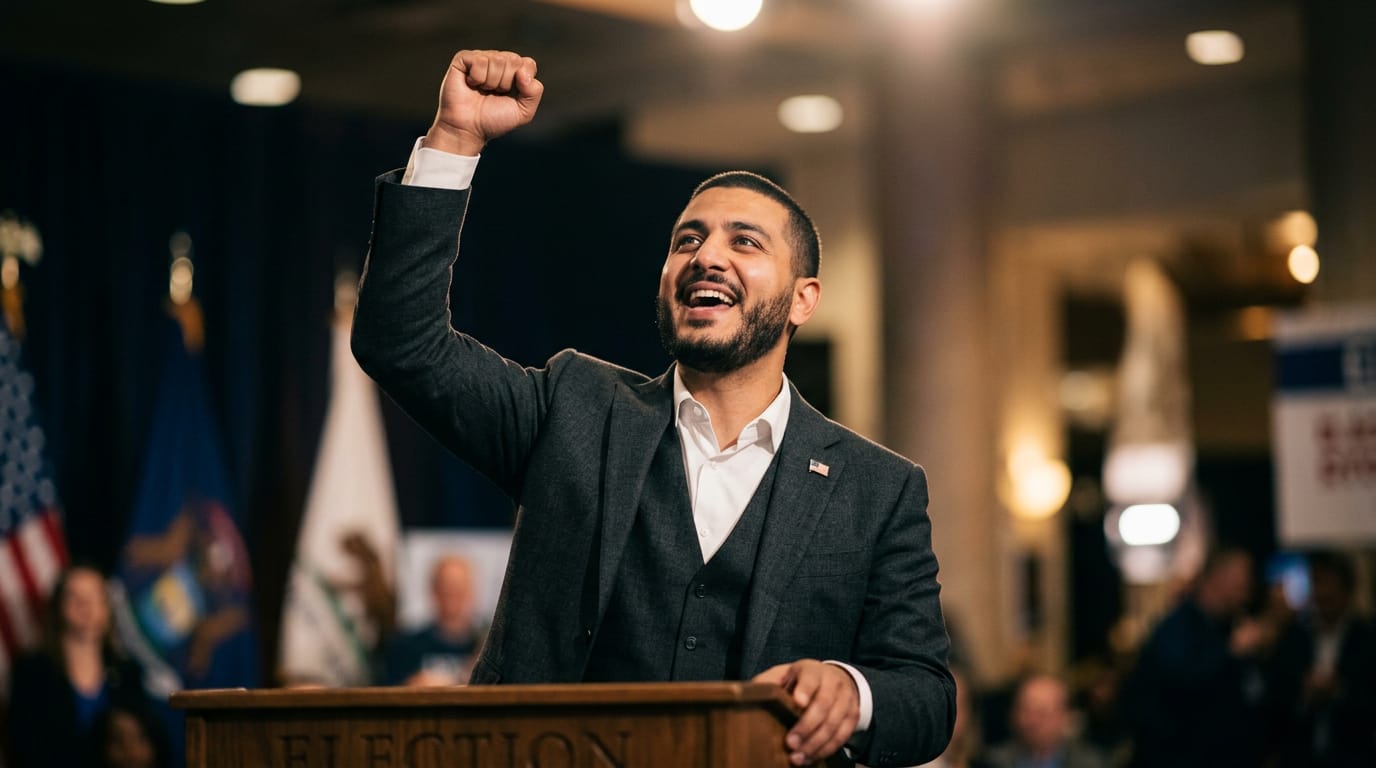
LANSING, MI – In a closely watched and fiercely contested race that highlighted deep ideological fissures within the Democratic Party, Abdul El-Sayed, a progressive former public health official, has clinched the party's nomination for the U.S. Senate in Michigan. El-Sayed's narrow victory over U.S. Representative Haley Stevens on August 4, 2026, marks a significant win for the insurgent left wing and sets the stage for a critical November general election battle against Republican Mike Rogers, with control of the U.S. Senate potentially hanging in the balance.
A Narrow, Yet Decisive, Progressive Triumph
El-Sayed's win was confirmed early Wednesday morning after a protracted vote count, with Decision Desk HQ and the Associated Press projecting his victory. The contest remained exceptionally tight throughout election night, ultimately concluding with El-Sayed holding a lead of approximately 1 percentage point over Stevens. This outcome defied conventional expectations for a race that saw unprecedented levels of outside spending primarily aimed at boosting Stevens and undermining El-Sayed's progressive platform. The primary served as a stark demonstration of the Democratic Party's ongoing internal struggle between its progressive and moderate factions, particularly in a crucial battleground state like Michigan, which former President Donald Trump narrowly won in 2024.
The Battle of Ideologies and Unprecedented Spending
The Michigan Democratic Senate primary was largely defined by a clash of distinct political visions and a flood of external financial influence. Abdul El-Sayed, 41, positioned himself as an anti-establishment progressive, advocating for policies such as "Medicare for All," campaign finance reform aimed at removing money from politics, and a reevaluation of U.S. military aid to Israel. His campaign slogan, "Get money out of politics, put money back in your pocket and pass Medicare for All," resonated with a significant portion of the Democratic base. El-Sayed garnered endorsements from prominent progressive figures, including Senator Bernie Sanders and Representative Alexandria Ocasio-Cortez, who championed his campaign as a grassroots movement against corporate influence and the political establishment.
Conversely, Representative Haley Stevens, 43, presented herself as a pragmatic and experienced policymaker. Her platform emphasized her work on the 2008 auto rescue task force and a focus on manufacturing and economic issues. Stevens received considerable backing from the Democratic establishment, including endorsements from Senate Minority Leader Chuck Schumer, outgoing Senator Gary Peters, and popular Michigan Governor Gretchen Whitmer.
The primary became one of the most expensive in U.S. history, with tens of millions of dollars in outside spending pouring into the state. Reports indicate that over $40 million, potentially up to $70 million, was spent by external groups, with a substantial portion coming from organizations affiliated with the American Israel Public Affairs Committee (AIPAC). These funds were primarily used to support Stevens' candidacy and to launch attacks against El-Sayed, particularly concerning his critical stance on Israel's government and the war in Gaza. El-Sayed, who would be the first Muslim U.S. Senator if elected, made opposition to the pro-Israel lobby's spending a central theme of his campaign.
Contentions and Controversies on the Campaign Trail
The primary was marked by several contentious issues, including heated debates over electability, gender, and racial bias. Stevens and her allies frequently argued that her more moderate approach would make her a more viable candidate in the general election in Michigan, a state known for its fluctuating political allegiances. Some of her campaign's messaging even included satirical "endorsements" from Republican Mike Rogers, suggesting that El-Sayed would be an easier opponent for the GOP.
El-Sayed, an Egyptian-American, faced criticism and what some described as "sexist attacks" and mockery, which he vehemently denounced as rooted in racial and religious tropes. He asserted that criticisms about his electability often stemmed from his name and faith in a state that had previously elected Barack Obama twice. The issue of Israel also became a flashpoint, with El-Sayed's strong criticisms of the Israeli government and its actions in Gaza drawing both fervent support and accusations of antisemitism from his opponents and pro-Israel groups. El-Sayed maintained that his criticisms were of the Israeli government's policies, not the Jewish people, and emphasized his commitment to Jewish safety.
Despite being heavily outspent and facing opposition from significant figures within his own party, El-Sayed emphasized his grassroots campaign, powered by volunteers and individual supporters. His victory, albeit narrow, represents a significant moment for the progressive movement, demonstrating its capacity to challenge and overcome well-funded establishment candidates.
The Path to November: Unification and a Toss-Up Race
Following his primary win, El-Sayed quickly moved to address the divisions of the hard-fought primary, calling for unity within the Democratic Party to defeat the Republican nominee. In her concession call, Representative Stevens pledged her support for El-Sayed, acknowledging the need for Democrats to rally together for the general election.
El-Sayed will now face former Republican Congressman Mike Rogers in the November 3 general election. Rogers ran unopposed in the Republican primary, allowing him to focus his campaign efforts on the general election while Democrats engaged in a bruising internal contest. The general election for the seat held by retiring Democratic Senator Gary Peters is widely considered one of the most competitive and crucial races in the country, with nonpartisan forecasters like the Cook Political Report rating it as a "toss-up."
Michigan's Senate race is seen as a bellwether for national political trends and will play a critical role in determining which party controls the U.S. Senate. Donald Trump's victory in Michigan in 2024 underscores the state's battleground status, setting the stage for a challenging contest for El-Sayed, who must now unite disparate Democratic factions and appeal to a broader electorate.
El-Sayed's victory in Michigan's Democratic Senate primary sends a clear message about the growing influence of the progressive wing within the Democratic Party. Despite facing a well-funded opponent and significant establishment opposition, his grassroots campaign and bold policy agenda resonated with primary voters. The challenge now shifts to uniting a fragmented party and convincing a diverse electorate in a critical swing state that his progressive vision is the right path forward. The November election against Republican Mike Rogers will not only determine Michigan's representation in the Senate but could also dictate the balance of power in Washington, making this one of the most closely watched races of the 2026 midterm cycle.


