Activist Sonam Wangchuk Hospitalized Amid Hunger Strike, Drawing Attention to Multiple Causes
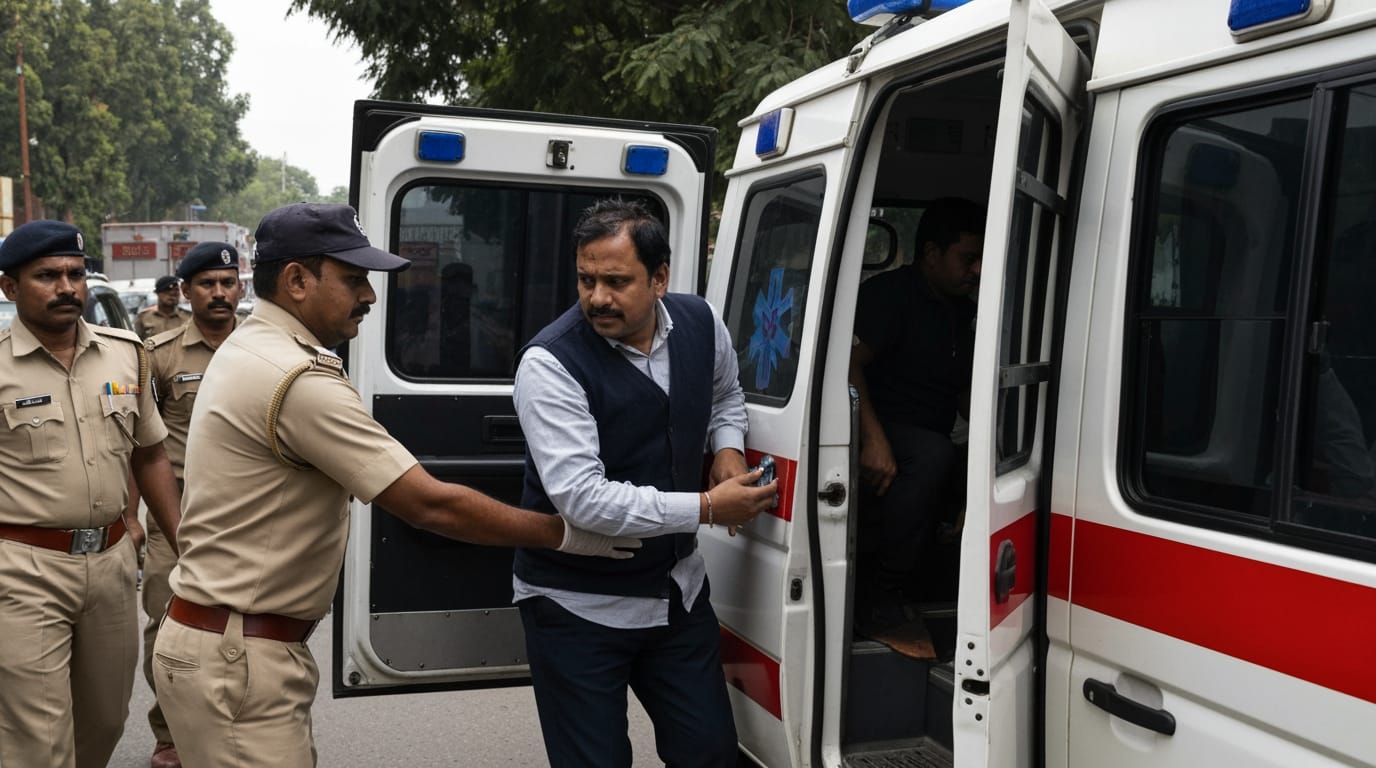
NEW DELHI – Prominent environmental and education activist Sonam Wangchuk was moved to a hospital early Saturday, July 18, 2026, after his health significantly deteriorated during a 20-day hunger strike at Jantar Mantar. The transfer, carried out by Delhi Police, came in compliance with a Delhi High Court order and on the advice of medical experts, highlighting the critical condition of the 59-year-old activist. Wangchuk's current fast is primarily in protest against alleged irregularities in the NEET examination and demanding the resignation of Union Education Minister Dharmendra Pradhan, but it also brings renewed focus to his long-standing advocacy for constitutional safeguards for Ladakh.
Court Orders and Deteriorating Health Lead to Hospitalization
The decision to hospitalize Wangchuk followed days of growing concern over his health. Doctors monitoring him had described his condition as an emergency on Friday, expressing worries about potential organ failure. Daily medical bulletins indicated a steady decline, with reports that Wangchuk had lost over eight kilograms since beginning his indefinite fast. The Delhi High Court had earlier in the week directed authorities to conduct daily clinical health assessments and ensure all necessary medical intervention to safeguard his life, emphasizing that "the life of any citizen is precious."
Police personnel arrived at the protest site in the morning to execute the court order. While activists from the Cockroach Janta Party (CJP), who have been supporting Wangchuk's current agitation, attempted to obstruct the transfer, police maintained restraint, safely shifting him to Safdarjung Hospital. Officials stated Wangchuk is conscious and his vital signs are stable, indicating he is currently under medical supervision for essential care. This intervention occurred just two days before Wangchuk and his supporters had planned a march to Parliament on July 20 to amplify their demands.
The Immediate Catalyst: NEET Exam Scandal
Wangchuk's current hunger strike at Jantar Mantar is focused on the contentious issue of alleged paper leaks and irregularities in the National Eligibility cum Entrance Test (NEET) examination. He has vehemently called for the resignation of Union Education Minister Dharmendra Pradhan, linking the irregularities to a systemic failure within the education sector. This protest marks a recent shift in the immediate subject of his high-profile activism, though it aligns with his broader commitment to accountability and ethical governance. The "Cockroach Janta Party" has been a vocal proponent of this particular agitation, demanding swift action against those responsible for the examination anomalies.
A Long History of Principled Activism: The Ladakh Movement
While his current protest addresses a national educational crisis, Sonam Wangchuk is widely recognized for his relentless advocacy for Ladakh, a cause he has championed through numerous hunger strikes and public campaigns. His activism for Ladakh primarily revolves around two key demands: statehood for the Union Territory and its inclusion under the Sixth Schedule of the Indian Constitution.
The Sixth Schedule provides for the administration of tribal areas in Assam, Meghalaya, Tripura, and Mizoram, granting them significant autonomy in legislative, administrative, and judicial matters through Autonomous District Councils (ADCs). For Ladakh, where an estimated 97% of the population is tribal, this status would provide crucial constitutional safeguards to protect its unique environment, culture, land, and resources from unchecked development and external influences.
Wangchuk's efforts to secure these protections for Ladakh date back years. In January 2023, he undertook a five-day fast in sub-zero temperatures at Leh's SECMOL campus to highlight the ecological risks facing the region from mining, carbon emissions, and large infrastructure projects. This was followed by a 21-day "Climate Fast" in March 2024, after talks between Ladakhi representatives and the central government failed to yield a breakthrough on statehood and Sixth Schedule status. His longest fast, a 35-day hunger strike, began in September 2025, alongside the Leh Apex Body and Kargil Democratic Alliance, reiterating demands for statehood, Sixth Schedule status, a separate Public Service Commission, and dedicated parliamentary representation for Ladakh. These repeated fasts underscore his unwavering commitment to using non-violent means to press for his causes.
Ladakh's Broader Struggle for Identity and Autonomy
The demand for statehood and Sixth Schedule inclusion in Ladakh gained significant momentum after the abrogation of Article 370 in August 2019. This constitutional change led to the bifurcation of Jammu and Kashmir into two Union Territories, with Ladakh becoming a Union Territory without a legislative assembly. Ladakhi representatives argue that this move deprived the region of meaningful participation in decision-making processes concerning land, employment, and developmental policies, leading to a "representation deficit."
Concerns among Ladakhis center on the perceived loss of control over their land, employment opportunities, fragile ecosystem, and distinct cultural identity. With a predominantly tribal population, residents fear that without constitutional safeguards, the region's delicate ecology and unique demographic character are vulnerable to exploitation and demographic changes. The protests, which have been ongoing since 2021, reflect a deep-seated desire for self-governance and protection from external commercial interests and unplanned development. While the government cites strategic security and constitutional hurdles, local leaders stress the need for inclusive development that benefits local communities, particularly in sectors like tourism and renewable energy, while preserving their heritage.
Conclusion: A Voice for the Vulnerable
Sonam Wangchuk's hospitalization marks a critical juncture in his current protest against examination irregularities, yet it simultaneously casts a spotlight on his enduring fight for Ladakh's environmental and cultural preservation. His strategic use of hunger strikes, a powerful tool in Indian political history, consistently draws national attention to issues he believes are vital for the nation's future and the rights of its communities. While the immediate focus is on his recovery and the demands regarding the NEET controversy, his long history of advocating for Ladakh ensures that the call for statehood and Sixth Schedule protection for the Himalayan region remains a prominent and unresolved issue on the national agenda. His actions continue to highlight the struggles of vulnerable populations and fragile ecosystems in the face of rapid change and development.


