Prominent Cuban Dissident Artist Arrives in U.S. After Five Years of Imprisonment and Forced Exile
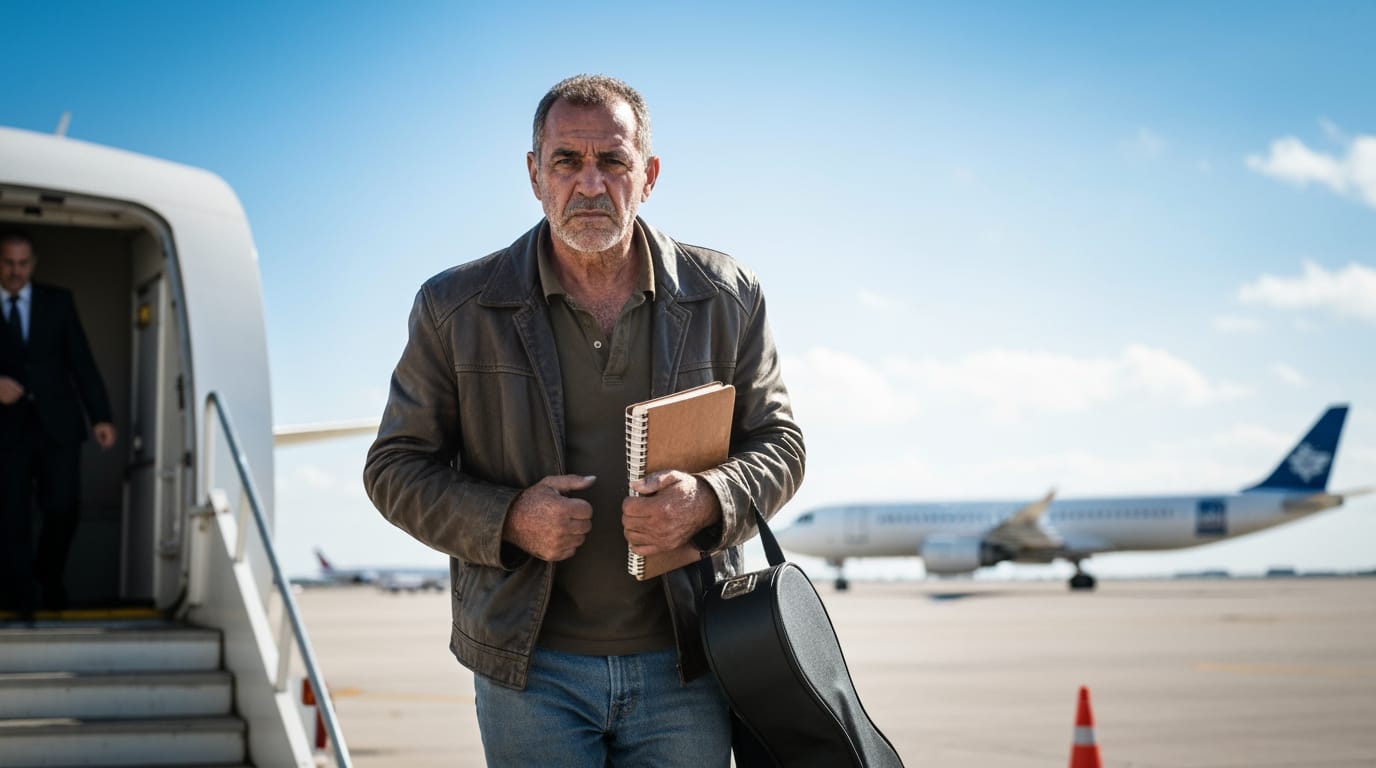
Miami, FL – July 18, 2026 – Luis Manuel Otero Alcántara, a leading Cuban dissident artist and co-founder of the influential San Isidro Movement, arrived in Miami today, marking the end of a harrowing five-year imprisonment in Cuba and the beginning of a forced exile in the United States. His release, granted under the condition that he leave his homeland, culminates years of international advocacy and shines a renewed spotlight on the Cuban government's suppression of artistic freedom and political dissent.
Otero Alcántara's arrival was met with an emotional welcome from a crowd of supporters at Miami International Airport, many draped in Cuban flags emblazoned with "Patria y Vida" ("Homeland and Life"), the anthem of the Cuban opposition. The visual artist, a symbol of resistance for many, carries not only the weight of his personal struggle but also the hopes of countless others still facing repression on the island.
A Voice Silenced, A Movement Ignited
Aged 38, Luis Manuel Otero Alcántara rose to prominence as a conceptual artist and a vocal critic of the Cuban government. He is recognized as a co-founder of the San Isidro Movement (MSI), an artists' and writers' collective formed in Havana's San Isidro neighborhood. The movement gained international attention for its protests against Decree 349, a 2018 law that significantly restricts artistic freedom by requiring cultural activities to be approved by the Culture Ministry, allowing for arbitrary censorship. Otero Alcántara's activism and art frequently challenged state authority, making him a consistent target for Cuban authorities.
His arrest on July 11, 2021, occurred amidst the largest anti-government protests Cuba had witnessed in decades. These demonstrations, fueled by economic hardship and a yearning for greater freedoms, saw thousands take to the streets across the island. Otero Alcántara had publicly stated his intention to join these protests, leading to his detention. In 2022, a Cuban court sentenced him to five years in prison on charges including public disorder, contempt, and disrespect toward national symbols — charges widely condemned by human rights groups as politically motivated. His incarceration quickly cemented his status as a political prisoner, embodying the broader struggle for human rights in Cuba.
Five Years Behind Bars: A Battle for Freedom
During his five-year imprisonment, primarily at the Guanajay maximum-security prison near Havana, Otero Alcántara's case became a rallying point for international human rights organizations and foreign governments. Groups such as Amnesty International, Freedom House, PEN International, and the UN Working Group on Arbitrary Detention consistently denounced his detention, labeling him a prisoner of conscience and calling for his immediate and unconditional release. The United States government also frequently highlighted his plight, with officials like U.S. Secretary of State Marco Rubio and Ambassador Michael Waltz publicly criticizing Cuba's human rights record and displaying images of political prisoners, including Otero Alcántara.
His detention and the conditions he endured drew widespread concern. Otero Alcántara engaged in hunger strikes to protest his treatment and the ongoing violations of his rights. While imprisoned, his work and defiance earned him significant international recognition, including being named one of Time Magazine's most influential persons in 2021 and receiving prestigious honors such as the National Endowment for Democracy's 2026 Democracy Award, the Rafto Human Rights Prize, and the Václav Havel Prize for Creative Dissent. These accolades underscored his global standing as a symbol of artistic courage in the face of authoritarianism.
The Path to Exile: A Bitter Freedom
Despite completing his five-year sentence, Otero Alcántara was not immediately freed. For more than a week after his sentence concluded, he was held in an undisclosed location by Cuban state security agents, his whereabouts unknown even to his family and advocates. During this period, he faced intense pressure to leave Cuba, a condition Cuban authorities have increasingly imposed on high-profile dissidents in exchange for their release. Initially, Otero Alcántara had repeatedly rejected the prospect of exile, expressing a desire to remain in his homeland. However, in a 2024 interview from prison, he acknowledged reconsidering his stance, recognizing that staying in Cuba might prevent him from continuing his art and activism.
The U.S. government ultimately granted him humanitarian parole, facilitating his journey to Miami. His departure, though a personal liberation, is perceived by many as a calculated move by the Cuban government to silence a prominent dissenting voice by removing him from the island. This pattern of forced exile has been observed with other Cuban dissidents, creating a bittersweet freedom for those who must abandon their country to escape persecution.
Miami's Embrace, Cuba's Unfinished Fight
Upon his arrival in Miami, Otero Alcántara was greeted by a passionate community eager to embrace him. He carried with him a broken statue of the Virgin Mary, a potent symbol he described as representing hope and healing, a chance to mend what has been shattered. His presence in the United States offers a new platform for his artistic and activist endeavors, free from immediate state repression, though the emotional and psychological toll of forced displacement remains.
While Otero Alcántara has found a measure of freedom, the broader struggle for human rights and artistic liberty in Cuba continues. His fellow artist and San Isidro Movement co-founder, Maykel "Osorbo" Castillo Pérez, who famously co-authored the Grammy-winning song "Patria y Vida" and also faced severe state repression, remains imprisoned, serving a nine-year sentence. Advocates highlight that more than 1,300 political prisoners still languish in Cuban jails, underscoring that Otero Alcántara's release, while significant, is part of a larger, ongoing human rights crisis.
A New Chapter, An Enduring Call for Justice
Luis Manuel Otero Alcántara's arrival in the United States marks a pivotal moment in his personal odyssey and serves as a powerful reminder of the enduring human cost of authoritarian rule. His five years in prison and subsequent forced exile underscore the Cuban government's relentless efforts to stifle dissent, particularly from artists and intellectuals who dare to challenge the official narrative. As he embarks on this new chapter, his journey will undoubtedly continue to inspire and amplify calls for freedom, justice, and respect for human rights for all Cubans, keeping the international spotlight firmly fixed on the island's political landscape.


