Kyiv Endures Relentless Ballistic Barrage as Russian Missiles Strike Capital Amid Escalating Aerial Campaign
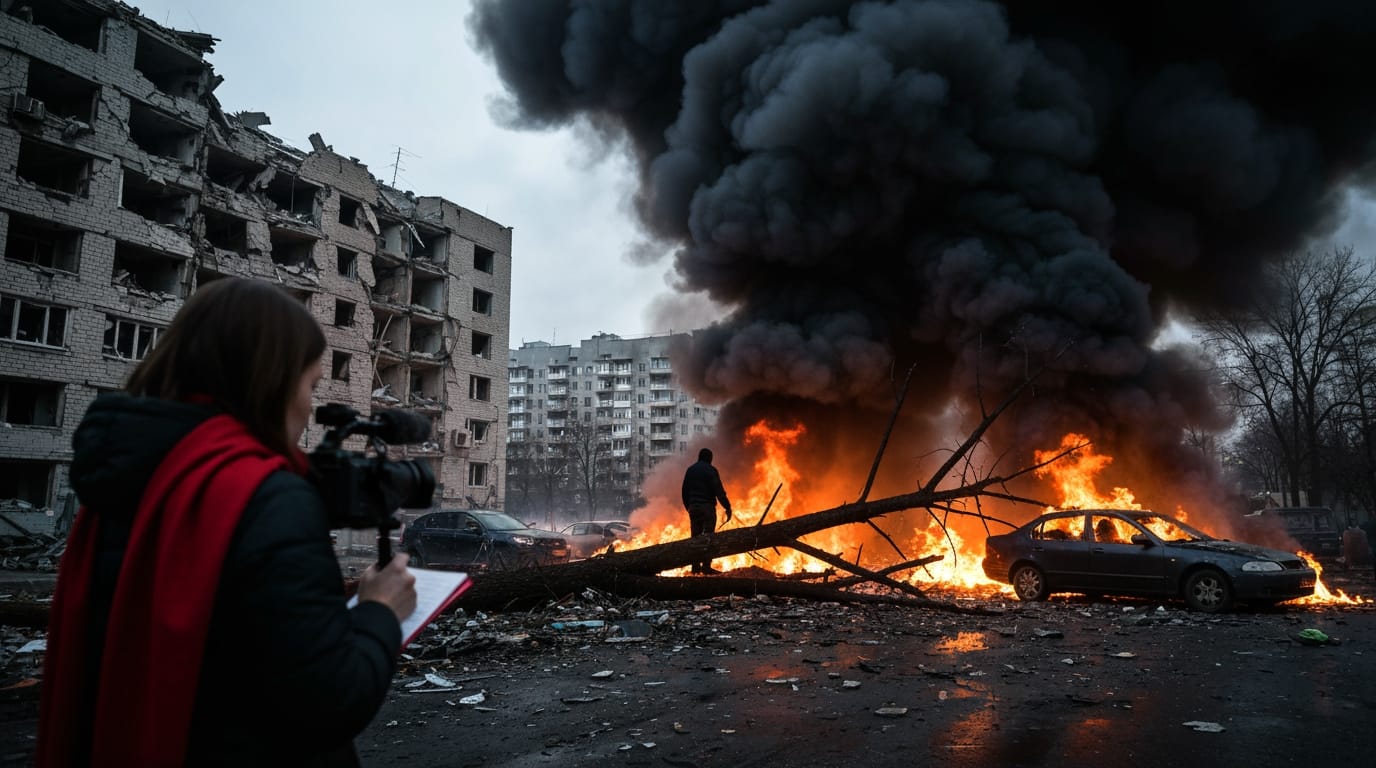
KYIV – Ukraine's capital, Kyiv, has faced a devastating surge in Russian ballistic missile attacks throughout July 2026, culminating in a particularly intense overnight assault on July 19. The latest offensive, characterized by a rapid succession of powerful explosions, left multiple civilians injured, residential buildings ablaze, and critical infrastructure damaged, underscoring the relentless nature of the ongoing conflict and the severe challenges facing Ukraine's air defense capabilities. This recent wave of strikes follows a pattern of heightened aerial aggression against Kyiv, marking July as one of the most perilous periods for the city in recent memory.
Overnight Terror: The July 19th Onslaught
In the early hours of July 19, Kyiv was subjected to what Ukrainian monitoring channels described as potentially the largest ballistic missile assault on the capital since the full-scale invasion began. Air raid sirens blared across central and eastern Ukraine around 1:30 a.m. local time, swiftly followed by a series of explosions that reverberated across the city. Reports indicated approximately 40 missiles, including 31 ballistic missiles and at least eight Zircon hypersonic missiles, were fired towards Kyiv within a mere 53 minutes.
Kyiv Mayor Vitali Klitschko reported at least seven people sustained injuries in the attack, with six requiring hospitalization and one treated at the scene. Emergency services rescued five individuals from damaged buildings, as fires erupted in various districts. In the Dniprovskyi district, a dormitory building caught fire from falling debris, and smoke was observed near a shopping center. A commercial property and a warehouse were struck in the Desnyanskyi district, igniting vehicle fires. The Solomyanskyi district saw a supermarket roof and a nearby residential building engulfed in flames, while debris near a nine-story building shattered windows, necessitating the rescue of a resident from the second floor. The Lukianivska metro station also experienced crumbling ceiling and debris fall due to missile impacts.
A Month of Relentless Attacks
The July 19th attack was not an isolated incident but rather the latest in a series of severe aerial assaults that have tormented Kyiv throughout the month. Just days prior, on July 16, Russian ballistic missiles claimed the lives of at least two people and injured six others, including a 16-year-old, in an overnight strike. That attack, which targeted warehouses and non-residential buildings in the Sviatoshynskyi and Darnytskyi districts, marked the sixth ballistic assault on Kyiv in July alone, according to President Volodymyr Zelenskyy.
Earlier in the month, a coordinated drone and ballistic missile attack on July 8 resulted in four deaths and 15 injuries, further highlighting the constant threat faced by residents. A particularly devastating "night of horror" on July 6 witnessed at least 26 fatalities and dozens more injured, including seven children, from waves of Russian missiles and drones. The month began with an extensive barrage on July 2, which Ukrainian officials described as a "night of horror," leaving over 30 people dead and more than 100 injured across more than 30 locations in Kyiv, including residential neighborhoods. These attacks frequently involve a mix of ballistic missiles and Shahed-type drones, overwhelming air defense systems.
Challenges and Efforts in Air Defense
The repeated strikes underscore a critical vulnerability in Ukraine's air defense infrastructure. Ballistic missiles, known for their high speed and steep trajectory, pose a significant challenge for interception. While U.S.-made Patriot systems are highly effective against such threats, their interceptor missiles have reportedly been in short supply, partly due to increased global demand amid conflicts, including the Iran war. Ukrainian President Zelenskyy has repeatedly called on international partners to accelerate the delivery of air defense interceptors to counter the ongoing Russian terror.
Despite these challenges, Ukraine's air defenses continue to operate, with the Air Force reporting the interception of five ballistic missiles on July 14, likely using Patriot systems. Ukraine is actively working to bolster its defensive capabilities, aiming to achieve the technical capacity to produce missiles for the Patriot air defense system domestically by the end of 2026. This initiative seeks to reduce reliance on foreign supply chains. Concurrently, France has committed to providing Ukraine with four next-generation Franco-Italian SAMP/T NG air defense systems, with temporary provision of two existing SAMP/T batteries expected sooner, and deliveries of the new systems slated to begin in 2027. Furthermore, private Ukrainian companies are increasingly contributing to the nation's air defense, with over 50 enterprises joining a pilot project to integrate private resources into the national system, some already successfully downing drones.
Human Impact and Strategic Context
The relentless bombardment has inflicted a heavy toll on the civilian population of Kyiv. Residents are frequently forced into bomb shelters and underground metro stations as explosions rock the capital, often before air raid sirens can even sound. Beyond the immediate casualties, the psychological impact of constant threat and destruction is profound. The attacks target not only military or military-related facilities, as claimed by the Russian Defense Ministry, but also civilian infrastructure, including homes, commercial properties, and public spaces.
These aerial offensives are seen within the broader context of Russia's ongoing strategy to exert pressure on Ukraine, often framed by Moscow as responses to Ukrainian drone strikes on Russian territory. The increasing intensity and frequency of ballistic missile attacks on Kyiv highlight a clear escalation in Russia's aerial campaign, aimed at overwhelming Ukraine's defenses and demoralizing its populace. The vulnerability of the capital, despite ongoing efforts to enhance air defense, remains a critical concern for Ukraine and its international partners as the conflict continues.


