Israel Paves Way for Crocodiles in Prison Security, Igniting Fierce Debate
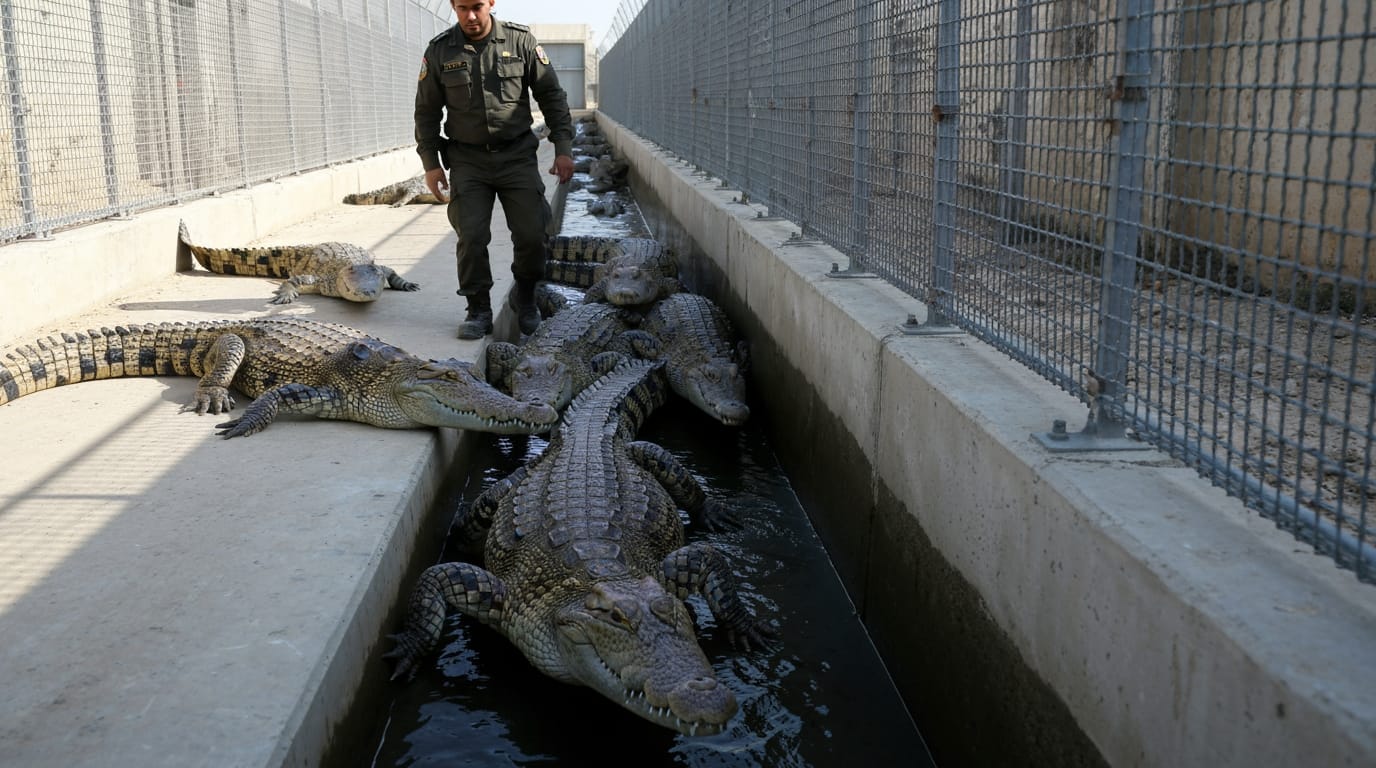
JERUSALEM – In a move that has sparked widespread controversy and environmental concern, Israel's Environmental Protection Minister, Idit Silman, has reclassified Nile crocodiles, effectively clearing a significant legal hurdle for their potential deployment in deterring prison escapes. The decision, strongly backed by hardline National Security Minister Itamar Ben Gvir, aims to integrate the formidable reptiles into the security infrastructure of high-security correctional facilities, a concept previously met with skepticism and even ridicule. This unusual approach marks a radical shift in Israel's prison management strategy, prioritizing an unconventional, and some argue inhumane, method to bolster security.
The reclassification shifts Nile crocodiles from "wild animals" to "captive-bred wildlife" or "managed wild animals," a critical distinction that permits security bodies like the Israel Prison Service (IPS) to possess and breed them outside the confines of licensed zoos and sanctuaries. This new regulation, signed into law on July 15, stipulates that such possession must adhere to strict conditions set by the Director of the Nature and Parks Authority to prevent their release into the wild, and requires the Environmental Protection Minister to deem their use necessary for security purposes. The impetus for this policy stems directly from National Security Minister Itamar Ben Gvir, who reportedly first floated the idea in December during a meeting with IPS Commissioner Kobi Yaakobi.
Genesis of the "Crocodile Prison" Concept
Minister Ben Gvir, known for his hardline stance on security and prison affairs, has been the primary advocate for the "crocodile prison" initiative. His proposal, reportedly inspired by Florida's "Alligator Alcatraz" immigration detention facility, envisions moats filled with crocodiles surrounding correctional facilities to create an imposing and seemingly impenetrable barrier against escape attempts. Upon the legal reclassification, Ben Gvir publicly welcomed the decision, sharing an AI-generated image of himself holding a crocodile on a leash on social media. His accompanying caption, "Ministers Ben Gvir and Silman are cooperating and encircling prisons with crocodiles!", was a clear message to potential escapees: "Are you thinking of attempting to escape? Think again."
The initial proposal in December 2025 reportedly encountered significant resistance and even "ridicule" from several prison service officers. Nevertheless, the IPS proceeded with preliminary steps to explore the feasibility of the plan. In January, senior officers from the Israel Prison Service undertook a study visit to the Hamat Gader crocodile farm in northern Israel. During this visit, they were briefed on various aspects of crocodile management, including their behavior, handling protocols, associated risks, and the projected costs involved in acquiring an estimated 60 crocodiles to encircle a facility. This fact-finding mission underscores the seriousness with which the IPS is now considering this unconventional security measure.
Vehement Opposition from Environmental and Legal Experts
Despite the government's progression with the plan, it has faced sustained and vocal opposition from environmental organizations and legal experts within Israel. The Israel Nature and Parks Authority (INPA), the body responsible for safeguarding the nation's wildlife, has consistently argued against the proposal. INPA officials maintain that crocodiles are protected species that should be conserved, not exploited for security. They assert that "We need to protect them; they don't need to protect us," emphasizing that the spirit of wildlife protection laws is fundamentally at odds with using animals as security deterrents.
Furthermore, the INPA has raised serious concerns regarding the practicalities and risks associated with housing crocodiles in a prison environment. Officials have questioned the IPS's ability to provide appropriate care for these complex animals, highlighting that there is "no sufficient professional basis" for such an undertaking. They also warned of "significant risks" to both the crocodiles and the public, citing past problems with crocodile farming in Israel, which included instances of escapes and threats to public safety. Legal advisers within the Environmental Protection Ministry also expressed reservations, with one reportedly warning Minister Silman that she lacked the authority to unilaterally lay the legal groundwork for using crocodiles in prisons. These objections, however, appear to have been overruled in the final decision-making process.
Implications and Broader Context
The initial target for this novel security measure is reportedly Ketziot Prison in southern Israel. This facility holds a substantial number of Palestinian security prisoners, including Hamas members captured following the October 7, 2023, attacks. Minister Ben Gvir's tenure has been characterized by policies aimed at tightening conditions for Palestinian detainees, and this crocodile initiative aligns with a broader strategy to enhance prison security, particularly for this specific population.
From an economic perspective, proponents suggest that crocodile-filled moats could potentially reduce guarding costs, thereby saving millions of shekels annually in personnel expenses. However, the initial outlay for acquiring and maintaining these reptiles is significant. A young crocodile is estimated to cost around $8,000, while a mature adult can command up to $20,000. These figures do not account for the considerable ongoing costs of feeding, veterinary care, and constructing suitable habitats, which the INPA suggests the prison service may not be equipped to handle. The reclassification of crocodiles specifically as "managed wild animals" for security purposes represents a revival of a legal category that previously facilitated commercial crocodile farming for skins, a practice that was later terminated due to numerous issues.
A Unique and Contentious Security Frontier
The legal pathway has been cleared, but the implementation of crocodile-guarded prisons in Israel remains a highly contentious issue. The government's decision signals a willingness to pursue unconventional and aggressive security measures, particularly in the context of ongoing regional tensions and the desire to prevent high-profile prison breaks. While proponents emphasize the deterrent effect and potential cost savings, critics underscore the ethical implications for animal welfare, the ecological risks, and the precedent set by using wild animals as tools for incarceration.
As the Israel Prison Service explores the practicalities of deploying these ancient predators, the debate is likely to intensify, pitting security imperatives against environmental protection and humanitarian concerns. The world watches as Israel ventures into this unique and controversial frontier of prison security, with many questioning whether the potential benefits outweigh the ethical, practical, and environmental challenges posed by the "crocodile prison."


