Activist's Brutal Killing Plunges Guinea-Bissau Deeper into Crisis, Igniting Widespread Protests
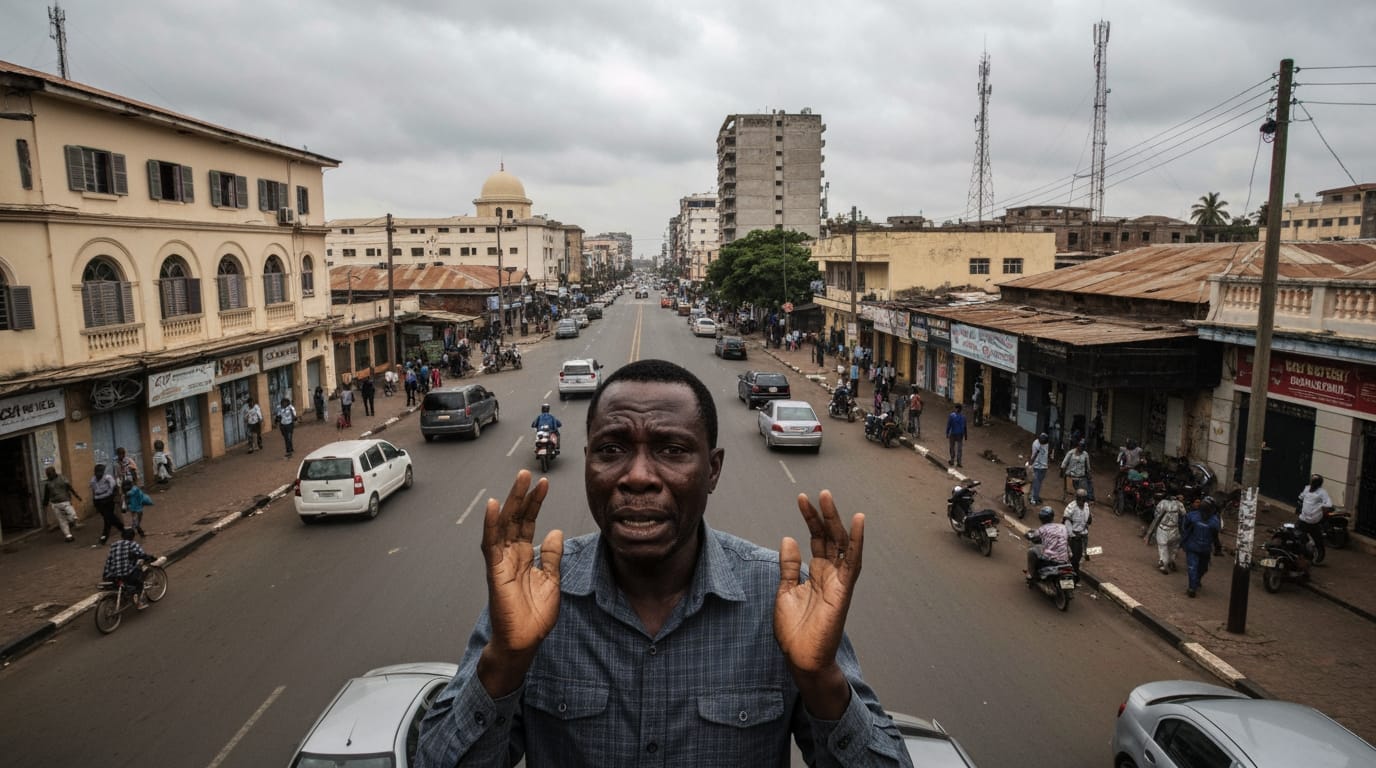
BISSAU, Guinea-Bissau – The already precarious political landscape of Guinea-Bissau has been violently shaken by the brutal killing of prominent civil society activist Vigário Luís Balanta, igniting a wave of protests across the capital and drawing strong condemnation from international bodies. Balanta, a vocal critic of the country's transitional authorities, was found dead earlier this week with apparent signs of extreme violence, fueling suspicions of a politically motivated assassination and deepening fears for the future of democracy and human rights in the West African nation.
The discovery of Balanta's body on Tuesday, reportedly bearing numerous injuries including stab wounds and gunshot wounds to the head, sparked immediate outrage and calls for justice. Witnesses and activists claim he was violently attacked and beaten to death, with some online images reportedly showing injuries consistent with torture. As coordinator of the "Po di Terra" movement, Balanta, 35, had been a persistent voice challenging military rule and advocating for transparency. His death has become a flashpoint, highlighting the severe erosion of civil liberties and the deepening climate of fear that has gripped Guinea-Bissau following a recent coup.
The Gruesome Discovery and Public Outcry
Vigário Luís Balanta's body was discovered in a rural area approximately 30 kilometers outside Bissau, in the Ndam region. The gruesome details of his death, which the Guinea-Bissau League for Human Rights swiftly denounced as an assassination, immediately triggered a furious public reaction. Hundreds of mourners, many wearing T-shirts emblazoned with Balanta's image, took to the streets of Bissau after his funeral, transforming the procession into a spontaneous demonstration demanding accountability.
Protesters, many of them young, voiced their belief that Balanta's killing was not accidental but politically motivated, directly linking it to his outspoken criticism of the regime and his fight for truth and justice. The demonstrations quickly escalated, with individuals blocking roads using burning tires and furniture in various neighborhoods of the capital. Security forces responded with force, deploying tear gas and batons to disperse the crowds, leading to the arrest of at least a dozen people. The United Nations expressed deep shock and condemned the "brutal" killing, calling for an independent and urgent investigation and warning of a shrinking civic space in the country.
A Nation Mired in Political Volatility
Guinea-Bissau has long been plagued by chronic political instability, with a history marked by numerous coups and attempted coups since gaining independence from Portugal. The current heightened tensions are set against the backdrop of a military takeover that occurred on November 26, 2025. This coup saw the military assume control after overthrowing then-President Umaro Sissoco Embaló and suspending the electoral process. General Horta N'Tam was subsequently appointed as the transitional president.
Critics have described this period as an "institutional coup," alleging that President Embaló's actions, such as the dissolution of the opposition-controlled parliament in December 2023 and the arbitrary postponement of parliamentary elections scheduled for November 2024, were aimed at consolidating his grip on power. This ongoing political maneuvering has resulted in a deep constitutional crisis and a pervasive climate of uncertainty, contributing significantly to the erosion of democratic principles and civil liberties. The suspension of approximately ten private radio stations for administrative reasons further underscores concerns about restrictions on media freedom.
Deteriorating Human Rights and Impunity
The human rights situation in Guinea-Bissau has deteriorated "across the board" between 2023 and 2024, according to Bubacar Turé, president of the Guinean Human Rights League. Reports highlight a disturbing pattern of abuses, including arbitrary arrests, beatings, kidnappings, torture, and ill-treatment in detention. Activists and journalists who criticize the government have reportedly faced harassment, arbitrary detentions, and physical assault.
Compounding these issues are harsh and life-threatening prison conditions, serious challenges to the independence of the judiciary, and pervasive government corruption. A culture of impunity is said to exist within the public prosecutor's office, particularly concerning abuses committed by security forces and national police, where individuals responsible for such acts are rarely punished. This climate of unchecked power and a struggling judicial system leaves vulnerable populations, including women and people with disabilities, disproportionately affected and with limited access to justice.
Implications and the Urgent Call for Accountability
The killing of Vigário Luís Balanta has intensified calls for a transparent inquiry and for robust safeguards to protect activists and political voices in Guinea-Bissau. Local and international observers fear that if not properly addressed, this incident could have far-reaching consequences, further destabilizing a nation already on edge. Sabino Gomes Júnior, President of the Forum of Coalitions API Cabaz Garandi and PAI – Terra Ranka, underscored the severity of the situation, stating that Balanta's death represents "a serious blow to democracy and civic engagement" and warning that "without justice and transparency, the risk of further instability remains high."
The incident has become a focal point for wider concerns about political repression and the rule of law. Despite the palpable fear, activists express a renewed sense of resolve, asserting that Balanta's death has, paradoxically, strengthened calls for unity and resistance among those fighting for democratic ideals. The international community, particularly the United Nations, continues to urge the military authorities to swiftly restore constitutional order and ensure a credible investigation into the activist's death. Upcoming elections, initially announced for December 6, are intended to pave the way for a return to civilian rule, but the prevailing uncertainty and a history of annulled results cast a long shadow over the prospects for genuine democratic transition.
The tragic death of Vigário Luís Balanta casts a stark light on the deeply entrenched challenges facing Guinea-Bissau. It underscores the urgent need for a commitment to the rule of law, the protection of human rights, and the establishment of transparent governance to prevent further descent into instability. The international community's sustained attention and pressure will be crucial in ensuring that justice is served and that the voices of those advocating for a democratic future are not silenced.


