Africa Cup of Nations: A Beacon of Hope Amidst World Cup Heartbreak
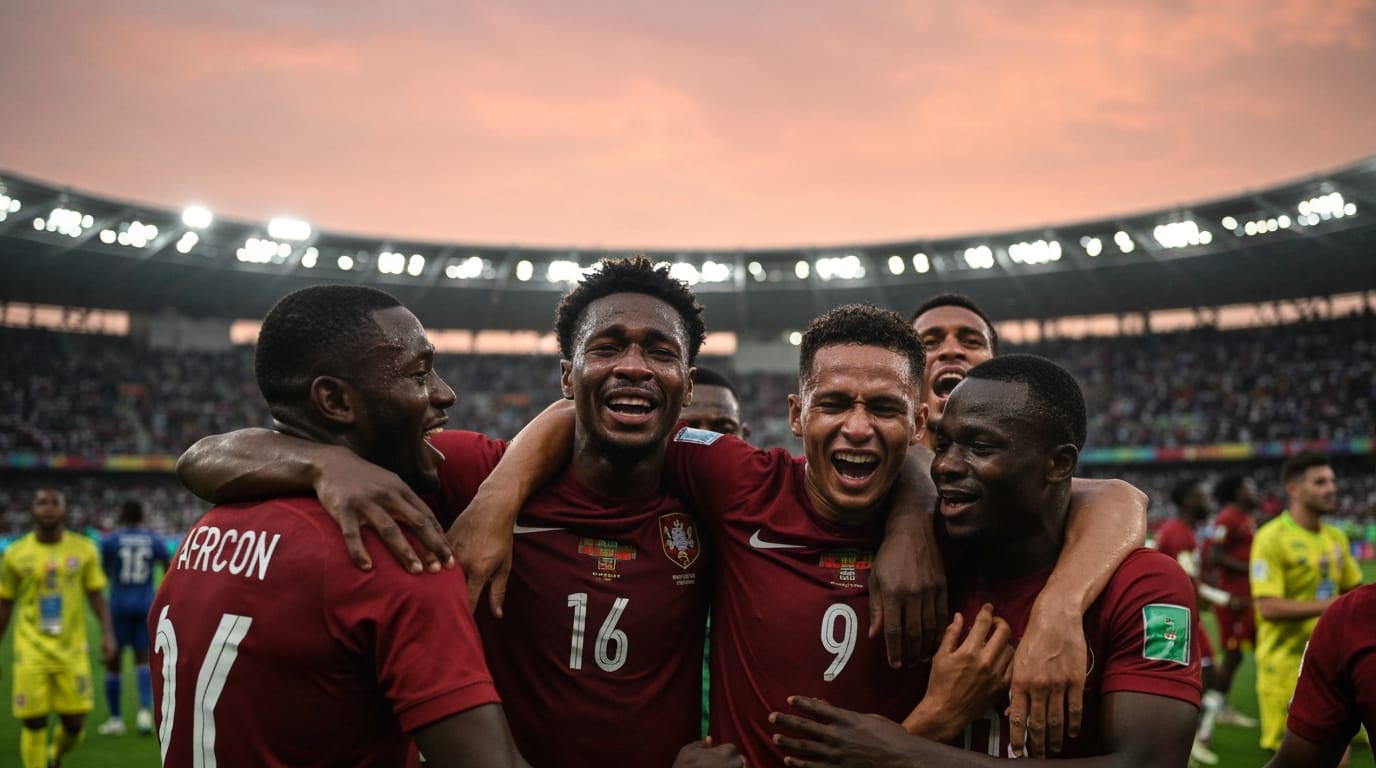
For many African footballing nations, the quadrennial FIFA World Cup often brings a mix of soaring hopes and crushing disappointments. While the global stage offers unparalleled visibility, the journey can frequently end in collective heartbreak. Yet, even in the wake of such setbacks, the Africa Cup of Nations (AFCON) consistently emerges as a vital tournament, providing a crucial platform for redemption, renewed ambition, and a potent celebration of continental pride. This biennial spectacle, deeply embedded in Africa's sporting and cultural fabric, frequently allows teams and fans to quickly shift focus from global misses to the pursuit of cherished continental glory.
The Weight of World Cup Aspirations and Past Disappointments
The FIFA World Cup, despite its allure, has often proven to be a difficult stage for African teams. The 2018 tournament in Russia stands as a stark example of collective disappointment for the continent. All five African representatives – Egypt, Morocco, Nigeria, Senegal, and Tunisia – were eliminated during the group stage, marking the worst performance by African nations since the 1986 World Cup. Many of these exits were characterized by narrow margins, late goals conceded, and even disciplinary records playing a deciding factor, such as in Senegal's case. Football enthusiasts at the time voiced widespread disappointment, noting that teams with numerous European-based players had underperformed. This collective early exit was a significant blow, especially after hopes had been high for African teams to build on previous successes where at least one team had advanced past the group stages in every World Cup since 1986.
More recently, the pain of World Cup qualification has been acutely felt by nations like Nigeria. The Super Eagles, three-time AFCON champions, recently missed out on a spot in the 2026 FIFA World Cup for the second consecutive cycle. This unprecedented setback for a nation considered a continental powerhouse has left players and fans seeking an immediate path to redemption. The disappointment was palpable, with fans expressing immense sadness and former players acknowledging the difficulty of digesting such a reality. Nigeria's President Bola Ahmed Tinubu has explicitly advised the team to now "focus all efforts on the Cup of Nations" following their World Cup playoff defeat, underscoring the continental tournament's role as a crucial next target.
The Gleam of Qatar 2022: A Shift in Narrative
While 2018 brought frustration, the 2022 FIFA World Cup in Qatar offered a contrasting and historically significant narrative for African football. The tournament witnessed a record-breaking performance for the continent, with every African team securing at least one victory. This collective achievement included notable upsets, such as Cameroon stunning Brazil, Tunisia defeating reigning champions France, and Morocco overcoming Belgium.
The undeniable highlight of the 2022 World Cup was Morocco's phenomenal run to the semi-finals. The Atlas Lions made history by becoming the first African nation to reach the final four of the global tournament, captivating audiences worldwide with their resilient performances. Their journey saw them top a group that included formidable opponents like Belgium and Croatia, before knocking out European giants Spain and Portugal in the knockout stages. This groundbreaking achievement not only showcased African football's growing capabilities on the world stage but also inspired millions across the continent and beyond. Morocco's success fostered a belief that African teams could truly compete with any top opponent, signaling a shift in perception and ambition.
AFCON: The Continent's Own Stage for Redemption and Glory
Amidst the highs and lows of World Cup campaigns, the Africa Cup of Nations remains the continent's most prestigious football competition, organized biennially by the Confédération Africaine de Football (CAF). Since its modest beginnings in 1957 with just three participating teams, AFCON has evolved into a major international showcase featuring twenty-four nations, becoming a consistent mirror of Africa's identity, ambition, and political evolution.
The tournament serves as a powerful symbol of national pride, fostering unity and transcending diverse cultures across the continent. Historically, AFCON victories have often reflected national rebirths, political transitions, and collective healing, with titles living on in songs, parades, and family stories. Beyond showcasing athletic prowess, the Cup of Nations has been a conduit for expressing political values and ideas, inspiring millions through the success stories of footballing icons such as Didier Drogba, Samuel Eto'o, Mohamed Salah, and Sadio Mané.
For many nations, AFCON offers an immediate opportunity to reset, rebuild, and reassert their footballing credentials after global disappointments. The upcoming 2025 edition in Morocco is particularly significant for teams like Nigeria, whose players and officials explicitly view it as a chance to "redeem" themselves following their consecutive World Cup qualification failures. The sentiment within the Nigerian camp is that winning AFCON would not only atone for the pain of missing the World Cup but also serve as a message that the team only faced a "rough path" during the qualifiers, helping to bring fans and players together. This intense focus highlights AFCON's enduring power as a platform where legacies are measured honestly, without hype or shortcuts.
Morocco 2025: A Tournament of High Stakes and Renewed Hope
The stage is now set for the 2025 Africa Cup of Nations, hosted by Morocco from December 21, 2025, to January 18, 2026. For Morocco, the host nation, this tournament carries particular significance as they look to build upon their historic semi-final run at the 2022 World Cup. Their coach, Walid Regragui, aims to continue their impressive trajectory and potentially secure the continental crown on home soil, a feat that would solidify their status as a dominant force in African football. While hosting brings additional pressure, Morocco's strong home record and talented squad, featuring players like Achraf Hakimi and Hakim Ziyech, make them strong contenders.
For other powerhouses, AFCON 2025 represents different facets of ambition. Nigeria, for instance, sees it as a crucial opportunity to mend recent disappointments and deliver a trophy their talented squad is believed to be capable of. Egypt, the most decorated nation with seven AFCON titles, will be driven by their star player Mohamed Salah's quest to finally lift the trophy after losing two finals. Senegal, the reigning champions from 2021, enter the tournament among the favorites, boasting a strong squad with players like Sadio Mané.
The tournament, which will unfold across nine venues in six cities, is also a crucial test run for Morocco, as it will co-host the 2030 FIFA World Cup alongside Portugal and Spain. Beyond the competition on the pitch, AFCON contributes significantly to national unity, economic benefits for host countries, and inspires youth across the continent. The passionate support, vibrant culture, and festive atmosphere surrounding AFCON underline its role as more than just a football tournament; it is a celebration of the African spirit.
In conclusion, the Africa Cup of Nations stands as an enduring emblem of hope and resilience in African football. While World Cup campaigns can bring both moments of brilliance and profound disappointment, AFCON consistently offers a timely opportunity for teams to rally, showcase their talent, and pursue glory on their own continental stage. For nations navigating the aftermath of global setbacks, AFCON is not merely a competition; it is a vital source of redemption, a beacon of national pride, and a powerful reaffirmation of Africa's rich and vibrant footballing identity. It is where new narratives are forged, and the continent's footballing dreams are kept alive, one passionate tournament at a time.