Africa Divided: Macky Sall's UN Bid Falters Amidst Continental and Domestic Opposition
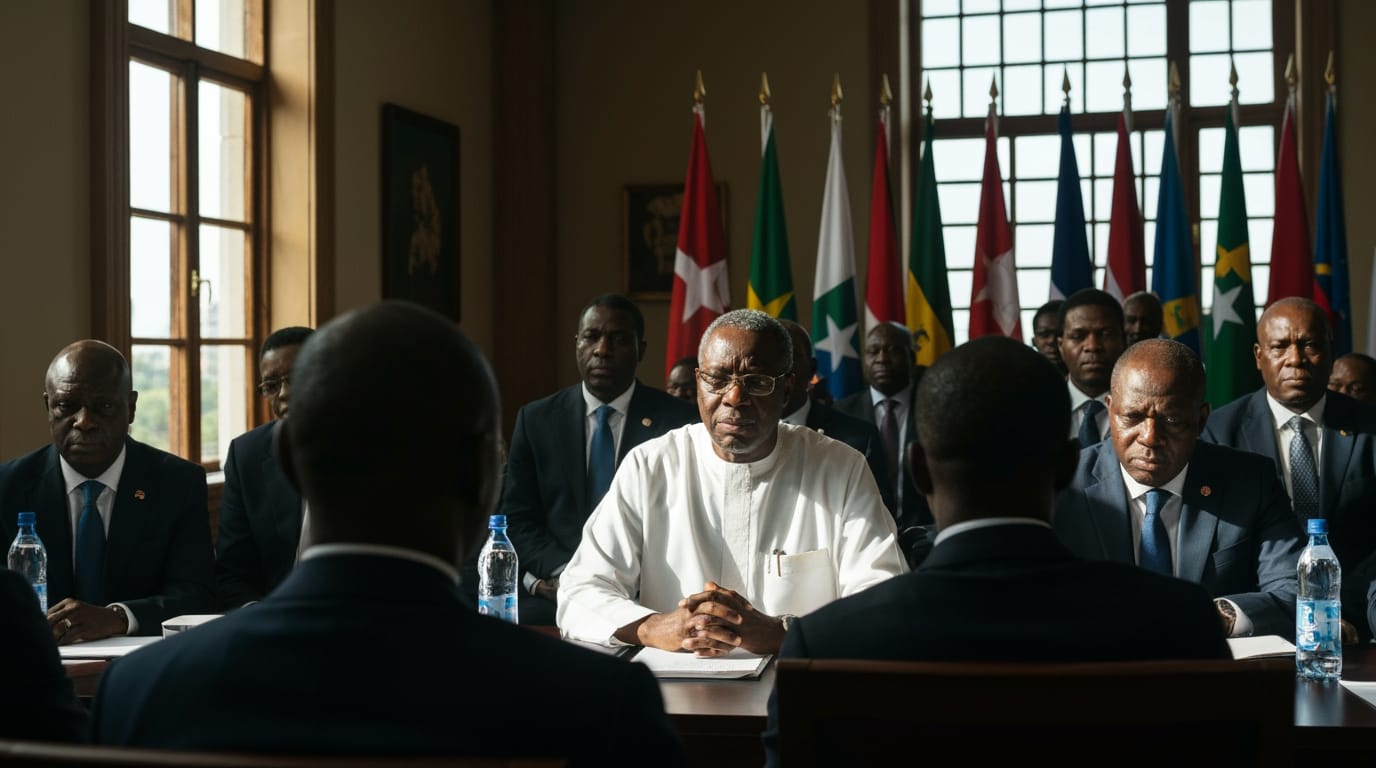
Former Senegalese President Macky Sall's aspiration to lead the United Nations has encountered significant obstacles, revealing deep fissures within the African Union (AU) and considerable opposition within his home country. What might have been perceived as a straightforward path for a prominent African statesman has instead become a contentious diplomatic episode, underscoring challenges in continental unity and the long shadow of domestic politics on international ambitions. The African Union's decisive refusal to endorse Sall's candidacy has brought to light a complex interplay of credibility, timing, and trust that has left Africa fractured over a critical global leadership role.
A Continental Rebuke and the Quest for Consensus
The African Union's decision not to back Macky Sall for the UN Secretary-General position was a striking departure from what might typically be expected for a former head of state of his stature. This rejection was neither sudden nor accidental but rather the culmination of deeper concerns and a clear lack of consensus among member states. Around 20 countries, including Senegal itself, did not support the bid, signaling a profound disagreement that extended beyond mere procedural matters. For a candidate to advance to a global role as significant as UN Secretary-General, broad regional consensus is not merely advantageous; it is essential, serving as strategic currency in the intricate world of international diplomacy.
The absence of a united front highlights a recurring challenge for the AU: its struggle to speak with a single, authoritative voice on the global stage. Without the required backing, the AU could not formally adopt Sall as its candidate, effectively leaving him to pursue the role without the continental mandate that often proves decisive. This failure to rally behind a single candidate risks diluting Africa's influence in global leadership contests, especially as geopolitical competition for such positions intensifies.
The Shadow of Domestic Unrest and Eroded Credibility
A critical factor undermining Sall's international aspirations has been the lingering impact of his final years in power in Senegal. His presidency, particularly from 2021 to 2024, was marred by significant political unrest and accusations that have eroded his credibility both at home and across the continent. Attempts to pursue a controversial third term, despite eventually stepping aside, triggered widespread protests, political tensions, and tragically, the loss of at least 65 lives.
This turbulent period has cast a long shadow, prompting questions about Sall's suitability to embody the stability, restraint, and respect for democratic norms expected of a UN leader. Critics argue that the UN should not become a "laundering place for blood crimes and economic crimes," directly referencing the accusations of repression and increased national debt under his administration. For many African states, leadership at the UN level demands not just experience but symbolic credibility, a perception that, once shaken, proves difficult to fully restore in a short timeframe. The timing of his candidacy, shortly after a politically sensitive period in his country, made it harder for him to present himself as a neutral, unifying figure on the international stage.
Procedural Missteps and the Erosion of Trust
The manner in which Macky Sall's candidacy emerged also contributed significantly to the continental division. Instead of being formally presented and championed by Senegal, his bid surfaced through diplomatic channels linked to Burundi, which held the rotating chairmanship of the African Union at the time. This unconventional approach raised immediate red flags among many African leaders.
Rwandan Foreign Minister Olivier Nduhungirehe publicly excoriated Burundi's President Évariste Ndayishimiye for attempting to force an endorsement of Sall's candidacy without proper consultation. Nduhungirehe highlighted that the nomination "came as a surprise" to African leaders, who were reportedly given a mere 24 hours to either endorse or reject it. This perceived "diktat" and "disrespect" from the AU Chairperson further alienated member states, leading to a breakdown of trust and undermining the legitimacy of the proposed endorsement process. Objections mounted behind closed doors, with member states questioning the transparency and institutional grounding of Sall's emergence as a candidate. This procedural misstep not only complicated Sall's bid but also exposed underlying tensions within the AU regarding leadership selection protocols.
Senegal's Own Deep Divisions
The continental resistance to Macky Sall's UN bid is mirrored by significant divisions within Senegal itself. While some segments of the political class and trade unions, particularly members of his former party, the Alliance for the Republic (APR), support his ambition, many others vehemently oppose it. Sall's supporters emphasize his international achievements, such as securing Africa's permanent seat in the G20 and his diplomatic role in the Russia-Ukraine war, arguing that he consistently placed Africa at the center of global debates. They believe his experience makes him well-suited for the UN's top job.
However, opposition is robust and deeply rooted in the contentious events of his final years. Victims of the violence between 2021 and 2024 have voiced strong opposition, unwilling to see a leader associated with such events represent the international community. Even within the current ruling majority in Senegal, there are voices against his candidacy, accusing him of oversight in human rights abuses and increasing national debt. Communication consultant Mademba Ndiaye noted that the candidacy is likely to remain contentious both regionally and domestically, reflecting the unresolved political tensions and calls for accountability within Senegal. The internal debate reveals a nation still grappling with the legacy of its former leader, unwilling to present a unified front for his global aspirations.
Implications for Africa's Global Voice
Macky Sall's embattled bid for the UN Secretary-General position carries significant implications for Africa's standing on the world stage. The failure of the African Union to coalesce around a single candidate underscores the persistent challenge of projecting a unified continental voice in crucial international forums. In the intricate political landscape of the United Nations, regional endorsement is not merely symbolic; it is a strategic asset. Without it, even experienced candidates face a considerable disadvantage, navigating a complex environment where regional blocs and alliances often dictate outcomes.
Despite the setbacks, Sall's team has indicated that he plans to press ahead with his campaign, maintaining that the process remains open. However, the lack of African Union unity is widely expected to open the door for other potential African candidates to emerge or, conversely, inadvertently strengthen candidates from outside the continent if Africa cannot present a strong, unified contender. The episode serves as a powerful reminder that global leadership aspirations require not only individual qualifications but also robust, unassailable support from one's own nation and a clear, unified mandate from one's regional bloc. The internal balancing act and the need for broad confidence, both domestically and continent-wide, remain decisive factors in diplomacy at this level.


