Africa's Critical Minerals: At the Crossroads of US-China Global Rivalry
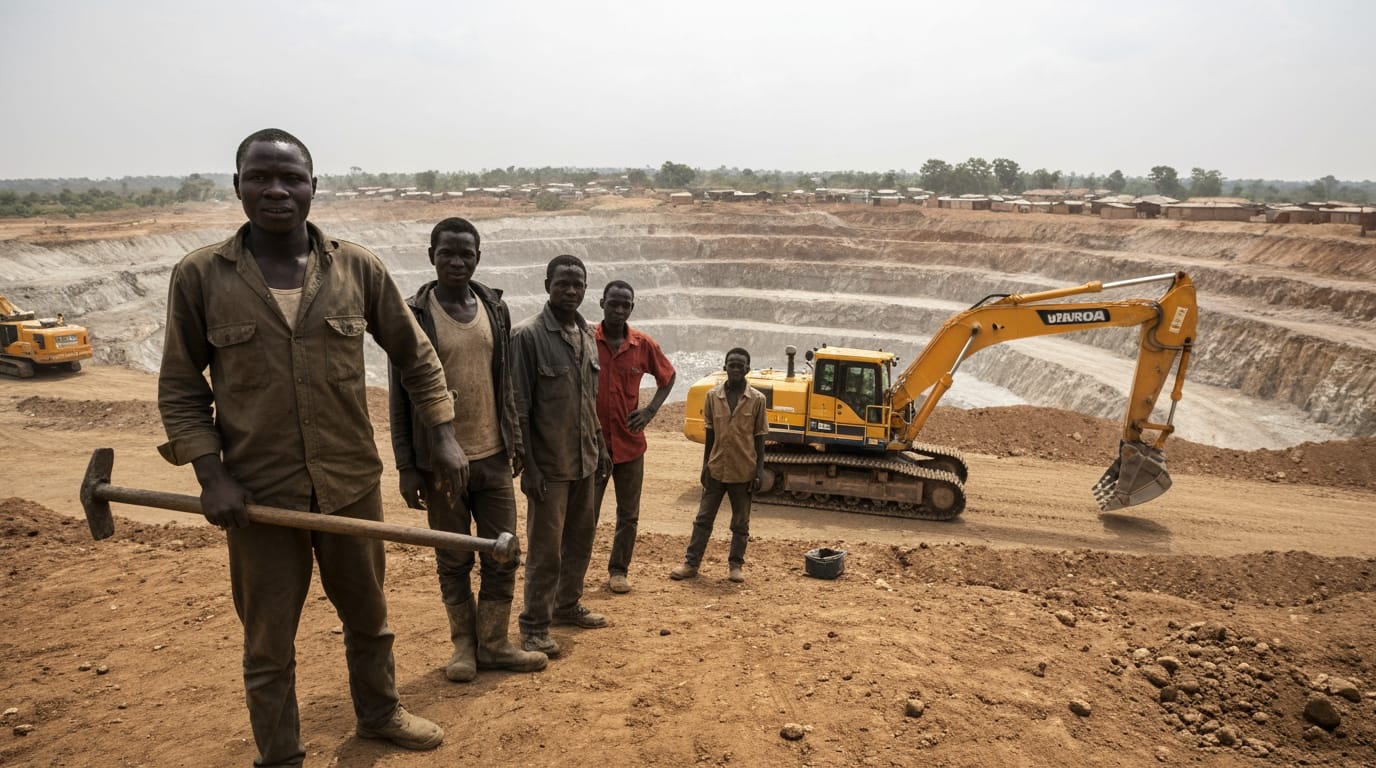
Africa has emerged as the pivotal battleground in an intensifying geopolitical competition between the United States and China, driven by the surging global demand for critical minerals essential to modern technology and the burgeoning green energy transition. As the world pivots towards electric vehicles, renewable energy infrastructure, and advanced electronics, the continent's vast and largely untapped mineral wealth positions it at the center of a strategic resource race with profound implications for global supply chains and Africa's future development.
The New Geopolitical Prize: Critical Minerals and Global Demand
The strategic importance of critical minerals—a category encompassing cobalt, lithium, nickel, rare earth elements, manganese, platinum group metals, graphite, chromium, and bauxite—has escalated dramatically. These elements are indispensable for manufacturing everything from electric vehicle batteries and wind turbines to fighter jets and semiconductor chips. The World Bank projects that by 2050, the demand for certain critical minerals like graphite, lithium, and cobalt could increase by 500% compared to 2018 levels, underscoring their vital role in achieving clean energy goals.
Africa holds an estimated 30% of the world's known critical mineral reserves. The Democratic Republic of Congo (DRC) alone controls approximately 70-73% of global cobalt production, a key component in lithium-ion batteries. South Africa possesses roughly 45-50% of global manganese reserves and 88% of known platinum group metals (PGMs). Other significant deposits include lithium in Zimbabwe, Mali, and the DRC; copper in Zambia; graphite in Mozambique and Madagascar; and bauxite in Guinea. This concentration of vital resources makes Africa an unavoidable focal point for industrial nations seeking to secure their economic and national security interests.
China's Entrenched Dominance: A Strategy of Infrastructure and Access
For over two decades, China has systematically established itself as the dominant player in Africa's critical minerals sector. Its strategy, largely implemented through the Belt and Road Initiative (BRI), involves state-backed investments that intertwine infrastructure development with resource acquisition. Beijing offers African nations significant infrastructure projects—including roads, railways, and ports—often in exchange for long-term access to raw materials. This model ensures that the necessary logistics are in place to transport minerals from extraction sites to export hubs, frequently connecting directly to Chinese-controlled shipping routes.
China's approach extends beyond mere extraction; it has invested heavily in the refining and processing capabilities for critical minerals. China currently accounts for 85-90% of global rare earth element mine-to-metal refining and processing, and it processes approximately 77% of Africa's raw mineral materials after export. This vertical integration provides China with a significant advantage in global supply chains, creating a mutual dependency where African nations often rely on China for processing, while China relies on Africa for raw materials. Chinese companies, including state-owned enterprises, control substantial mining operations in key countries like the DRC (cobalt) and Zimbabwe (lithium). In 2024, Chinese investment in Africa's mining sector reached an estimated $3.37 billion.
The United States' Evolving Strategy: Countering Influence and Securing Supply Chains
The United States, historically less focused on direct critical mineral extraction in Africa compared to China, is now intensifying its engagement due to concerns over supply chain vulnerabilities and national security. Beijing's control over critical minerals, exemplified by its past export controls on elements like gallium and germanium, has underscored the urgency for Washington to diversify its sources.
The US strategy marks a shift from traditional aid-focused approaches to one emphasizing trade, investment, and selective partnerships based on resource development. The US prioritizes private sector involvement and aims to secure critical minerals to reduce its reliance on China while advancing clean energy and economic goals. Initiatives like the Lobito Corridor project, which aims to improve rail transportation from Zambia and the DRC to Angola's Atlantic coast, are examples of US-backed efforts to create alternative export routes that bypass Chinese-built infrastructure. In 2023, the US invested $7.4 billion in Africa overall, though critical mineral investments were a smaller portion at just under $300 million. The US also seeks to collaborate with allies through initiatives like the Minerals Security Partnership (MSP) to coordinate investments and establish bilateral critical mineral partnerships with African nations. The recent US National Security Strategy signals a transactional approach, focusing on economic growth and resource development, and partnering with "capable, reliable states" committed to open markets.
African Agency and the Path Forward: Balancing Opportunity and Sovereignty
African nations find themselves at a crucial juncture, navigating the intense rivalry between the two global powers. This competition presents both significant opportunities for economic development and substantial risks to national sovereignty and long-term sustainability.
African leaders express a desire not to "pick sides" but rather to leverage the competition to secure the "best of both worlds"—seeking investments and partnerships that align with their developmental priorities. There is a growing emphasis on local value addition, meaning African countries want to process and refine their minerals domestically rather than exporting them as raw materials, a practice that historically has limited their economic benefits. The African Continental Free Trade Area (AfCFTA) and the African Union's Green Minerals Strategy are frameworks aimed at boosting intra-African trade and increasing regional beneficiation, enabling countries to capture more value from their resources.
However, the continent also grapples with the enduring legacy of colonial-era resource exploitation, which often left nations dependent on raw material exports and vulnerable to the "resource curse"—where abundant natural resources lead to conflict, corruption, and underdevelopment. The current competition exacerbates concerns over debt traps, environmental degradation, and the potential for foreign interests to undermine national sovereignty, particularly through resource-backed loans or infrastructure deals that create long-term dependencies. Ensuring transparency, implementing robust regulatory frameworks, and fostering domestic capacity building are critical for African nations to truly benefit from their mineral wealth.
Conclusion: The Future Landscape of Global Resource Geopolitics
The US-China resource race in Africa is reshaping global supply chains and profoundly influencing the trajectory of the clean energy transition. Africa, with its immense critical mineral reserves, is no longer merely a source of raw materials but an increasingly influential player in global geopolitics. The decisions made by African governments in navigating this complex competitive landscape will determine not only their own economic futures but also the balance of power in the global resource economy. As both Washington and Beijing vie for influence, the continent's ability to assert its agency, prioritize sustainable development, and demand equitable partnerships will be paramount in transforming its mineral wealth into lasting prosperity rather than a perpetuation of historical exploitation.


