Africa Urges Restraint as US-Israel Strikes Escalate Tensions Across Middle East
Addis Ababa, Ethiopia — A series of coordinated military strikes by the United States and Israel against targets in Iran, which resulted in the death of Iranian Supreme Leader Ayatollah Ali Khamenei, has triggered widespread alarm and urgent calls for de-escalation from African nations and international bodies. The attacks, launched on Saturday, February 28, 2026, mark a significant intensification of hostilities in the Middle East, prompting retaliatory strikes from Tehran and raising fears of a broader regional conflict with profound global implications.
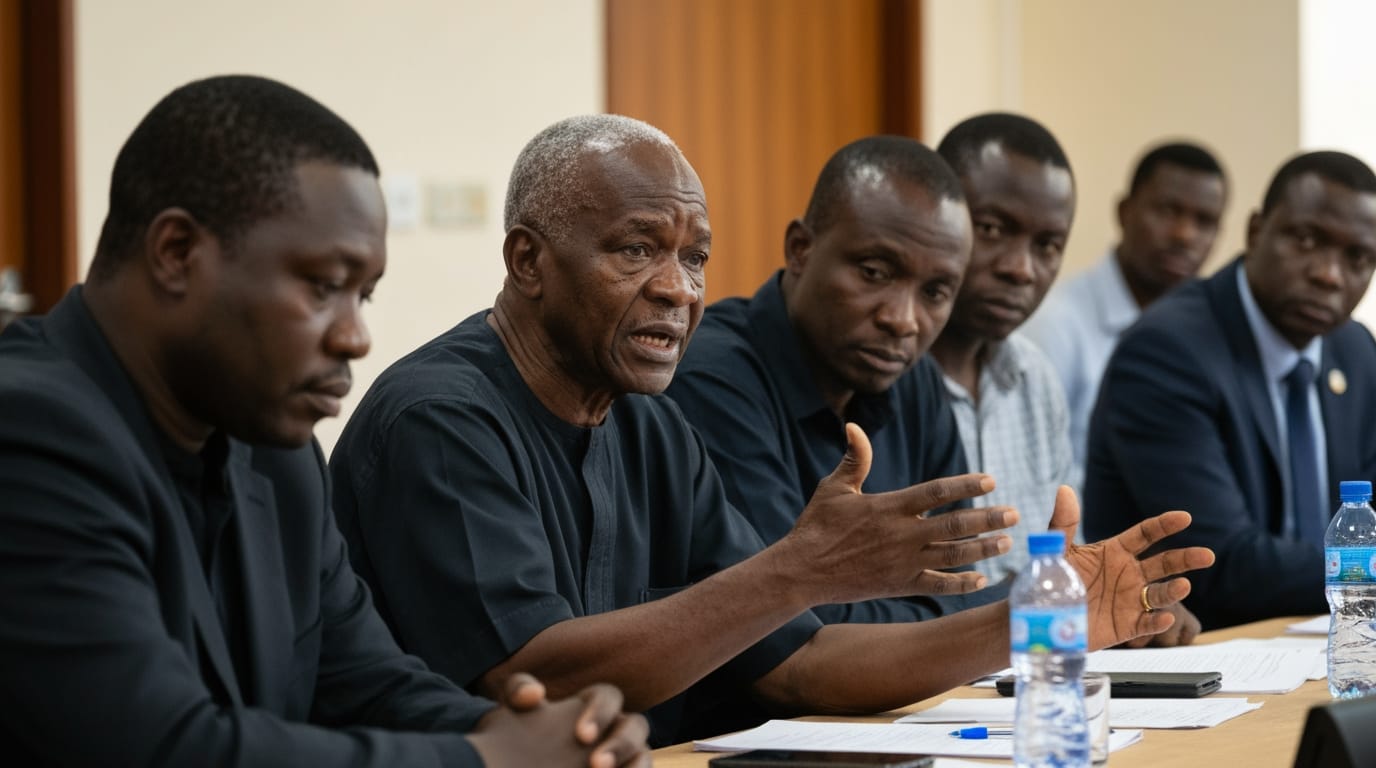
The African Union (AU) was quick to express its deep concern, with Chairperson Mahmoud Ali Youssouf appealing for "restraint, urgent de-escalation and sustained dialogue" between all parties involved. Youssouf warned that further escalation risked exacerbating global instability, particularly impacting Africa's energy markets, food security, and economic resilience, a continent already grappling with numerous internal conflicts and economic pressures.
Unprecedented Strikes and Swift Retaliation
The joint offensive, dubbed "Operation Epic Fury" by some, saw US and Israeli forces target Iranian military sites, nuclear facilities, and key leadership infrastructure across the Islamic Republic. Among the primary objectives stated by Washington and Tel Aviv were eliminating perceived imminent threats, dismantling Iran's nuclear program, and fostering a change in government leadership. The death of Ayatollah Ali Khamenei, Iran's long-serving Supreme Leader, in one of the initial strikes sent shockwaves through the region and beyond, prompting immediate and strong condemnation from Tehran.
In a swift and forceful response, Iran's Revolutionary Guard launched waves of missiles and drones. These retaliatory strikes targeted Israeli cities, including Tel Aviv, and US military installations situated in various Gulf states such as Bahrain, Qatar, the United Arab Emirates, and Kuwait. Explosions were reported across the Gulf region, with smoke seen rising over Tehran and missile interceptions lighting up skies in several locations. The intensified conflict also saw Israel conduct airstrikes in Lebanon in response to attacks from the Iranian-backed Hezbollah group. The unfolding events led to immediate disruptions, including airspace closures and the cancellation of numerous flights by regional and international airlines.
The Deep Roots of Escalation
The recent escalation follows a prolonged period of heightened tensions between the US, Israel, and Iran, punctuated by diplomatic efforts that ultimately failed to avert military confrontation. For weeks leading up to the strikes, indirect nuclear negotiations between Washington and Tehran, mediated by Oman, had been underway but concluded without a significant breakthrough. These discussions were aimed at addressing concerns over Iran's nuclear program, which the US and Israel contend poses a proliferation risk, while Tehran maintains its program is for peaceful purposes.
The conflict's history is marked by a decades-long rivalry, sanctions, proxy conflicts, and periodic military confrontations. A previous 12-day war in June 2025, involving Israel and Iran with US intervention, had temporarily ended with a ceasefire, but underlying animosities and strategic objectives remained unresolved. The current US and Israeli operations are not only aimed at Iran's nuclear capabilities but also at undermining its regional influence and challenging its leadership.
Africa's Call for Diplomacy and Warnings of Fallout
The African response to the escalating conflict has been clear and consistent: a strong emphasis on diplomatic solutions and a stark warning about the potential consequences for the African continent. South Africa's President Cyril Ramaphosa condemned the initial US and Israeli strikes, asserting they violated international law and that "anticipatory self-defense is not permitted" under such legal frameworks. The African National Congress (ANC) echoed these sentiments, stressing that lasting peace could only be achieved through dialogue, meaningful negotiations, and a genuine commitment to coexistence, rather than military standoffs.
The concerns voiced by African leaders are not merely humanitarian. The African Union's Chairperson, Mahmoud Ali Youssouf, highlighted the grave economic risks to Africa, including severe implications for energy markets, food security, and overall economic resilience. Analysts have corroborated these fears, noting that a prolonged conflict could push crude oil prices significantly higher, offering temporary relief to oil-producing African nations but posing severe inflationary risks for fuel importers. This would translate into higher fuel and transportation costs, straining household budgets and potentially undermining fragile economic recoveries across the continent, particularly in East African nations heavily reliant on imported energy.
Furthermore, disruptions to critical shipping routes, such as those in the Red Sea, could lead to increased freight costs and supply chain instabilities for essential goods, including food and fertilizers, disproportionately affecting vulnerable East African communities. The broader geopolitical instability could also deter foreign investment in Africa, as investors become more risk-averse, impacting critical sectors like mining.
Broader Regional and International Repercussions
The sudden surge in hostilities has prompted reactions from across the globe. While some nations, including Canada, Australia, and Ukraine, voiced support for the US and Israel, others like Russia and China have sided with Iran, reflecting existing geopolitical fault lines. European nations have largely called for de-escalation, with Spain specifically condemning the initial US-Israeli actions as a violation of international law.
The United Nations Secretary-General António Guterres has also weighed in, stating that the US and Israeli airstrikes violated international law and the UN Charter, and urged all parties to prevent further escalation. The International Atomic Energy Agency (IAEA) has expressed concerns about the safety of nuclear facilities in the region, calling for maximum restraint to avoid a radiological incident. The potential for Iranian proxy groups, including the Houthis in Yemen, Hezbollah in Lebanon, and various Iraqi militias, to fully mobilize in retaliation remains a significant concern, threatening to further expand the geographical scope of the conflict.
A Precarious Future
The Middle East finds itself at a critical juncture, with the recent US-Israeli strikes and Iran's swift retaliation pushing the region to the brink of a wider conflict. The killing of a sitting Supreme Leader of Iran marks an unprecedented development, fundamentally altering the dynamics of an already volatile region. While the stated objectives of the US and Israel include dismantling Iran's nuclear ambitions and promoting regime change, the immediate outcome has been a rapid escalation of violence.
African nations, acutely aware of the potential for devastating ripple effects across their continent, are unified in their plea for restraint and a return to diplomacy. The global community now watches anxiously, hoping that international efforts and appeals for de-escalation can prevent a catastrophic conflict whose consequences would reverberate far beyond the Middle East, impacting global peace, security, and economic stability.


