Gaza: A Cry for Peace Lost in the Shadow of Regional Strife
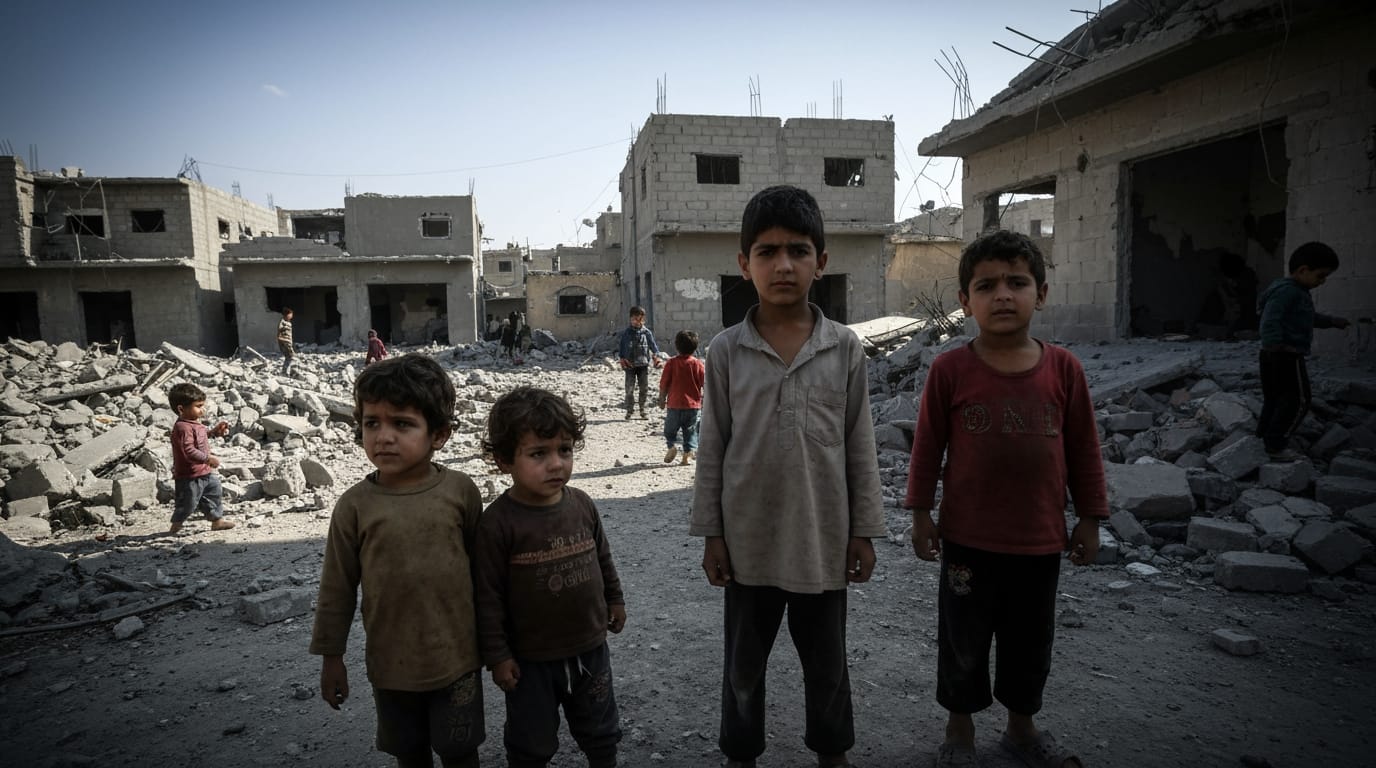
Gaza remains ensnared in a humanitarian catastrophe and a protracted conflict, its plight frequently overshadowed by the broader geopolitical tensions consuming the Middle East, particularly the ongoing proxy conflicts involving Iran. Despite recent efforts towards a ceasefire and a comprehensive peace plan, the strip is a stark landscape of devastation, with its populace caught between cycles of violence and an elusive promise of peace. The international community's attention often shifts to more expansive regional flashpoints, leaving Gaza in a state of limbo where the line between war and fragile truce blurs.
The Long Shadow of Regional Geopolitics and Iran's Influence
For decades, Iran has cultivated a network of proxy forces, often referred to as the "axis of resistance," extending its influence across the Middle East. Groups such as Hamas and Palestinian Islamic Jihad (PIJ) in Gaza have received financial, military, and logistical support from Tehran, positioning them as key actors in Iran's strategy to counter Israeli and U.S. interests in the region. This approach, characterized by proxy warfare, aims to encircle Israel and exert pressure without engaging in direct state-on-state conflict.
The regional power dynamics mean that events far beyond Gaza's borders directly impact its destiny. For instance, the ongoing conflict with Iran has further exacerbated the humanitarian situation in Gaza, leading to increased restrictions on aid and continued Israeli strikes, even amid supposed ceasefires. Some residents of Gaza, paradoxically, observe these larger conflicts with a mixture of despair and faint hope, believing that a significant shift in regional power, regardless of its alignment with their immediate interests, might disrupt their stagnant reality. This intricate web of alliances and antagonisms ensures that Gaza's fate is inextricably linked to the broader regional chessboard, often relegating its immediate suffering to a secondary concern on the international agenda.
Gaza's Deepening Humanitarian Catastrophe and Economic Collapse
The human cost of the prolonged conflict in Gaza is staggering. As of April 2026, over 73,000 Palestinians have been reported killed, with studies indicating a significant undercount and a disproportionate number of casualties being women and children. The violence has led to mass displacement, with nearly 1.9 million people—approximately 90% of Gaza's population—uprooted from their homes, facing dire shortages of shelter, food, clean water, and essential medical care.
Gaza's economy, already fragile, has suffered a catastrophic collapse. Pre-war poverty rates of 64% and high unemployment have spiraled, pushing nearly 100% of the population into poverty and an unemployment rate exceeding 80%. The destruction of infrastructure, including homes, hospitals, schools, and critical water and sanitation systems, is estimated to cost tens of billions of dollars to rebuild. Famine conditions have been confirmed in some areas, with 100% of the population experiencing acute food insecurity and a significant portion facing catastrophic levels. The ongoing blockade and restrictions on humanitarian aid continue to deepen this crisis, severely impeding the delivery of life-saving supplies and any prospect of recovery.
A Cycle of Conflict and Elusive Ceasefires
Gaza has endured a relentless cycle of escalations between Israeli forces and Hamas, punctuated by often short-lived and fragile ceasefires. The most recent large-scale conflict began with the October 7, 2023 attacks by Hamas, which triggered a substantial Israeli offensive. Interim ceasefires in late 2023 and early 2025 offered brief reprieves but ultimately collapsed, highlighting the deep-seated obstacles to lasting peace.
Even when a "ceasefire in name only" is declared, as was the case in October 2025, the reality on the ground often tells a different story. Israeli strikes have reportedly continued, civilians have been killed, and aid access has remained restricted, demonstrating the fragility and incompleteness of such pauses. For many Gazans, the daily struggle for survival overshadows any broader political considerations. They are trapped in a constant state of uncertainty, where the distinction between active conflict and tenuous peace has become increasingly blurred, and the psychological toll is immense.
The Challenging Path Towards Enduring Peace
Despite the dire circumstances, diplomatic efforts persist, albeit with significant hurdles. A U.S.-brokered "Gaza peace plan," officially known as the "Comprehensive Plan to End the Gaza Conflict," was endorsed by the UN Security Council in November 2025. This plan outlines a multi-phase approach, including an immediate ceasefire, the release of all hostages, prisoner exchanges, the demilitarization of the Gaza Strip, and the deployment of an international stabilization force. It also envisions transitional governance by Palestinian technocrats and a large-scale reconstruction effort.
However, the implementation of this plan faces immense challenges. Key sticking points include the demilitarization of Hamas, which has not fully accepted this condition, and the ongoing military actions even after the plan's adoption. The financial requirements for reconstruction are staggering, with estimates ranging from $50 billion to $80 billion, and securing adequate funding remains a significant concern. The international consensus for a two-state solution, long championed by the UN, continues to be undermined by persistent violence, settlement expansion, and the absence of a clear political horizon for an independent Palestinian state.
Conclusion
Gaza exists in a state of profound crisis, a humanitarian disaster unfolding amidst a complex geopolitical landscape. Its acute suffering is often marginalized by the larger regional confrontations, particularly those involving Iran, which divert international attention and resources. The ongoing struggle between war and elusive peace leaves its population in a precarious and desperate situation. Achieving a lasting resolution demands not only an immediate end to hostilities and unrestricted humanitarian access but also a sustained, comprehensive international effort that addresses the deep-seated political, economic, and social challenges. Without such a concerted and dedicated approach, Gaza risks remaining a forgotten crisis, perpetually caught in a cycle of devastation and unfulfilled hopes for peace.


