US Military Navigates Libya's Divisive Landscape: A Quest for Unity Amidst Russian Pressure
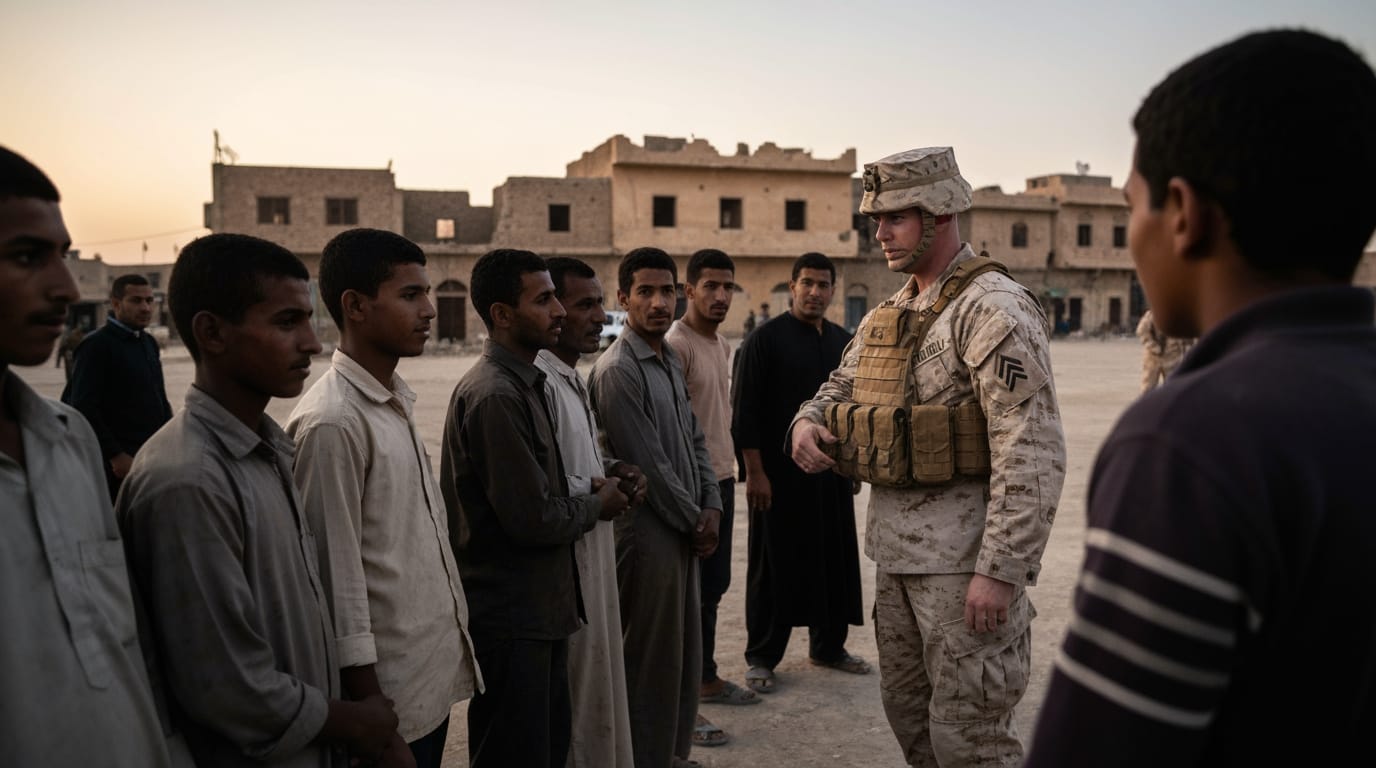
The United States military finds itself engaged in a complex and often contradictory mission in Libya, striving to foster national unity and stability in the war-torn North African nation while simultaneously confronting an expanding Russian influence. This intricate dance of diplomacy, military engagement, and strategic competition underscores the multifaceted challenges of a post-conflict state, where internal divisions are exacerbated by external power plays. Washington's approach reflects a delicate balancing act, aiming to prevent further destabilization while guarding against the geopolitical aspirations of a resurgent Moscow.
America's Enduring Commitment to Libyan Stability
Since the 2011 overthrow of Muammar Gaddafi, Libya has grappled with persistent fragmentation and violent conflict, prompting a sustained, albeit evolving, commitment from the United States. Washington's stated objectives are clear: to support an immediate cessation of hostilities through United Nations-led mediation efforts and to facilitate the emergence of a stable, prosperous, and democratic Libya with a unified and inclusive government. This commitment extends to providing targeted assistance aimed at bolstering Libyan institutions, promoting political reconciliation, and enhancing the government's capacity to deliver essential services, secure its borders, and manage public finances transparently.
The US Strategy to Prevent Conflict and Promote Stability (SPCPS) for Libya outlines a long-term goal of a democratically elected, representative authority capable of ensuring human rights and fostering inclusive economic growth. Central to this strategy is the promotion of inclusive political and economic processes, actively seeking to increase the participation of marginalized groups, women, and youth. Beyond political reform, the US military has historically engaged in direct action, notably conducting airstrikes against Islamic State (ISIL) targets between 2015 and 2019 to eliminate the terrorist group's foothold in the region, in support of the Tripoli-based Government of National Accord. More recently, joint military exercises, such as the upcoming Flintlock 2026, are designed to enhance counterterrorism capabilities and, critically, to foster the unification of Libya's fractured military institutions by bringing together forces from both western and eastern factions. These initiatives underscore a broader international effort to support Libya's security sector and improve interoperability among allied forces to address shared threats.
Russia's Calculated Gambit in North Africa
Against this backdrop of US efforts to cultivate unity, Russia has steadily increased its footprint in Libya, exploiting the power vacuum and internal divisions that have plagued the nation. Moscow's expanding influence is primarily channeled through the Wagner Group, a private military company now known as Africa Corps, which has actively supported Khalifa Haftar's self-styled Libyan National Army (LNA) in the eastern part of the country. This support has manifested in various forms, including the deployment of mercenaries, the introduction of advanced military hardware such as Mig-29 fighter jets and armored vehicles, and the reported laying of landmines and improvised explosive devices—all in violation of the UN arms embargo. US Africa Command (AFRICOM) has documented these activities, accusing Russia of using the Wagner Group as a proxy to establish a long-term presence on the Mediterranean Sea.
The implications of Russia's deepening engagement extend beyond Libya's borders. US and European strategists view Russia's presence as a strategic bridgehead, enabling Moscow to project power into the Sahel region and support anti-Western governments across Africa. There are significant concerns that Russia seeks to establish a durable maritime presence in the Mediterranean and gain influence over crucial transit routes, thereby positioning itself to exert pressure on Europe regarding energy security and critical infrastructure. The redeployment of Russian military assets from Syria to Libya following the collapse of the Assad regime further highlights Moscow's intent to consolidate its strategic gains in the region. AFRICOM officials have even characterized Russia's presence as more dangerous than the threat posed by remaining ISIS elements, underscoring the gravity of this geopolitical shift.
The Elusive Pursuit of Libyan Unity
Despite ongoing international and US-led diplomatic initiatives, Libya remains deeply divided, with two principal governments operating and relying on various militias to maintain control. A nationwide ceasefire agreement in October 2020, which created an opportunity for a UN-facilitated political roadmap, ultimately stalled, illustrating the formidable challenges in achieving lasting reconciliation. The United States recognizes the need for an incremental and adaptable approach, given the persistent national-level political uncertainties and practical limitations to external engagement.
USAFRICOM has played a crucial role in de-escalating military tensions and supporting the 5+5 Joint Military Committee (JMC), which advocates for a ceasefire, the withdrawal of foreign forces, and the eventual unification of the Libyan army. However, the path to a unified military is inextricably linked to broader political stability and the resolution of the deep-seated issues that perpetuate institutional divisions. The inclusion of both western and eastern Libyan forces in joint training exercises, such as Flintlock 2026, represents a tangible step toward bridging these divides and fostering a shared sense of national security. Yet, the overarching goal of a truly unified and democratic Libya remains a significant undertaking, requiring sustained diplomatic pressure and unwavering international cooperation.
A Geopolitical Chessboard: US Versus Russia
Libya has undeniably emerged as a critical arena for US-Russia competition, with both nations vying for influence in a region of immense strategic importance. Washington views Russia's actions as an attempt to exploit the conflict for its own geopolitical advantage, with fears that Libya could follow a trajectory similar to Syria, where Russian intervention significantly altered the balance of power. The US has responded with sanctions against Wagner-linked individuals and entities involved in Libya, aiming to disrupt Moscow's ability to fuel the conflict.
Beyond sanctions, the US has engaged in direct efforts to counter Russia's influence, including attempts to persuade General Haftar to distance himself from the Kremlin. This has involved high-level engagements with LNA leaders and even demonstrative military actions, such as B-52 bomber exercises, intended to "tempt" Haftar to eject Russian forces. The US consistently condemns foreign military involvement, including the use of mercenaries, a thinly veiled reference to Russia's Wagner Group, emphasizing that such interference prolongs the conflict and poses significant threats to regional stability. Ultimately, the US employs an "all-of-government approach," integrating diplomatic, developmental, and defense resources to counter Russian initiatives and promote a stable, unified Libya.
Conclusion: A Long Road to Lasting Peace
The US military's involvement in Libya embodies a complex endeavor, simultaneously striving for the noble goal of national unity and confronting the stark realities of geopolitical competition. While Washington consistently advocates for a sovereign, unified, and democratic Libya, the pervasive presence of Russian influence, coupled with persistent internal divisions, complicates this mission. The strategic tension between pursuing Libyan unity and pressuring Russia underscores the intricate dance required to navigate a region where local conflicts often become proxy battlegrounds for global powers. Achieving lasting stability and genuine self-determination for the Libyan people will necessitate not only sustained international cooperation and robust diplomatic efforts but also a clear and consistent strategy to mitigate the destabilizing impact of external actors like Russia. The road ahead for Libya, and for the US military's role within it, remains long and fraught with challenges.


