Air Canada CEO to Retire Following Outcry Over English-Only Condolence Message
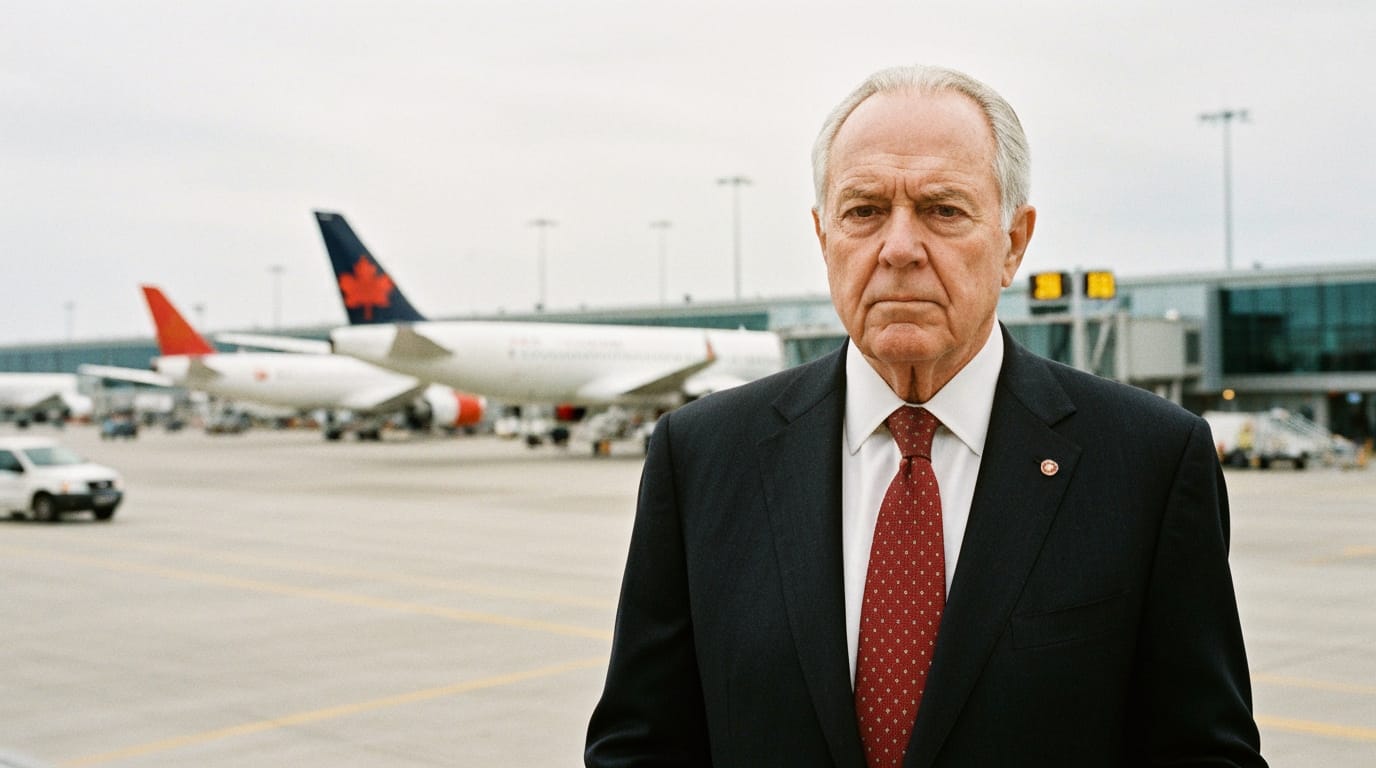
MONTREAL, QC – Air Canada President and Chief Executive Officer Michael Rousseau is set to retire by the end of the third quarter of 2026, an announcement that comes just over a week after he faced widespread condemnation for delivering an English-only condolence message following a fatal plane crash. The departure marks a significant moment for the national carrier, reigniting conversations about linguistic sensitivity and corporate accountability in Canada. While Air Canada's board lauded Rousseau's nearly two decades of service and contributions, the timing of his retirement has drawn direct links to the public furor, underscoring the profound impact of language politics in the country.
The Tragic Incident and Immediate Fallout
The catalyst for the recent controversy was a devastating Air Canada Express crash on March 22, 2026, at LaGuardia Airport in New York. The flight, originating from Montreal, collided with a fire truck upon landing, tragically killing both pilots, Antoine Forest and Mackenzie Gunther. One of the deceased pilots, Captain Antoine Forest, was a French-speaking Quebecer, a detail that amplified the subsequent public reaction.
In the immediate aftermath of the tragedy, Air Canada CEO Michael Rousseau released a video message expressing his condolences. However, the four-minute message was delivered almost entirely in English, with only "bonjour" and "merci" spoken in French, accompanied by French subtitles. This unilingual address, in a country officially bilingual and a province where French is the majority language, sparked an immediate and intense backlash. The Office of the Commissioner of Official Languages reportedly received thousands of complaints regarding the message.
Political Condemnation and Previous Controversies
The public outcry quickly escalated into political condemnation. Prime Minister Mark Carney criticized Rousseau's message, stating it showed "a lack of judgment and a lack of compassion" and emphasized Air Canada's responsibility to communicate in both official languages. Quebec Premier François Legault echoed these sentiments, calling the video disrespectful to the airline's employees and its francophone customers, even suggesting Rousseau should resign if he couldn't speak French. Rousseau was subsequently summoned to appear before the House of Commons standing committee on official languages.
This incident was not Rousseau's first brush with language controversy. In 2021, he drew widespread criticism after delivering a speech almost entirely in English to the Montreal Chamber of Commerce. During that time, he infamously stated he did not need to learn French to get by in Montreal, remarks for which he later apologized. Despite pledging to improve his French at that time, his recent apology for the condolence message acknowledged his continued "inability to speak French adequately" despite years of lessons.
Air Canada's Official Language Obligations
As a former federal Crown corporation, Air Canada operates under the purview of the Official Languages Act. This legislation mandates that the airline offer services in both English and French, particularly for routes involving airports in Quebec, Ontario, and New Brunswick. The repeated controversies involving its chief executive's unilingualism have raised significant questions about the airline's adherence to these requirements at the highest levels of management. Critics argue there is a stark contrast between the bilingual expectations for front-line staff and the linguistic capabilities of the CEO.
The board of directors, in its retirement announcement, notably stated that the external global search for Rousseau's successor, which began in January 2026, will assess candidates based on a range of performance criteria, "including the ability to communicate in French." This explicit inclusion highlights the profound impact of the recent events and the imperative for the next leader to embody Canada's bilingual identity.
Leadership Transition and Future Implications
Air Canada's board framed Rousseau's departure as a "natural retirement age" and a part of a "longstanding focus on CEO succession planning," with an internal development program for high-potential executives having been underway for over two years. Rousseau, who has served as President and CEO since February 2021 and held various senior leadership roles for nearly two decades, including Chief Financial Officer, will continue to lead the company and serve on its board until his retirement. This extended transition period is intended to ensure continuity and a smooth handover.
However, the timing of the announcement, just days after the intense backlash, makes it difficult to decouple Rousseau's retirement from the language controversy. His departure places a renewed focus on corporate governance, leadership requirements in federally regulated entities, and the critical importance of respecting Canada's official languages and diverse cultural fabric. The next CEO will not only inherit the operational challenges of a major international airline but also the significant responsibility of rebuilding trust and demonstrating a genuine commitment to bilingualism across all facets of the company. The search for a French-speaking leader signals a potential shift in corporate culture and a stronger emphasis on linguistic competence at the helm of a key Canadian institution.


