U.S. Reopens Embassy in Caracas as Post-Maduro Venezuela Navigates New Era
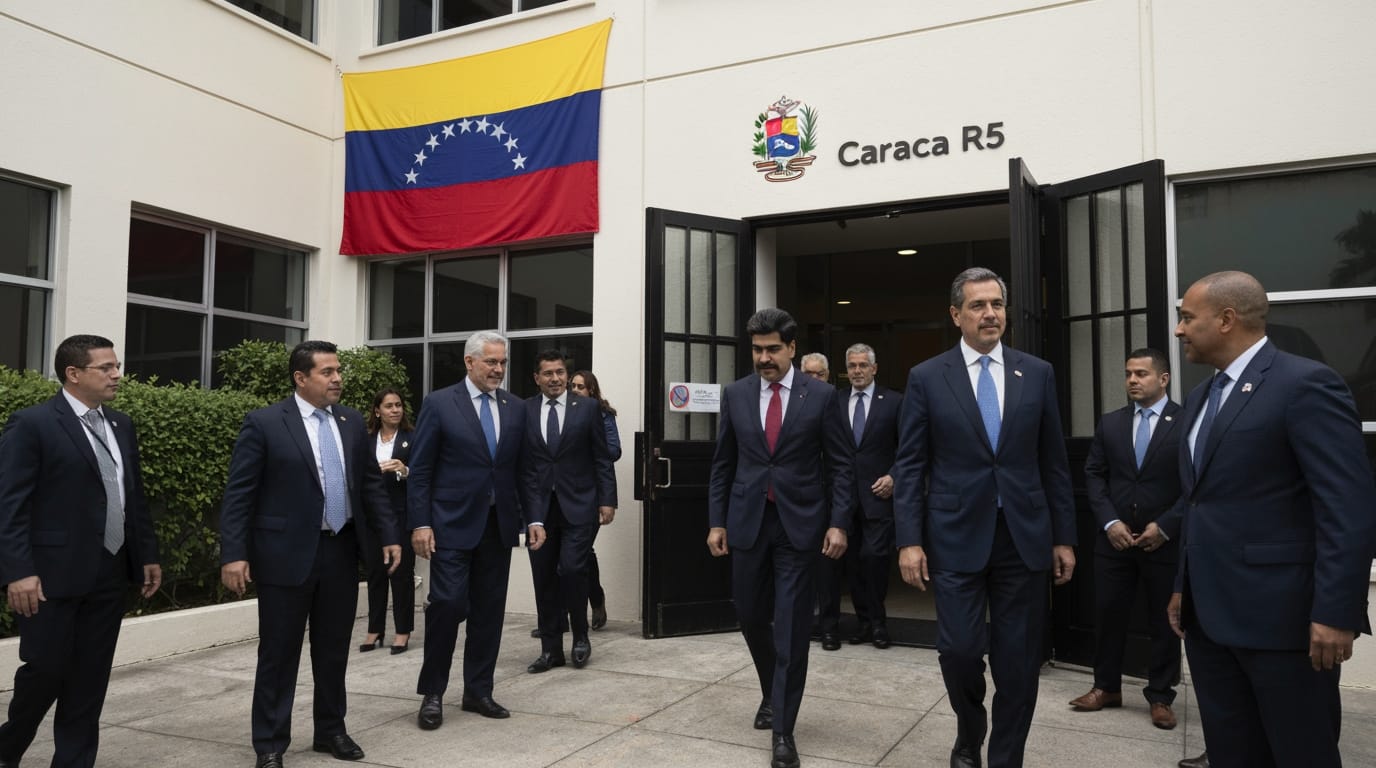
CARACAS, VENEZUELA – The United States officially reopened its embassy in Caracas on Monday, March 30, 2026, marking a significant recalibration of diplomatic relations with Venezuela after a seven-year hiatus. This pivotal development comes roughly three months after former Venezuelan President Nicolás Maduro was forcibly seized by U.S. forces and taken to the United States to face drug trafficking charges, ushering in an interim government led by his former Vice President, Delcy Rodríguez. The move signals a complex new chapter for a nation long mired in political turmoil and economic crisis, with Washington expressing optimism for stability and a renewed engagement with the South American country.
A Return to Caracas: A New Diplomatic Horizon
The formal resumption of operations at the U.S. Embassy in Caracas represents a decisive shift in American foreign policy toward Venezuela. For seven years, since March 2019, U.S. diplomatic relations with Venezuela were conducted primarily from the U.S. embassy in neighboring Colombia, following the rupture of ties during the first Trump administration. The U.S. State Department announced the reopening, framing it as a "new chapter" in diplomatic relations and a crucial step in directly engaging with Venezuela's interim government, civil society, and the private sector. A small team of diplomats has been on the ground in Caracas for over a month, working to restore the embassy compound, which required significant repairs, including mold remediation. The U.S. has not had an ambassador in Venezuela since 2010, further underscoring the depth of the diplomatic freeze that characterized much of the last decade.
The End of an Era: Maduro's Downfall and Capture
The dramatic seizure of Nicolás Maduro on January 3, 2026, by U.S. forces served as the immediate catalyst for the diplomatic thawing. Maduro, who had served as Venezuela's president since 2013, and his wife, Cilia Flores, were captured and subsequently transported to New York, where they are currently on trial for drug trafficking charges. His presidency was marked by increasing authoritarianism, accusations of electoral fraud, widespread human rights abuses, and severe economic hardship, leading to one of the largest refugee crises in the world with millions fleeing the country. The United States had long refused to recognize the legitimacy of Maduro's government, particularly after his disputed 2018 re-election, and had imposed extensive sanctions on Venezuela. While the U.S. government viewed Maduro's capture as a decisive move against a regime accused of illicit activities, the Delta Force raid that led to his apprehension was met with international condemnation, with some legal experts suggesting it may have violated the U.N. Charter's provisions on national sovereignty and the use of military force without authorization.
Venezuela's Interim Government and U.S. Strategic Interests
In the wake of Maduro's ouster, his vice president, Delcy Rodríguez, assumed the role of acting president, and the Trump administration has swiftly moved to engage with her interim government. This engagement is seen as a key component of a broader U.S. three-phase plan for Venezuela: prioritizing stability, followed by economic recovery, and eventually a political transition. A significant driver behind this renewed relationship is Venezuela's vast oil reserves—the largest proven in the world. The U.S. has signaled a shift in its focus, moving from primarily targeting drug shipments to expressing a strong interest in Venezuela's oil and strategic mineral resources, with discussions already underway regarding U.S. companies gaining access to these energy assets. Agreements have been reached for the U.S. to sell Venezuelan oil, and sanctions waivers have been issued to encourage U.S. investment, indicating a pragmatic approach to leveraging economic opportunities in the post-Maduro landscape.
The Path Forward: Navigating a Fragile Future
The reopening of the embassy and the establishment of ties with the Rodríguez administration represent a potential thaw in long-strained relations, yet the road ahead for Venezuela remains fraught with challenges. The country faces the daunting task of reconstruction, which will necessitate debt restructuring, rebuilding critical infrastructure, and comprehensive institutional reforms that could span decades. While the removal of Maduro has opened pathways to address Venezuela's profound political repression and economic misery, experts caution that a genuine democratic transition is far from guaranteed. Concerns persist about whether the current leadership can move beyond a "reconfigured authoritarianism" to establish a truly democratic and stable state, especially given the military's deep entanglement in the country's political and economic structures. The coming months will be critical in determining whether the U.S. engagement accelerates a democratic future or merely stabilizes a new form of governance.
The U.S. State Department’s statement highlighted that the embassy’s return to Caracas will "strengthen our ability to engage directly with Venezuela's interim government, civil society and the private sector." However, the complexities of Venezuela's internal dynamics, coupled with a deep ideological rift that has polarized the nation for years, mean that achieving true stability and a lasting democratic future will require sustained effort from both internal and international actors. The re-establishment of a physical diplomatic presence is an undeniable turning point, but it merely inaugurates a new, uncertain chapter in a story of profound political transformation.


