Air Safety Under Scrutiny: Marine One Incident Triggers Dual Federal Probes
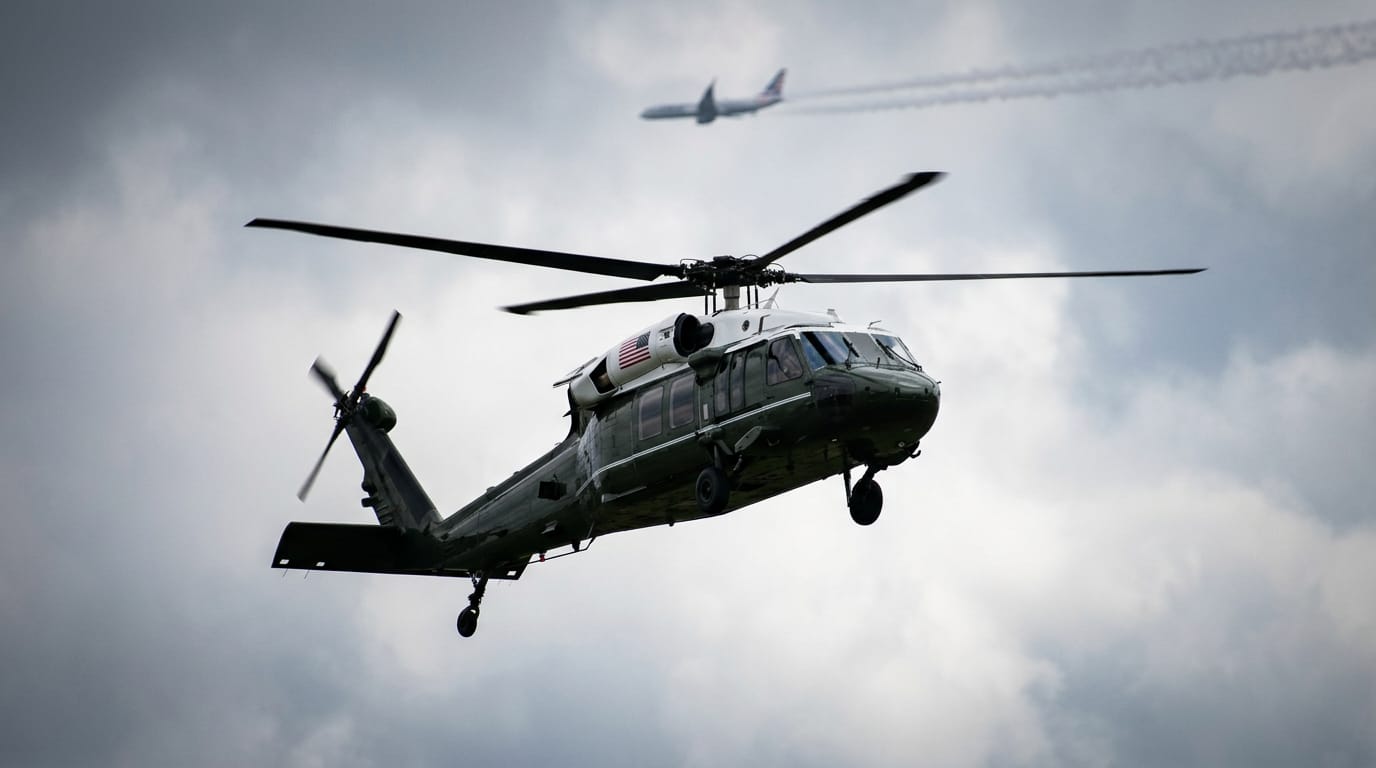
WASHINGTON D.C. – A recent mid-air safety incident involving Marine One, the presidential helicopter carrying then-President Donald Trump, and a commercial passenger jet has sparked immediate investigations by both the Federal Aviation Administration (FAA) and the National Transportation Safety Board (NTSB). The event, which occurred Tuesday afternoon near Ronald Reagan Washington National Airport (DCA), saw a momentary "loss of separation" between the two aircraft, raising significant concerns about air traffic control protocols, especially in the sensitive airspace surrounding the nation's capital. This close call comes just over a year after a tragic mid-air collision near the same airport prompted new, stricter rules for air traffic management.
The Incident Unfolds
The episode began around 2:33 p.m. EDT when Marine One, with President Trump on board, lifted off from the Ellipse near the White House, en route to Joint Base Andrews for a presidential trip to Los Angeles. Simultaneously, an Embraer E-170 regional jet, Envoy Air Flight 3742, operating on behalf of American Airlines and bound for Pensacola, Florida, departed from Reagan National Airport at approximately 2:34 p.m. Initial reports from the FAA confirmed a "momentary loss of separation" between the presidential helicopter and the commercial airliner. While the White House was quick to assert that President Trump was never in danger, and the FAA clarified that the aircraft were not on a collision course, the incident violated established safety parameters requiring aircraft to maintain at least 1.5 miles of horizontal separation and 500 feet of vertical separation around airports. Sources familiar with the matter indicated the aircraft came closer than permitted, with one report suggesting they were within less than a mile of each other. Both aircraft ultimately landed safely at their respective destinations.
Communication Breakdown and Protocol Lapse
A central element of the unfolding investigation revolves around apparent communication issues between Marine One and air traffic control. Audio recordings obtained from ATC.com reveal that the Marine One pilot attempted to issue a standard three-minute warning multiple times before takeoff. However, the air traffic controller reportedly struggled to receive or understand these transmissions, describing them as "broken and unreadable." Despite these garbled communications, Marine One proceeded with its briefed flight plan.
Crucially, air traffic controllers at Reagan National Airport reportedly failed to implement a critical safety measure: halting commercial flights during Marine One's departure. This procedure is a direct consequence of a devastating mid-air collision that occurred in January 2025. Under the post-2025 rules, all but the most critical helicopter flights near DCA are banned, and specific regulations prohibit helicopters and commercial jets from occupying the same airspace in certain areas around the airport. The purpose of Marine One's three-minute warning is specifically to allow ATC to clear the airspace, ensuring an unimpeded and safe route for the presidential helicopter. The apparent failure to observe these renewed protocols is a primary focus of federal investigators.
The Shadow of a Past Tragedy
The incident gains added gravity when viewed through the lens of the January 2025 mid-air collision. That tragic event, which saw a military helicopter collide with an American Airlines regional jet near Washington D.C., resulted in the deaths of 67 people, marking it as one of the deadliest air disasters on U.S. soil in over two decades. The National Transportation Safety Board (NTSB) issued urgent safety recommendations in its aftermath, leading to the strict airspace restrictions currently in place around Reagan National Airport, particularly concerning mixed helicopter and commercial traffic. The swift launch of dual federal probes into the current Marine One incident underscores the heightened sensitivity and commitment to air safety in this complex and heavily trafficked airspace. It also highlights the critical importance of adherence to these protocols, which were established at such a high cost.
Official Responses and Ongoing Investigations
Both the FAA and the NTSB have confirmed their active investigations. The FAA, in its official statement, acknowledged the "momentary loss of separation" but emphasized that air traffic controllers maintained contact with both the commercial pilot and the Marine One pilot throughout the incident. The agency has stated it will review the incident thoroughly and implement any appropriate corrective actions based on its findings.
White House spokesman Kush Desai issued a statement asserting that President Trump was never in harm's way, adding that "Marine One flights are piloted by some of the best aviators in the world." Similarly, Marine Corps spokesman Capt. Jacob Sugg maintained that there were "no 'close calls'" and that the air traffic control team approved the requested route and provided timely and appropriate traffic information, a statement that appears to conflict with other reports regarding communication difficulties and protocol deviations. Envoy Air, the operator of the commercial jet, has yet to issue an immediate comment. The NTSB is specifically investigating the "reported loss of separation event," while the FAA focuses on why commercial departures were permitted during the presidential movement.
Implications for Air Traffic Control and Presidential Travel
This incident casts a spotlight on the intricate procedures governing presidential air travel and the immense responsibility placed on air traffic controllers. While presidential aircraft are granted priority and expedited movement, they are still subject to strict separation standards to ensure the safety of all air traffic. Advance coordination between various agencies, including the Office of the Military Assistant to the President, the U.S. Secret Service, and the FAA, is routine for presidential flights, often involving detailed briefings and temporary restrictions on normal air traffic operations. The reported communication issues and the apparent failure to clear the airspace as required indicate a potential breakdown at multiple levels, which the federal investigations will aim to uncover.
The findings from these probes will be critical in determining whether existing protocols need further reinforcement, whether there were human errors, or if technical issues contributed to the incident. Beyond the immediate parties involved, the incident serves as a stark reminder of the constant vigilance required to maintain air safety, especially in congested and high-stakes environments like the nation's capital. Any recommendations or changes stemming from this investigation will undoubtedly influence future air traffic management procedures for presidential movements and commercial flights alike, ensuring public confidence in the safety of the skies.


