AI's Iron Fist: Middle East Nations Deploy Advanced Tech to Quash Dissent
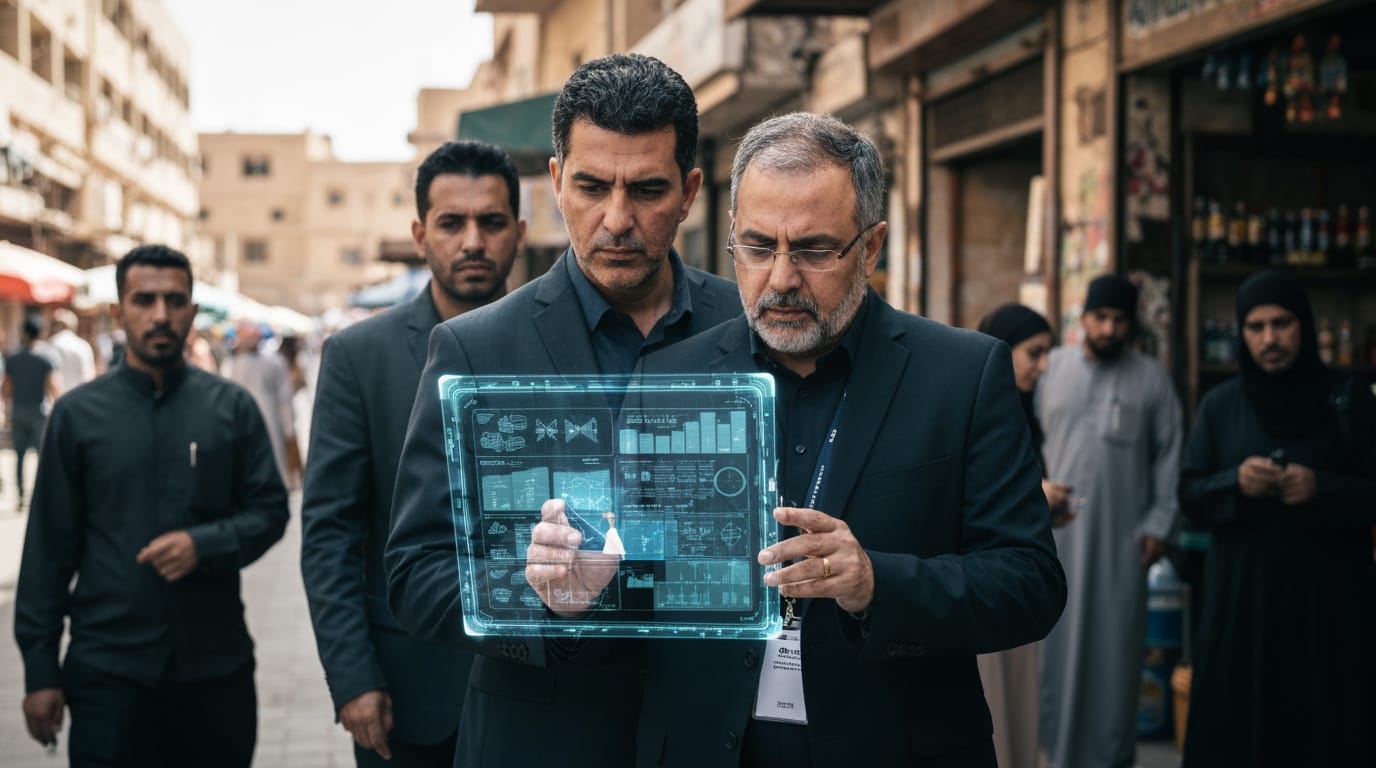
Across the Middle East, governments are increasingly leveraging artificial intelligence (AI) to create sophisticated surveillance networks, a development reshaping the dynamics between state power and citizen dissent. While proponents argue these technologies enhance national security and public safety, their widespread deployment raises profound concerns about privacy, freedom of expression, and the potential for pre-emptive suppression of opposition, often before it even materializes. The region, particularly the Gulf Cooperation Council (GCC) states and Israel, has become a hotbed for AI adoption in security, transforming urban environments into highly monitored spaces and chilling civil liberties.
The Expanding Digital Panopticon
The rollout of AI-powered surveillance in the Middle East is characterized by extensive infrastructure development. Cities like Dubai and Abu Dhabi in the United Arab Emirates (UAE) have invested heavily in smart city initiatives that integrate vast networks of cameras with advanced AI capabilities. Dubai's "Oyoon" program, for instance, incorporates over 300,000 cameras with facial recognition technology, enabling real-time monitoring of residents and visitors across the city. Similarly, Abu Dhabi's "Falcon Eye" system provides comprehensive surveillance, tracking individuals' movements from the moment they step outside their homes. These systems go beyond basic visual footage; they are designed to analyze minute details, including irises, retinas, and body heat, to gain deeper insights into individual behavior and mindset. Saudi Arabia is also aiming to establish a leading AI and mass surveillance program, with a law approved in 2022 requiring security cameras in most public spaces, capable of tracking individuals and their activities. The ambition to become an "AI-native government" by 2027 further underscores the UAE's commitment to embedding AI across its public sector, particularly in law enforcement. This digital infrastructure, often supplied by Chinese tech giants like Huawei, Hikvision, and SenseTime, forms the backbone of an expanding digital panopticon, allowing for unprecedented levels of public monitoring.
Predictive Policing and Pre-emptive Control
The core utility of AI in this context extends beyond mere observation; it involves predictive analytics designed to anticipate and prevent potential dissent. Middle Eastern governments are increasingly employing AI to detect patterns indicating future criminal activity or social unrest, allowing authorities to intervene before incidents occur. This predictive policing leverages machine learning algorithms fed with vast datasets, including crime reports, surveillance footage, and social media activity, to identify potential hotspots or individuals deemed "high-risk". In the UAE, the Ministry of Interior has stated that AI, surveillance, and modern laws are crucial for fighting crime, with plans announced to use AI to detect patterns indicating criminal activity. Social media is particularly scrutinized, with AI systems capable of analyzing online images, videos, sound, and even detecting irony and sarcasm in posts using sentiment analysis. This level of digital forensics is exemplified by the Israeli military's Unit 8200, which reportedly built a "ChatGPT-like" AI tool to analyze intercepted Palestinian communications in Arabic, identifying "troublemakers" and facilitating arrests in the occupied West Bank. This approach allows for the collection of immense amounts of personal data, from eye movement and facial features to touch patterns on smartphones, consolidating control over the population.
A Chilling Effect on Civil Liberties
The pervasive deployment of AI surveillance systems in the Middle East poses significant threats to fundamental human rights, notably privacy, freedom of expression, and the right to assembly. Continuous monitoring and analysis of personal behaviors without consent infringe upon international human rights standards, leading to a chilling effect where individuals engage in self-censorship due to the constant awareness of being watched. This is particularly acute in countries with stringent cybercrime laws, such as the UAE, where online activities deemed critical of the government can lead to severe penalties, including imprisonment. Reports indicate the use of sophisticated spyware, like Pegasus software from Israel's NSO Group, to monitor dissidents and perceived opponents, both domestically and internationally. The case of human rights defender Ahmed Mansoor, sentenced to 10 years in prison based on information extracted from his Pegasus-infected device, highlights the severe consequences of such surveillance. In Palestinian territories, Israeli surveillance, including extensive CCTV networks and facial recognition technology, is described as a "digital warfare" tool that restricts movement, quashes dissent, and enables post-event targeting, often leading to detention without due process based on opaque algorithmic scores. This technological dragnet ensures that those who express even "low-level political speech" can be flagged and targeted, stifling any form of public discourse or opposition.
The Global Marketplace of Surveillance
The rapid expansion of AI surveillance in the Middle East is not solely an indigenous development; it is fueled by a global marketplace of technology providers. Chinese firms have emerged as key players, exporting mass AI surveillance technology to the region. Huawei, for instance, has reportedly signed deals to build surveillance networks in Dubai, while companies like Hikvision and SenseTime are integral to the UAE's security apparatus, contributing to smart city initiatives and critical infrastructure protection. These collaborations provide authoritarian regimes with the tools to detect grassroots activism and monitor political discussions, making it difficult for people to organize rallies or speak out. Beyond China, Western tech companies have also played a role. IBM and Microsoft have provided software for monitoring border crossings, and Palantir has offered predictive policing algorithms to security forces, particularly in Israel. Even Amazon and Google have signed agreements to provide cloud computing infrastructure and AI systems. This international involvement underscores the complex ethical dilemmas faced by technology companies whose products, while developed for broader applications, are deployed in ways that curtail human rights in the region. The financial investments are substantial, with countries like the UAE and Saudi Arabia injecting billions into AI, aligning with national strategic goals for economic diversification and technological self-sufficiency.
The integration of advanced AI technologies into the security apparatus of Middle Eastern nations represents a significant shift towards heightened state control and pre-emptive dissent suppression. While governments justify these measures under the guise of national security and public safety, the documented implications for human rights—including widespread privacy infringements, the curtailment of freedom of expression, and the chilling effect on civil society—are undeniable. The absence of robust regulatory frameworks and oversight, combined with the continuous flow of surveillance technology from global providers, creates an environment ripe for algorithmic authoritarianism. As AI capabilities continue to evolve, the challenge for both regional populations and the international community will be to navigate this technological landscape, advocating for ethical deployment and safeguarding fundamental freedoms against the growing digital iron fist.


