Lebanon Grapples with Deception as Allegations of Fabricated Plots Undermine Fragile Governance
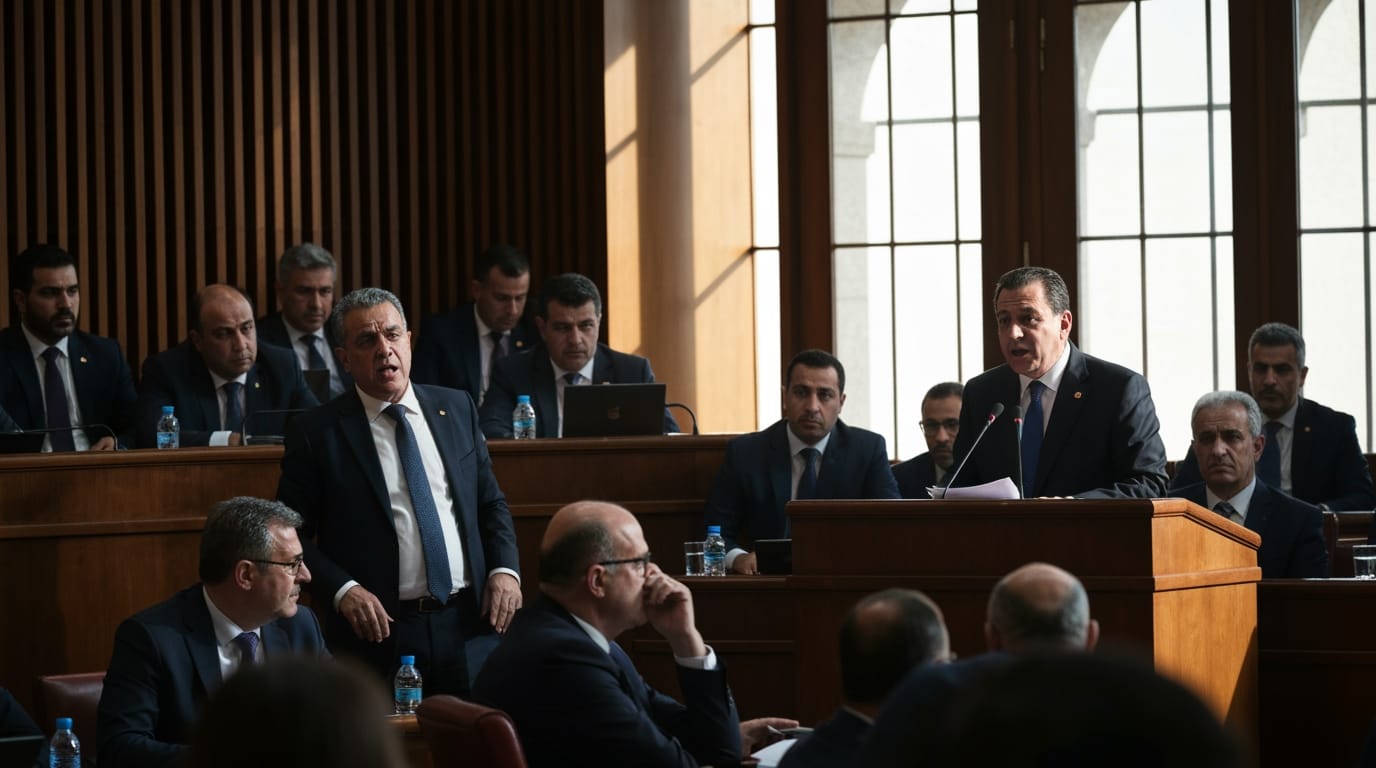
Beirut, Lebanon – In a nation already reeling from chronic political paralysis and an unprecedented economic collapse, Lebanon's fragile government and political landscape have been further destabilized by a series of alleged and fabricated plots. These incidents, ranging from elaborate scams designed to dupe high-ranking officials to contested claims of attempted coups, underscore the deep-seated vulnerabilities within the Lebanese state and fuel public distrust in a system perceived to be perpetually on the brink. The proliferation of such narratives, whether genuine acts of deception or politically motivated allegations, has intensified the struggle to distinguish fact from fiction, leaving the populace to navigate a complex web of uncertainty and further eroding confidence in leadership.
The Phony Prince and the Patronage Pipeline
One of the most striking instances of deception to rock the Lebanese political sphere recently is the "Abu Omar" affair, dubbed the "fake Saudi prince" scandal. This elaborate scheme, reportedly active since at least 2015, saw an impoverished plumber, Mustafa al-Hessian, impersonate an influential member of the Saudi royal court with direct access to decision-makers in Riyadh. Hessian, operating under the alias "Abu Omar," allegedly leveraged this fabricated identity to engage with numerous high-profile Lebanese politicians and business figures, promising Saudi backing in exchange for cash or influence.
The scandal, which became public knowledge in late 2025 following Hessian's formal arrest, sent shockwaves through Lebanon's political class. It emerged that the imposter had managed to penetrate the highest echelons of government, even attempting to influence the nomination of Lebanon's prime minister. The scheme reportedly unraveled in October 2025 when Hessian was abducted and confessed on camera after being accused of fraud by a businessman. Sheikh Khaldoun Oraymet, a respected Sunni cleric, was alleged to have coordinated the scheme, though he has vehemently denied the accusations, calling them a "big lie" and an attack on the Sunni community. The "Abu Omar" affair vividly highlighted the susceptibility of Lebanon's sectarian political system, which is heavily reliant on patronage networks and external financial support, making it fertile ground for such sophisticated scams. The incident served as a profound embarrassment for a political elite already struggling with legitimacy.
Contested Coup Claims: Hezbollah Under Scrutiny
Adding another layer of complexity to Lebanon's volatile environment are recent allegations, widely reported by Israeli media in April 2026, suggesting that Hezbollah had planned a military coup to seize critical government institutions. These reports claimed that the alleged plot aimed to take control of key facilities, including the Grand Serail and the presidential palace, and was ultimately thwarted by Israeli military actions. The Israeli narrative asserted that their strikes effectively "aborted the operation," claiming to have eliminated a significant number of Hezbollah commanders and fighters.
These allegations ignited a sharp division within Lebanon. While some voiced concerns about the potential for a repeat of past internal conflicts, others vehemently dismissed the reports as cynical Israeli propaganda designed to justify ongoing military aggression and destruction of Lebanese infrastructure. Skeptics argued that such claims serve to create a pretext for external intervention or to delegitimize Hezbollah's political presence within the country. The Lebanese government, grappling with the implications of these accusations, faces pressure for thorough investigations to ascertain the truth, even as the political establishment remains largely unable to challenge Hezbollah's military strength. This debate over the veracity of the alleged coup underscores the deep polarization within Lebanon and the profound impact of regional geopolitical tensions on domestic stability.
The Allure of False Authority: The Imposter Judges
Further illustrating the pervasive nature of deception targeting Lebanese officialdom is the revelation of a scheme involving "fake international judges." In late 2024, it was exposed that a group of fraudsters had been impersonating delegates from an "International Court for the Settlement of Disputes" for over two years. These imposters engaged with numerous Lebanese politicians, judiciary members, and legal professionals, discussing pressing national issues such as the "Lebanese file," the Syrian displacement crisis, and upcoming elections.
The perpetrators, who were later revealed to have a history of fraud and forgery, leveraged their fabricated identities to gain access and influence, even operating across various Lebanese territories. The scheme was only exposed when the Central Criminal Investigations Department intervened, acting on instructions from the Public Prosecutor. This incident, much like the "Abu Omar" affair, highlights a troubling susceptibility within the Lebanese political and judicial systems to external manipulation and offers of illicit influence, driven by a desperate search for solutions or validation amidst the country's relentless crises.
A Nation Mired in Crisis: The Breeding Ground for Deception
These incidents of fabricated and alleged plots do not occur in a vacuum; they are symptoms of Lebanon's profound and long-standing state of instability. The nation has been mired in a severe economic and political crisis since 2019, characterized by a currency that has lost over 97% of its value, widespread poverty, and a persistent leadership vacuum. The confessional political system, designed to share power among 18 recognized ethno-religious groups, has ironically fostered corruption and political fragmentation, leading to a culture of impunity and ineffective governance.
The inability of the political class to enact structural reforms, coupled with the absence of a functioning president since late 2022, has left Lebanon with a caretaker government struggling to provide basic services and address the humanitarian crisis. In such an environment, where official institutions are weakened and public trust is at an all-time low, the spread of misinformation and the susceptibility to deceptive schemes become heightened. False reports and targeted disinformation campaigns further undermine public morale, create panic, and exploit existing societal anxieties, particularly in a region fraught with conflict. This pervasive climate of distrust and vulnerability makes it exceedingly difficult for citizens and officials alike to discern truth from manipulation, perpetuating a cycle of instability.
Conclusion
The recent wave of alleged and fabricated plots against the Lebanese government serves as a stark illustration of a nation caught in a deep and multifaceted crisis. From sophisticated scams targeting the political elite to contested claims of military coups, these incidents underscore not only the ingenuity of deceivers but also the profound fragility of the Lebanese state. The prevalence of such narratives, whether born from criminal intent or geopolitical maneuvering, thrives in an environment of economic collapse, political paralysis, and deep-seated societal divisions. As Lebanon continues to grapple with its existential challenges, the constant need to verify information and discern genuine threats from elaborate hoaxes adds another burden to an already beleaguered populace. Ultimately, these "fake plots" reflect a deeper crisis of confidence and governance, making the path toward stability and recovery even more arduous and uncertain for the Lebanese people.


