Al-Aqsa Under Threat: The Perilous Path of Altering Jerusalem's Sacred Status Quo
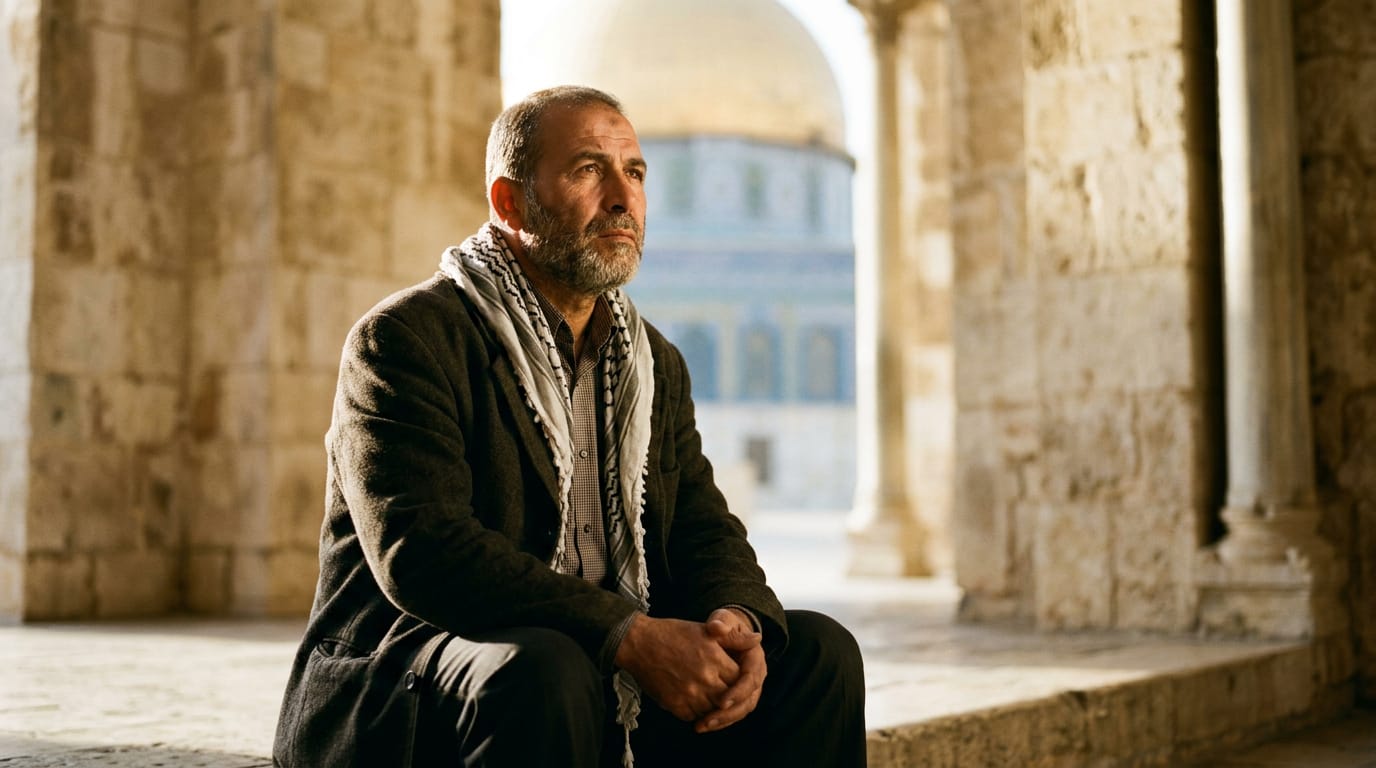
A potential shift in the administrative and religious control of the Al-Aqsa Mosque compound in Jerusalem, also known as the Temple Mount, looms as a critical flashpoint, carrying the potential to ignite a catastrophic religious conflict with far-reaching global implications. This ancient site, held sacred by billions across Islam and Judaism, currently operates under a fragile "status quo" arrangement that has historically maintained a delicate balance. Any fundamental change to this established order, particularly an Israeli takeover, is widely anticipated to trigger severe diplomatic repercussions, widespread unrest, and a dramatic escalation of violence across the Middle East and beyond.
A Contested Sanctuary of Profound Significance
The Al-Aqsa Mosque compound sits at the heart of Jerusalem's Old City, a site of immense religious importance for both Muslims and Jews, contributing to its designation as one of the world's most contested holy sites. For Muslims, it is the third holiest site in Islam, preceded only by Mecca and Medina. Its sanctity is deeply rooted in the belief that Prophet Muhammad embarked on his miraculous Night Journey, Al-Isra' wal-Mi'raj, from this location, ascending to the heavens. The compound encompasses not only the Al-Aqsa Mosque itself but also the iconic Dome of the Rock and all surrounding buildings and courtyards, symbolizing unity, faith, and divine connection for Muslims worldwide.
Conversely, for Jews, the same site, known as the Temple Mount (Har HaBayit), represents the holiest place in Judaism. According to Jewish tradition, it is where the First and Second Temples stood, and where the Third Temple is prophesied to be rebuilt with the coming of the Messiah. The site is linked to numerous pivotal biblical events, including the Binding of Isaac. This dual, profound religious significance transforms the area into a perpetual focal point of inter-religious tension.
The Fragile "Status Quo" and Its Erosion
Since the 19th century, particularly reaffirmed after Israel occupied East Jerusalem in 1967, the Al-Aqsa compound has been governed by a complex "status quo" arrangement. Under this internationally recognized agreement, the Jerusalem Islamic Waqf, a religious trust administered by Jordan, manages the day-to-day affairs of the compound. Critically, this arrangement dictates that only Muslims are permitted to pray within the compound, while non-Muslims, including Jews, are allowed to visit as tourists but are forbidden from praying there. Israel, while having overall sovereignty, controls access and security to the site. The 1994 peace treaty between Israel and Jordan officially recognized Jordan's custodianship of Islamic and Christian holy sites in Jerusalem.
However, this delicate balance has faced increasing pressure and perceived violations in recent years. Palestinian, Arab, and Muslim officials frequently condemn what they describe as systematic Israeli attempts to alter the historical and legal status quo. These concerns stem from actions such as incursions by Israeli national security ministers and extremist settlers, sometimes under police protection, performing religious rituals or waving Israeli flags within the compound. There are also reports of increased restrictions on Muslim worshippers' access, as well as attempts to impose temporal and spatial divisions at the site. Such moves are consistently described as provocative and a "blatant violation of international humanitarian law". Jordan, in particular, has repeatedly warned against Israeli actions that could lead to an "imminent" takeover or a change in the site's governance.
The Specter of Regional and Global Conflict
The potential for Israel to assume full control or significantly alter the status of the Al-Aqsa Mosque is universally viewed by Palestinian, Arab, and Muslim states as an existential threat, almost certain to provoke widespread and violent reactions. Warnings from Arab and Muslim countries indicate that such an act would not only destabilize the region but could also "trigger a religious conflict that will reverberate beyond Palestine and Jordan into the whole Muslim world".
Palestinian resistance groups, such as Hamas, consider the Al-Aqsa Mosque a "red line" and any change to its status unacceptable, viewing Israeli actions as a "blatant assault" and part of a "policy of Judaization". Past incidents involving perceived threats to the site have directly fueled unrest, triggered cross-border violence, and mobilized anger across the Arab and Muslim worlds. Analysts suggest that a fundamental alteration of the status quo would almost certainly lead to another Palestinian Intifada, potentially involving suicide attacks and casualties among both Jews and Muslims, extending beyond Jerusalem and the West Bank. The concept of "desecration" of Al-Aqsa, as Palestinians perceive it, serves as a powerful catalyst for resistance.
Recent emergency meetings of foreign ministers from Arab and Islamic nations, including Jordan, Saudi Arabia, Egypt, Turkey, Indonesia, Pakistan, and Malaysia, have consistently condemned Israeli actions and warned of a "catastrophic situation" if violations continue. These nations view such changes as undermining the Islamic identity of the holy sites and violating international law.
International Law and Geopolitical Fallout
From an international legal perspective, East Jerusalem, including the Old City where Al-Aqsa is located, is widely considered occupied territory. The international community, including the United Nations, does not recognize Israel's annexation of East Jerusalem in 1980 and asserts that an occupying power has no sovereignty over occupied territory. United Nations Security Council resolutions have repeatedly condemned Israeli measures aimed at changing Jerusalem's status.
A unilateral Israeli takeover of Al-Aqsa would not only breach existing agreements and international law but also severely damage Israel's diplomatic standing and relationships. It would likely lead to a complete breakdown of relations with Jordan, which views its custodianship as a fundamental element of its national identity and stability. The consequences would extend to Egypt and potentially jeopardize the Abraham Accords with countries like the UAE and Bahrain, and effectively end any prospects for normalization with Saudi Arabia. Calls for international intervention and economic sanctions against Israel, comparable to those imposed on Russia, are also likely to intensify.
The international community's stance emphasizes the need to preserve the historic status quo, recognizing that altering it would transform the Israeli-Palestinian conflict from a political and territorial dispute into an explicitly religious one, significantly complicating any future peace efforts.
Conclusion
The Al-Aqsa Mosque compound remains a barometer for peace and stability in the Middle East. Its unique status, shaped by centuries of religious reverence and delicate political arrangements, is a cornerstone of regional order. Any unilateral action by Israel to assert full control or fundamentally alter the existing "status quo" would represent a profound and dangerous gamble. The consensus among regional and international observers is clear: such a move would not only unleash unprecedented violence and terror but also plunge an already volatile region into a religious confrontation with devastating, unpredictable global consequences, unraveling decades of diplomatic efforts and further entrenching animosity. The preservation of the status quo, therefore, is not merely a matter of historical precedent but an urgent imperative for regional and global security.


