Alleged Assassin of Top Russian General Arrested in Dubai, Igniting Geopolitical Tensions
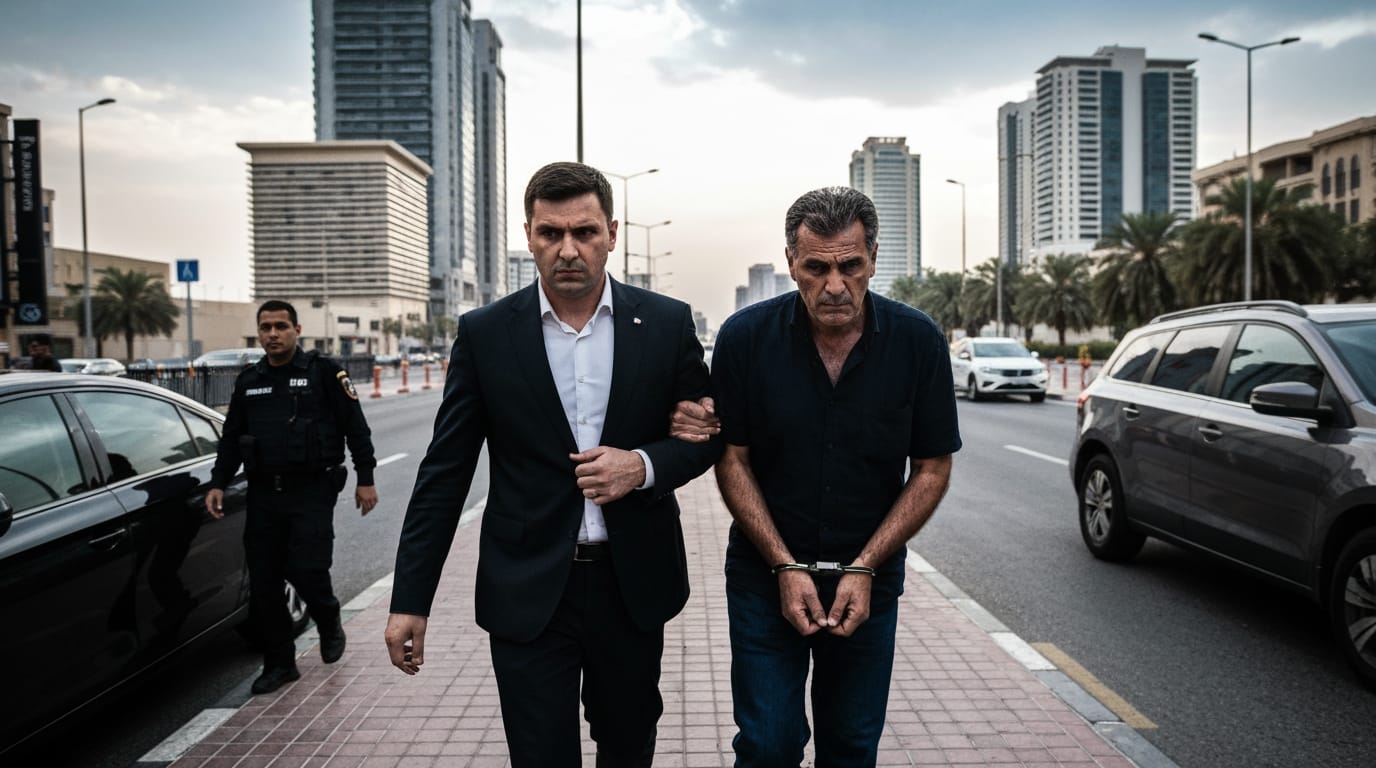
Dubai, UAE – February 8, 2026 – In a development poised to escalate already fraught international relations, Russian authorities announced Sunday the arrest in Dubai of a suspect in the recent shooting of Lieutenant General Vladimir Alekseyev, a high-ranking official in Russia's military intelligence. The Federal Security Service (FSB) identified the alleged shooter as Lyubomir Korba, a Russian citizen, who reportedly fled to the United Arab Emirates (UAE) following the audacious attack in Moscow. The incident, which left General Alekseyev hospitalized with multiple gunshot wounds, has been swiftly labeled a "terrorist act" by Moscow, with accusations directly aimed at Ukraine, a claim Kyiv vehemently denies. This arrest highlights the intricate web of international intelligence operations and the deepening shadow of the ongoing conflict on a global scale.
The Moscow Attack: A High-Profile Target
Lieutenant General Vladimir Alekseyev, the First Deputy Director General of the Russian General Department of Defense Intelligence (GRU), was gravely wounded on Friday, February 6, 2026, in what investigators are calling a deliberate assassination attempt. The attack occurred outside his residence in Moscow, where an assailant shot him multiple times from behind, striking him three times in the back. Alekseyev was immediately rushed to the emergency room and underwent surgery, reportedly in critical condition before regaining consciousness. Details regarding his precise health status have not been released, but the incident prompted heightened security alerts across the Russian capital.
General Alekseyev, 64, holds a significant position within Russia's military intelligence apparatus, having served as the first deputy head of the GRU since 2011. His distinguished career includes receiving the Hero of Russia medal for his role in Moscow's military campaign in Syria. Internationally, Alekseyev is a known figure, subject to Western sanctions for his alleged involvement in cyberattacks and the 2018 nerve agent poisoning of former Russian intelligence officer Sergei Skripal in Britain. The fact that such a prominent figure was targeted within Moscow underscores the brazen nature of the attack and the potential for far-reaching implications. Adding another layer of complexity, Alekseyev was born in the Vinnytsia region of Soviet Ukraine.
International Cooperation Leads to Dubai Arrest
Following the shooting, the alleged perpetrator, Lyubomir Korba, 65, a Russian citizen, reportedly fled Russia. However, his escape was short-lived. On Sunday, February 8, the FSB confirmed that Korba had been arrested in Dubai. The arrest was made possible through the cooperative efforts of the United Arab Emirates government, which then facilitated Korba's transfer to Russia for further investigation. This swift international cooperation marks a significant development, particularly given that the UAE has historically been reluctant to extradite suspects wanted by Russia, making this a "rare extradition operation," according to some reports.
The FSB also disclosed that an alleged accomplice, Viktor Vasin, 66, also a Russian citizen, was apprehended in Moscow in connection with the attack. Another suspected accomplice is believed to have fled to Ukraine. The speed of these arrests and the transatlantic cooperation highlight the seriousness with which this incident is being treated by both Russian and Emirati authorities.
Accusations and Denials Amidst Peace Talks
The timing of the assassination attempt has further amplified its geopolitical significance. Russian Foreign Minister Sergey Lavrov quickly characterized the shooting as a "terrorist act" and directly accused Ukraine of orchestrating the attack. Lavrov asserted that the incident was an intentional act designed to undermine ongoing peace talks aimed at resolving the nearly four-year-old conflict in Ukraine. These accusations gained traction as the shooting occurred just one day after Russian, Ukrainian, and U.S. negotiators concluded two days of discussions in Abu Dhabi, UAE, focused on finding a resolution to the conflict. Notably, General Alekseyev's superior, military intelligence chief Admiral Igor Kostyukov, led the Russian delegation at these critical talks.
In response to the severe allegations from Moscow, Ukrainian Foreign Minister Andrey Sibiga issued a swift denial, affirming that Kyiv had no involvement in the incident and rejecting all Russian accusations. Ukraine has previously claimed responsibility for certain high-profile attacks against Russian military personnel and officials within Russian and Russian-controlled territories since the full-scale invasion began in February 2022. However, in this instance, Kyiv has maintained its innocence, setting the stage for a diplomatic standoff. The United Arab Emirates has also recently served as a crucial mediator in prisoner exchanges between Russia and Ukraine, underscoring its role in facilitating dialogue despite the current tensions.
A Pattern of Targeting: Escalating Shadow Warfare
The attack on Lieutenant General Alekseyev is not an isolated event but rather the latest in a series of targeting incidents against senior Russian military officers, many of which Russia attributes to Ukraine. This pattern suggests an escalating shadow war unfolding beyond traditional front lines. In December 2025, Lieutenant General Fanil Sarvarov, head of the General Staff’s army training directorate, was killed by a car bomb in southern Moscow. April 2025 saw the death of Lieutenant General Yaroslav Moskalik, deputy chief of the Russian General Staff’s main operational directorate, due to a blast. Perhaps most strikingly, Lieutenant General Igor Kirillov, chief of Russia's nuclear, biological, and chemical protection forces, died in December 2024 after a bomb hidden on an electric scooter detonated near his apartment. While Ukraine has claimed responsibility for some of these past attacks, their denial in Alekseyev's case adds complexity to the narrative.
These repeated incidents underscore the vulnerability of even high-ranking officials within Russia and highlight the lengths to which intelligence agencies may go in a protracted conflict. The use of unconventional methods, such as a food delivery courier guise in some previous attacks (though not definitively confirmed for Alekseyev yet, the pattern of subterfuge is noted), demonstrates a sophisticated and determined effort to target key figures.
Conclusion: Heightened Stakes in a Fractured Landscape
The arrest of Lyubomir Korba in Dubai, following the shooting of Lieutenant General Vladimir Alekseyev in Moscow, casts a long shadow over the already turbulent international landscape. It not only brings to light the global reach of the conflict but also emphasizes the growing security cooperation between Russia and the UAE, a relationship that has deepened across various sectors including security and military ties.
With Russia firmly pointing the finger at Ukraine and Kyiv vehemently denying involvement, the incident further strains diplomatic efforts and complicates any potential pathways to peace. The successful apprehension of a suspect in a foreign country, particularly one with a history of reluctance in such extraditions, serves as a stark reminder that the consequences of the conflict are felt far beyond the immediate battlegrounds. As investigations continue, the world watches closely for further details that could illuminate the true orchestrators of this high-profile attack and its ultimate impact on the delicate balance of international relations.


