American Public Opinion Largely Opposes Renewed Military Engagement with Iran Under Trump
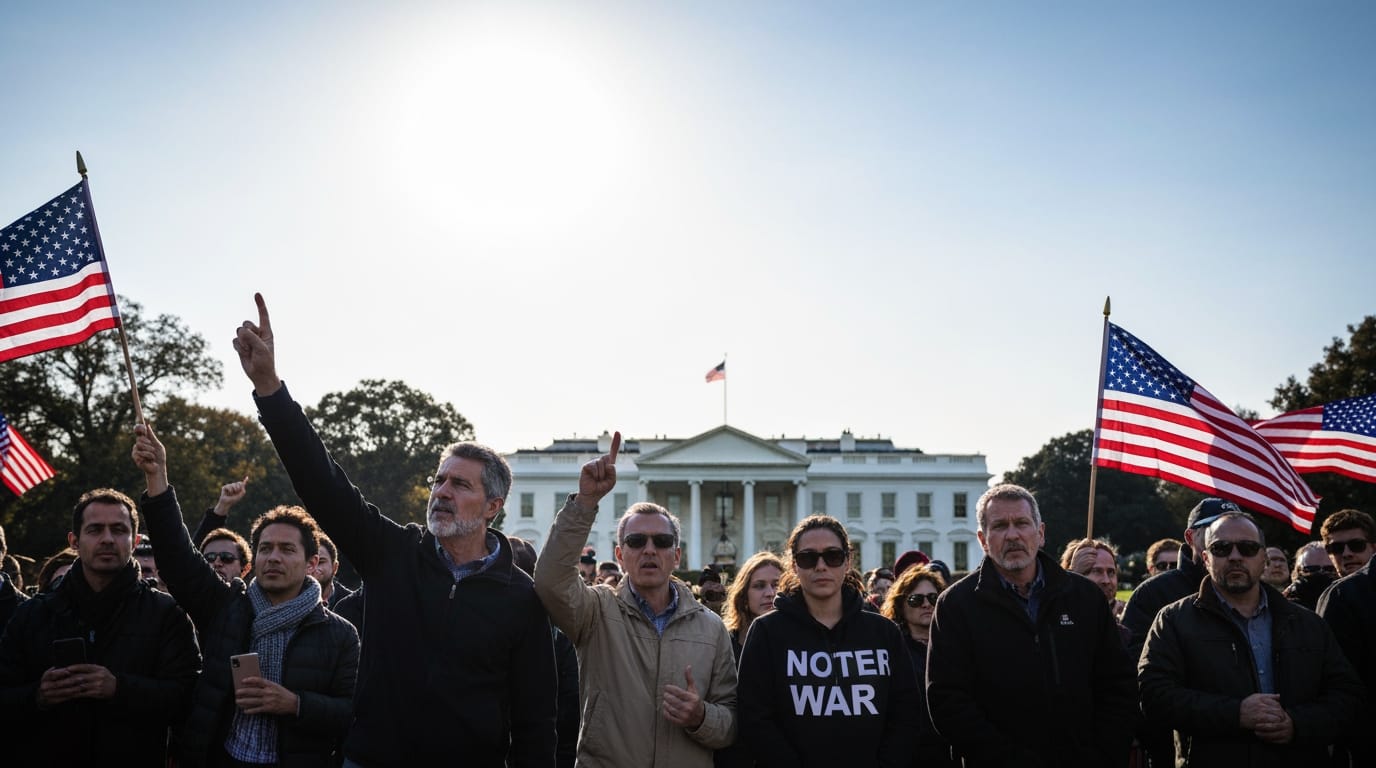
Washington D.C. — As recent military actions intensify tensions in the Middle East, public opinion polls reveal a clear and consistent majority of Americans harbor significant opposition to U.S. military involvement in Iran, particularly under the leadership of former President Donald Trump. Despite a series of strikes authorized by Trump in early March 2026, and earlier actions in 2025, a nation grappling with domestic priorities appears largely averse to another protracted conflict abroad, reflecting a deep partisan chasm on foreign policy.
Multiple surveys conducted in the immediate aftermath of recent U.S.-Israeli military operations against Iran indicate widespread disapproval. A Reuters/Ipsos poll, conducted in late February and early March 2026, found that only 27% of Americans approved of the strikes, while 43% disapproved, even before news of U.S. casualties emerged. Similarly, a CBS survey reported that over 60% of nearly 1,400 American adults felt the Trump administration had not provided a clear explanation for its objectives in Iran. The sentiment against military action was further echoed by a Marist Poll in early March 2026, which revealed that 56% of Americans opposed or strongly opposed U.S. military action in Iran, against 44% who supported it. This broad opposition suggests a nation weary of military entanglement and skeptical of the rationale for escalating hostilities.
The Deepening Partisan Divide
The overall disapproval, however, masks a profound partisan split that characterizes American views on foreign policy, particularly concerning Iran. Republican support for military action stands in stark contrast to the overwhelming opposition from Democrats and a significant majority of Independents. According to a CNN poll, approximately 41% of respondents approved of the strikes, with more than 80% of Democrats disapproving, while 77% of Republicans expressed their support for the decision. A Washington Post flash poll found that 81% of Republicans supported Trump's initial order for airstrikes, whereas only 9% of Democrats did. Among independents, opposition remained strong, with 59% to 68% disapproving of the strikes across various polls.
This divergence is also evident in how different political affiliations perceive Iran as a threat. While over eight in ten Americans generally view Iran as a threat to national security, the degree of concern varies significantly. A Marist Poll indicated that 44% of Americans perceive Iran as a major threat, with 40% considering it a minor threat, and 15% seeing no threat at all. Notably, 70% of Republicans consider Iran a major threat, a figure that has risen from 64% in 2025, while only 27% of Democrats share this view. This partisan lens through which the threat is viewed heavily influences support for military intervention, highlighting the political challenges in forging a unified foreign policy approach.
Calls for Congressional Oversight and Clear Objectives
Adding to the public's skepticism is a widespread belief that military action against Iran requires congressional authorization, which the Trump administration currently lacks. Nearly 70% of Americans believe the President needs congressional approval to continue military actions, a sentiment that transcends party lines according to a CBS News poll. Despite this public demand, efforts in Congress to assert its war powers have faced legislative hurdles, with both the Senate and House voting down resolutions that would have mandated congressional approval for future Iran-related military actions. This disconnect between public expectation and legislative action further complicates the political landscape surrounding the conflict.
Many Americans also express concerns about the lack of clarity regarding the administration's goals in Iran. Over 60% of respondents in one survey did not believe the Trump administration had provided a clear explanation for the U.S.'s objectives, a figure that showed only a slight improvement even after a presidential address. This perceived absence of a coherent strategy, coupled with concerns about the potential for U.S. casualties and a broader regional conflict, contributes to the prevailing opposition. Polls suggest that support for military action would significantly decline if it led to American deaths or an expanded war in the Middle East.
The Calculus of Conflict: Risks, Explanations, and Historical Precedents
The public's apprehension is rooted in a pragmatic assessment of the risks associated with military intervention. Concerns about the potential duration of a conflict are also a significant factor, with many Americans anticipating a war that could last months or even years, rather than days or weeks. Historically, public opinion has shown some malleability, particularly when specific objectives, such as preventing Iran from developing nuclear weapons, are highlighted. For instance, prior to recent strikes, there was an uptick in approval for military action aimed at stopping Iran's nuclear program following a presidential address. However, the preference for diplomatic or economic pressure over military force to address the Iranian regime remains a consistent theme in polling data.
The events of early March 2026, including U.S.-Israeli strikes that reportedly killed Iran's Supreme Leader Ali Khamenei and targeted military and nuclear facilities, represent a significant escalation. The human cost, with reports of six U.S. soldiers killed in retaliatory attacks and over a thousand civilian casualties, including students at a girls' school, underscores the gravity of the situation and its potential to further solidify public opposition.
A Nation Divided on the Path Forward
In conclusion, American public opinion regarding military engagement with Iran under former President Trump is characterized by a strong and sustained opposition to direct military action, a pronounced partisan divide, and a clear demand for congressional authorization and transparent objectives. While Republicans largely align with the President's assertive stance, the broader American populace, including a majority of independents and nearly all Democrats, expresses profound skepticism and disapproval. This fractured public sentiment presents significant challenges for policymakers navigating the complexities of Middle East relations and underscores the persistent national debate over the efficacy and consequences of military intervention.


