Europe Confronts Dual Crises: Escalating Heat and Accelerating Green Energy Transition
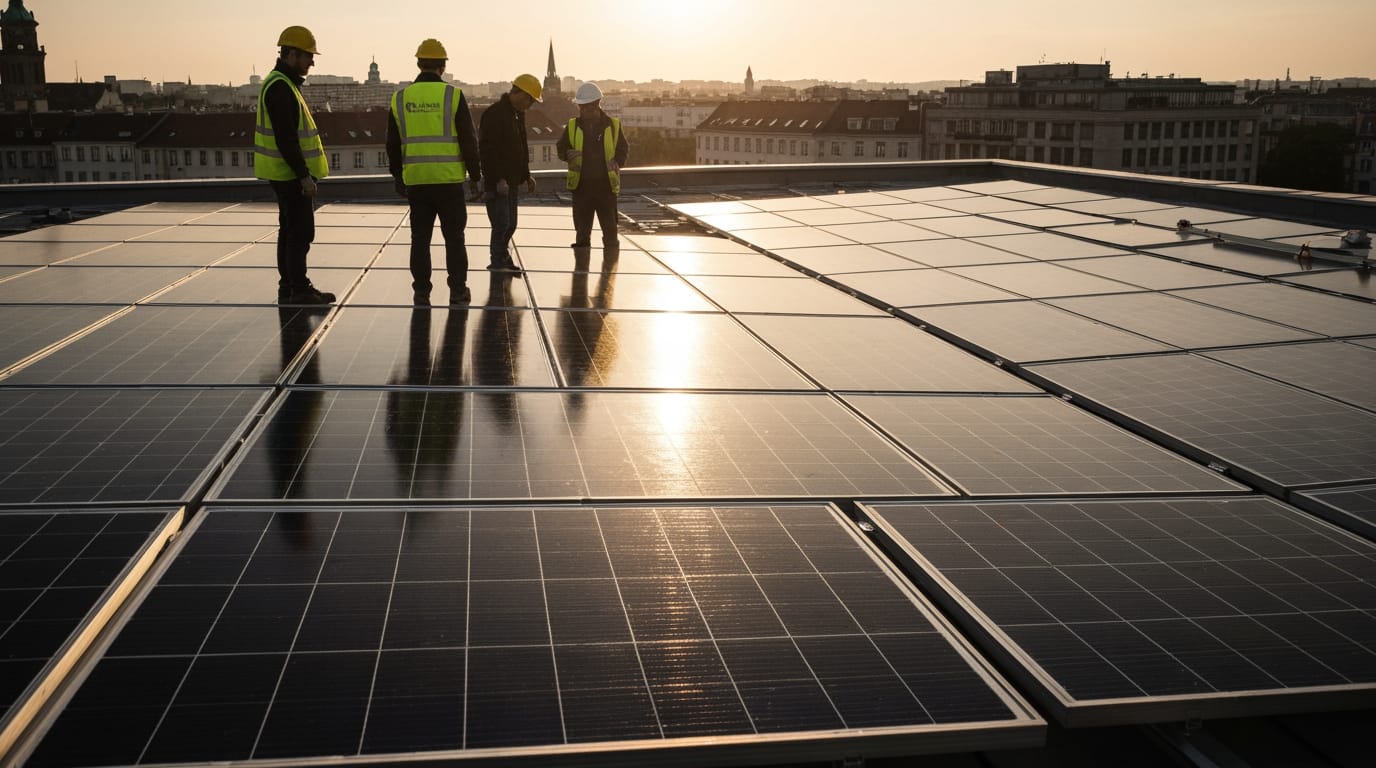
Europe finds itself at a critical juncture, grappling with the intensifying realities of climate change while simultaneously pushing forward an ambitious, rapid transition to green energy. The continent is warming at an alarming rate, nearly twice the global average, leading to unprecedented heatwaves and severe health and economic consequences. In response, and driven by geopolitical imperatives, the European Union has dramatically accelerated its pivot away from fossil fuels, pouring investments into renewables and energy efficiency measures in a bid to secure a sustainable and independent energy future.
The Scorching Reality: Europe's Escalating Heat
The data paints a stark picture of a continent increasingly besieged by extreme heat. Europe holds the unfortunate distinction of being the fastest-warming continent, experiencing temperature increases at roughly twice the global average rate. This trend is not merely theoretical; the three warmest years on record for the European region have all occurred since 2020, with the ten warmest years observed since 2007.
The human toll of this escalating heat is profound. Extreme heat warnings have surged by 318% between the periods of 1991-2000 and 2015-2024. Consequently, heat-attributable deaths are on a troubling upward trajectory across nearly all monitored European regions, with an estimated 62,000 fatalities in 2024 alone. Vulnerable populations, including infants, older adults, and outdoor workers, bear the disproportionate brunt of these severe conditions. Beyond immediate health impacts, the prolonged exposure to heat stress is expanding into more hours of the day, potentially leading to reduced physical activity and increased risks of non-communicable diseases.
The implications extend beyond public health. In 2023, over one million additional people faced food insecurity directly linked to heatwaves and drought. Critical infrastructure, including hospitals, faces growing risks of partial or total shutdown due to extreme weather events. Coastal inundation and flooding, exacerbated by climate change, are primary drivers of infrastructure damage. Economic losses from weather and climate-related extremes in Europe have already reached hundreds of billions of euros over the past four decades, with heatwaves accounting for over 85% of associated fatalities. This confluence of health, environmental, and economic stresses underscores the urgent need for comprehensive climate action and adaptation strategies.
Europe's Green Mandate: A Policy-Driven Energy Shift
Against the backdrop of a warming continent, Europe has intensified its commitment to a green energy revolution. This acceleration is driven by twin imperatives: mitigating climate change and bolstering energy security. The European Green Deal, a cornerstone policy, outlines a path to climate neutrality by 2050 and a binding target of at least a 55% reduction in greenhouse gas emissions by 2030.
The urgency of this transition was further amplified by geopolitical events, notably Russia's invasion of Ukraine in 2022. This conflict exposed Europe's significant reliance on imported fossil fuels, particularly Russian gas, and sparked the creation of the REPowerEU plan. Launched in May 2022, REPowerEU aims to make Europe independent from Russian fossil fuels well before 2030, with an ambitious goal of phasing out Russian fossil fuels entirely by 2027. The plan significantly increased Europe's renewable energy target from 40% to 45% by 2030 and set a new energy savings target of 13% by the same year. This comprehensive strategy mobilizes substantial financial resources, with the European Investment Bank (EIB) committing €45 billion over five years to support REPowerEU objectives.
Further solidifying its commitment, the revised Renewable Energy Directive has set a binding EU minimum target of 42.5% renewables in gross final energy consumption by 2030, with an aspirational target of 45%. These policy frameworks are not just about targets; they translate into concrete actions to diversify energy supplies, promote energy efficiency through technologies like heat pumps and rooftop solar, and streamline permitting procedures for renewable energy projects.
Milestones in Renewable Deployment
Europe's concerted efforts are yielding tangible results. In 2024, renewable energy sources constituted 25.2% of the final energy consumption across the EU. More impressively, preliminary Eurostat data for 2024 indicates that renewables were the leading source of electricity, accounting for 47.3% of total electricity generation. This figure held steady in 2025, with wind contributing 37.5%, solar 27.5%, and hydropower 25.9% of renewable electricity. During the same period, electricity generated from coal, oil, and gas continued its downward trend, falling to just 29.2% of total electricity production in 2024. Today, wind and solar collectively provide 31% of the EU's electricity, surpassing fossil fuels. In the first half of 2024, renewable electricity generation reached 50% of the EU's total electricity.
Specific technologies are experiencing unprecedented growth. Solar power production has more than doubled since 2019, with 2024 and 2025 marking record years for new solar capacity deployment. In 2025 alone, 56.1 GW of new solar capacity was installed, following 56.7 GW in 2024. In June 2025, solar energy made history by becoming the primary source of electricity generated in the EU, reaching 22%. The cost-effectiveness of solar has dramatically improved, with prices dropping 92% since 2011. Wind energy is also expanding significantly, having generated more electricity than gas in 2023. The EU aims to more than double its current wind capacity of 203 GW to approximately 440 GW by 2030.
Heat pumps are another key component of this transition, with sales peaking in 2022-2023 at 2.7 million units, and 2.3 million installed in 2025. The ambitious target is to install 58 million heat pumps across Europe by 2030, building on the over 24 million already in place. These advancements have directly contributed to substantial energy savings and reduced reliance on external energy sources. Notably, imports of Russian gas into the EU plummeted from around 150 billion cubic meters in 2021 to approximately 52 billion cubic meters in 2024, shrinking Russia's share of the EU gas market from about 45% to below 20%.
Persistent Challenges on the Path to a Green Future
Despite the remarkable progress, Europe's green transition faces considerable hurdles. Integrating variable renewable sources like solar and wind into existing energy grids presents significant technical challenges. The current grid infrastructure, historically designed for centralized fossil fuel plants, requires substantial upgrades, estimated to cost €1 trillion by 2030, to accommodate decentralized and fluctuating renewable inputs. The intermittency of renewables necessitates robust energy storage solutions, and while battery technology is advancing, current capacity is deemed insufficient to meet Europe's needs. Furthermore, a lack of adequate transmission line interconnections across the continent can lead to the curtailment of green power, where electricity generated from renewables is wasted due to insufficient infrastructure to transport or store it.
Economic and geopolitical obstacles also loom large. Europe remains heavily dependent on imports for critical raw materials and technologies essential for the green transition, such as components for solar panels and batteries. High energy costs continue to exert pressure on European industries, impacting competitiveness and potentially leading to plant closures and delayed investments. Disparities in public funding and fiscal constraints among member states exacerbate regional inequalities in implementing green initiatives. The current market designs, which often link electricity prices to gas, can complicate the economic viability of renewables. Geopolitical events, such as the recent energy market disruptions linked to conflicts in the Middle East, can still trigger price volatility and underscore Europe's remaining vulnerabilities. The ambitious 2030 targets necessitate a doubling of average deployment rates compared to the past decade, a significant undertaking that requires consistent policy implementation and investment.
A Converging Future: Adaptation and Transformation
Europe stands at a pivotal moment, confronting the undeniable impact of a rapidly warming climate with an equally rapid, though challenging, shift in its energy paradigm. The escalating heat, with its dire consequences for public health, food security, and infrastructure, underscores the non-negotiable urgency of climate action. Simultaneously, the continent's accelerated push towards green energy, propelled by innovative policies like the European Green Deal and REPowerEU, demonstrates a clear commitment to decoupling economic growth from fossil fuel dependence and securing a more stable energy future.
While significant milestones have been achieved in renewable energy deployment and the reduction of fossil fuel reliance, the path ahead is not without obstacles. Overcoming challenges related to grid infrastructure, energy storage, raw material dependencies, and equitable policy implementation will be crucial. Yet, the ongoing transformation is not merely an environmental endeavor; it is a strategic imperative for Europe's economic competitiveness, resilience, and sovereignty. The ability to adapt to a warmer world while achieving a climate-neutral and energy-independent future will define Europe's trajectory in the coming decades.


