Andes Shakes Again: Powerful 6.7 Magnitude Earthquake Rattles Southern Peru, No Immediate Damage Reported as Region Recovers from Previous Deadly Tremor
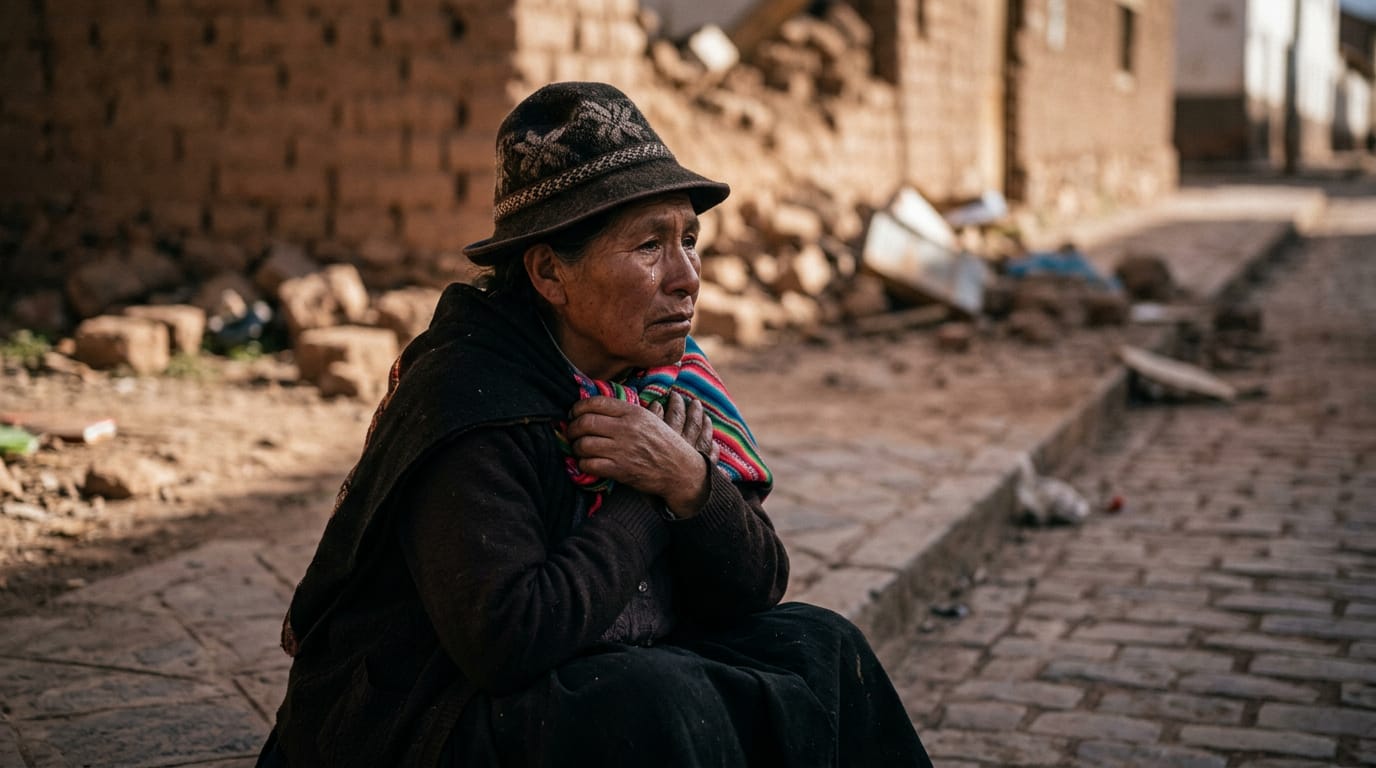
LIMA, Peru – A powerful magnitude 6.7 earthquake struck Peru's southern Andes Mountains on Thursday, sending tremors through several regions but, in a fortunate turn, prompted no immediate reports of damage or casualties. The seismic event, occurring in the Parinacochas province of the Ayacucho region, comes as parts of the Andean nation are still grappling with the aftermath of a deadly 5.5-magnitude earthquake that devastated communities just weeks prior in the central Junin department, highlighting Peru's persistent vulnerability to seismic activity.
The Latest Tremor: A Fortunate Reprieve
The U.S. Geological Survey (USGS) reported the 6.7-magnitude earthquake hit Peru's southern Andes on Thursday at approximately 1 p.m. local time (18:00 GMT). Its epicenter was located about 38 kilometers (24 miles) northwest of the city of Upahuacho, in the Parinacochas province of the Ayacucho region. The German Research Center for Geosciences (GFZ) measured the quake slightly lower at a magnitude of 6.6, noting a shallow depth of 10 kilometers (6.21 miles). The USGS, however, placed its depth at 66.7 kilometers.
Despite its considerable strength, initial assessments offered a collective sigh of relief across the affected areas. Authorities confirmed there were no immediate reports of damage to infrastructure or loss of life. Luis Vásquez, head of Peru's Civil Defense, stated on local radio that no damage of any kind had been reported so far, a sentiment echoed by Yony Reyes, the mayor of Parinacochas province. The Peruvian Navy also swiftly ruled out any tsunami threat, given the quake's inland location. This absence of immediate severe consequences stands in stark contrast to other recent seismic events in the highly active region.
Echoes of Recent Catastrophe: The July 19th Quake's Lingering Impact
While Thursday's quake appears to have spared lives and property, it serves as a stark reminder of the destructive power of seismic forces that recently impacted other parts of Peru. Just over a month ago, on Saturday, July 19, 2026, a 5.5-magnitude earthquake (some reports indicating 5.1 magnitude) struck the central Andes region of Junin at 9:24 p.m. local time, causing significant devastation and loss of life.
The July tremor, with its epicenter located 2 kilometers (1.24 miles) west-southwest of Sicaya in Huancayo province (or 7 km south of Chupaca), was particularly destructive. It resulted in the deaths of at least six people, with some initial reports citing five fatalities, including two elderly adults and a 17-year-old. More than 30 individuals sustained injuries, and over 300 were displaced from their homes, facing immediate hardship.
The impact on infrastructure was severe, especially in areas where traditional adobe materials were used for construction. Officials noted that this widespread use of rustic adobe homes significantly contributed to the extent of the damage. Entire blocks of traditional adobe homes collapsed in Chupaca province, where damage was most heavily concentrated. Specifically, 76 homes were completely destroyed, 95 were rendered uninhabitable, and 74 suffered partial damage. Among the historical casualties was the "Santiago de León" church and former convent in Chongos Bajo, a 16th-century architectural gem built in 1565 and designated as a national heritage site, which suffered structural damage. Local media broadcasts captured the anguish of victims' relatives in hard-hit agricultural areas like Chongos Bajo, where residents sought shelter under blankets outside their damaged homes, with some even reporting animals trapped under rubble. One resident, Hermenegilda Guamalato, recounted the destruction of her home, forcing her to seek refuge with her three children in a neighboring province. The main quake was followed by a 3.7 magnitude aftershock just 17 minutes later, and two additional 3.4 magnitude aftershocks aggravated the situation in Chupaca province.
Emergency Response and Lingering Challenges
In response to the July 19th earthquake, the Peruvian government swiftly declared a 60-day state of emergency in five districts of the Junin region, including Ahuac and Huayucachi, to facilitate immediate response and rehabilitation efforts. The declaration authorized measures for accelerated reconstruction, expedited procurement of emergency supplies, and the deployment of military engineering units for debris clearance.
Emergency teams, including the National Institute of Civil Defense (Indeci), dispatched humanitarian aid, providing 7.74 tons of food supplies sufficient to support 1,250 affected individuals for ten days. Field hospitals were established in Huancayo to treat the injured, with the National Police of Peru deployed to maintain public security and aid rescue operations. Looting concerns emerged in some damaged neighborhoods, prompting authorities to implement curfews in the most severely hit areas like Chongos Bajo. The challenges remain significant as communities face the daunting task of rebuilding and recovering from the extensive damage.
Peru's Tectonic Reality
Peru's geographic location positions it squarely within the "Pacific Ring of Fire," a horseshoe-shaped belt around the Pacific Ocean known for its intense seismic and volcanic activity. Earthquakes are a frequent occurrence in the country due to the interface between the Nazca and South American tectonic plates, where the Nazca plate subducts beneath the South American plate at a rate of 77 mm (3.0 inches) per year. This ongoing geological process is responsible for the formation of the Andes mountain range and the Peru–Chile Trench.
The nation's seismic history is marked by devastating events, serving as a constant reminder of this inherent risk. A magnitude 7.9 earthquake struck the province of Pisco in the Ica region in 2007, resulting in nearly 600 fatalities and extensive material losses, making it one of the most destructive quakes in recent Peruvian history. Such historical events underscore the critical importance of preparedness. Just days before Thursday's tremor, on August 14, 2026, Peru conducted a nationwide multi-hazard drill, simulating an 8.8-magnitude earthquake and tsunami off its central coast. This exercise, aimed at testing evacuation protocols and response capacities, reflected an ongoing national effort to mitigate the risks associated with living in such a seismically active zone.
The latest quake in the southern Andes, while seemingly less destructive than recent predecessors, reinforces the continuous need for vigilance, robust infrastructure, and effective emergency preparedness in a country intimately shaped by the Earth's restless forces. As affected communities from the July 19th event slowly begin the arduous process of recovery and rebuilding, the resilience of the Peruvian people will be continually tested by the powerful natural forces that define their land.