Anti-Immigrant Riots Rock Belfast Following Brutal Stabbing
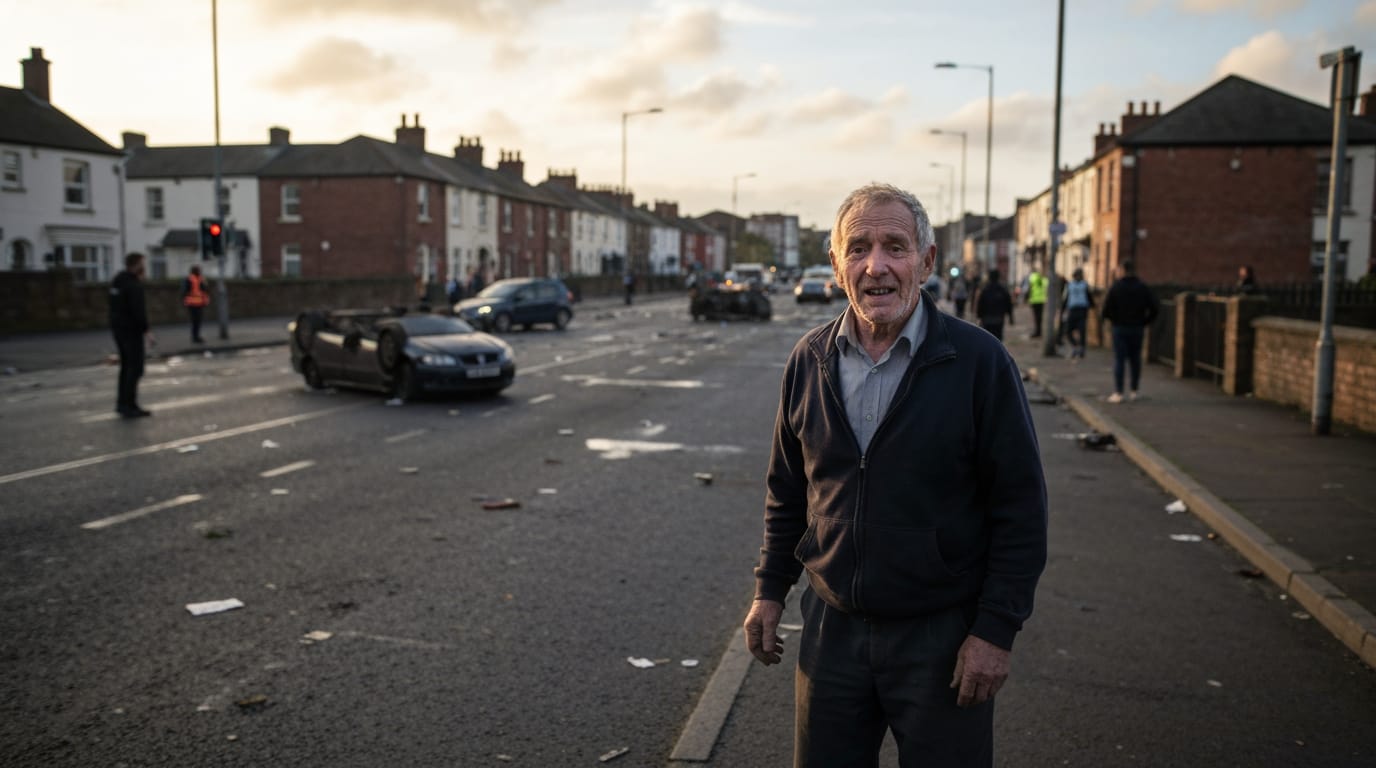
Belfast, Northern Ireland – Waves of anti-immigrant violence swept across Belfast on Tuesday evening, June 9, 2026, as masked individuals engaged in widespread disorder, setting vehicles and homes ablaze in response to a brutal knife attack the previous night. The unrest, fueled by a graphic video of the stabbing circulating online and calls for protests from far-right figures, plunged parts of the city into chaos, drawing swift condemnation from political leaders and igniting urgent discussions about immigration and social cohesion in Northern Ireland.
The Catalyst: A Brutal Attack Ignites Tensions
The catalyst for the widespread unrest was a horrific stabbing that occurred late Monday evening, June 8, in north Belfast. The victim, a man in his 40s, sustained severe injuries, including significant damage to his eyes and serious slash wounds to his face and back. Police recovered a kitchen knife at the scene, and members of the public were credited with intervening to fight off the assailant, potentially saving the victim's life. The suspect, a 30-year-old Sudanese national, was swiftly apprehended and subsequently charged with attempted murder, possession of a bladed article in a public place, and making threats to kill. He is scheduled to appear in Belfast Magistrates' Court on June 10.
Details regarding the suspect's immigration status quickly emerged, with authorities confirming he had entered Northern Ireland from Dublin, Republic of Ireland, in 2023, applied for asylum, and was granted a five-year permit to remain in the United Kingdom, valid until 2028. Police have stated there is no information currently suggesting the attack was terrorism-related. However, a graphic video of the incident, which depicted the assailant straddling the victim and repeatedly slashing him, was widely shared across social media platforms, with some far-right commentators erroneously claiming it depicted an attempted beheading. This widely circulated footage served to amplify outrage and was directly linked to calls for anti-immigrant protests.
Streets Ablaze: An Unfolding Night of Disorder
The calls for action quickly materialized into widespread disorder across Belfast on Tuesday evening, June 9. Hundreds of masked protesters gathered in multiple locations throughout the city, including East Belfast, North Belfast, and Sandy Row. The scale of the unrest prompted the Police Service of Northern Ireland (PSNI) to declare a "critical incident," deploying riot officers to various hotspots.
The violence was extensive, with protesters targeting immigrant communities and property. Masked men reportedly burned families out of their homes, with video footage showing police assisting residents escaping burning houses. Vehicles, including a Glider bus and several cars, were torched, and bins were set alight, creating barricades of burning debris in the streets. The Northern Ireland Fire and Rescue Service (NIFRS) had an exceptionally busy night, responding to 62 incidents between 7 p.m. and midnight, necessitating an additional 21 fire appliances from across Northern Ireland to manage the demand. Reports also indicated masked men attacked police officers with bricks and masonry, smashed windows and doorways of homes, and attacked businesses. A pastor from the area highlighted that those targeted and forced from their homes were often Black individuals. Chants of "Islam Out" were heard during some demonstrations. While the epicentre was Belfast, sporadic disorder and protests also occurred in other parts of Northern Ireland.
Leaders Condemn, Tensions Simmer
The immediate aftermath saw a chorus of condemnations from political leaders across Northern Ireland and the wider United Kingdom. First Minister Michelle O'Neill denounced the actions as "disgusting cowardice" and "outright thuggery," emphasizing that such violence had "nothing to do with community". Deputy First Minister Emma Little-Pengelly echoed these sentiments, stating that "taking frustration at the evil actions of a person out on those who had no part in it is utterly wrong". The leaders of Northern Ireland's five main political parties issued a joint statement, expressing their revulsion and calling for calm, urging people not to incite hatred or fear.
British Prime Minister Keir Starmer described the initial stabbing as "sickening" and the subsequent rioting as "shocking and completely unacceptable". He also implicitly condemned those who "encouraged" the disorder online, a statement some interpreted as a reference to social media figures like Elon Musk, who had been accused of amplifying the unrest. Northern Ireland Secretary Hilary Benn also condemned the violence, asserting that it only damages communities and puts innocent lives at risk. Police urged the public not to be "fooled or duped" by online voices "inciting hatred" and encouraging "awful behaviour".
A Troubled History, A Pressing Present
The recent unrest in Belfast is set against a complex backdrop of Northern Ireland's unique history and evolving demographic landscape. While known for its legacy of sectarian conflict during "The Troubles," which formally ended with the Good Friday Agreement in 1998, the region has also grappled with a long, albeit often overlooked, history of immigration, xenophobia, and racism. Historically, animosity was directed along Catholic-nationalist or Protestant-unionist lines, but as Northern Ireland's minority-ethnic population has grown, this "out-grouping" has increasingly shifted towards new arrivals. Data shows that race hate crimes in Northern Ireland now exceed sectarian offenses.
This is not the first instance of anti-immigrant unrest in Northern Ireland. The region experienced widespread rioting in June 2025 following allegations against two Romanian teenagers in Ballymena, with similar disturbances occurring in Dublin in November 2023 and other parts of the UK in 2024 and 2025. These prior incidents, often sparked by localized events but amplified by broader anti-immigration sentiment and social media, demonstrate a persistent underlying tension. Economic factors also play a significant role, with many areas experiencing such violence marked by economic problems, substandard housing, and perceived pressures on social services and housing lists due to immigration. Paramilitary groups, while officially disarmed, continue to exert influence in some communities and have been implicated in racially motivated attacks. The confluence of these historical grievances, socio-economic challenges, and the rapid spread of inflammatory content online creates a volatile environment ripe for such eruptions of violence.
Conclusion: A Call for Calm Amid Lingering Fears
The anti-immigrant riots in Belfast represent a stark and violent manifestation of rising tensions surrounding immigration in the United Kingdom, particularly within Northern Ireland. While the initial stabbing incident was unequivocally condemned by all major political parties, the subsequent attacks on homes and vehicles, and the targeting of immigrant families, underscore deep-seated anxieties and prejudices. The swift police response and widespread condemnation from leadership aim to restore order and reinforce the rule of law. However, the events of June 9, 2026, serve as a potent reminder of the fragility of social cohesion and the urgent need for constructive dialogue and action to address both the realities and perceptions surrounding immigration, as well as the insidious influence of online incitement. As Northern Ireland grapples with its complex past and evolving present, fostering an inclusive society that rejects such "disgusting cowardice" remains a critical challenge.


