Antitrust Scrutiny Halts Paramount-Warner Bros. Merger Until 2027
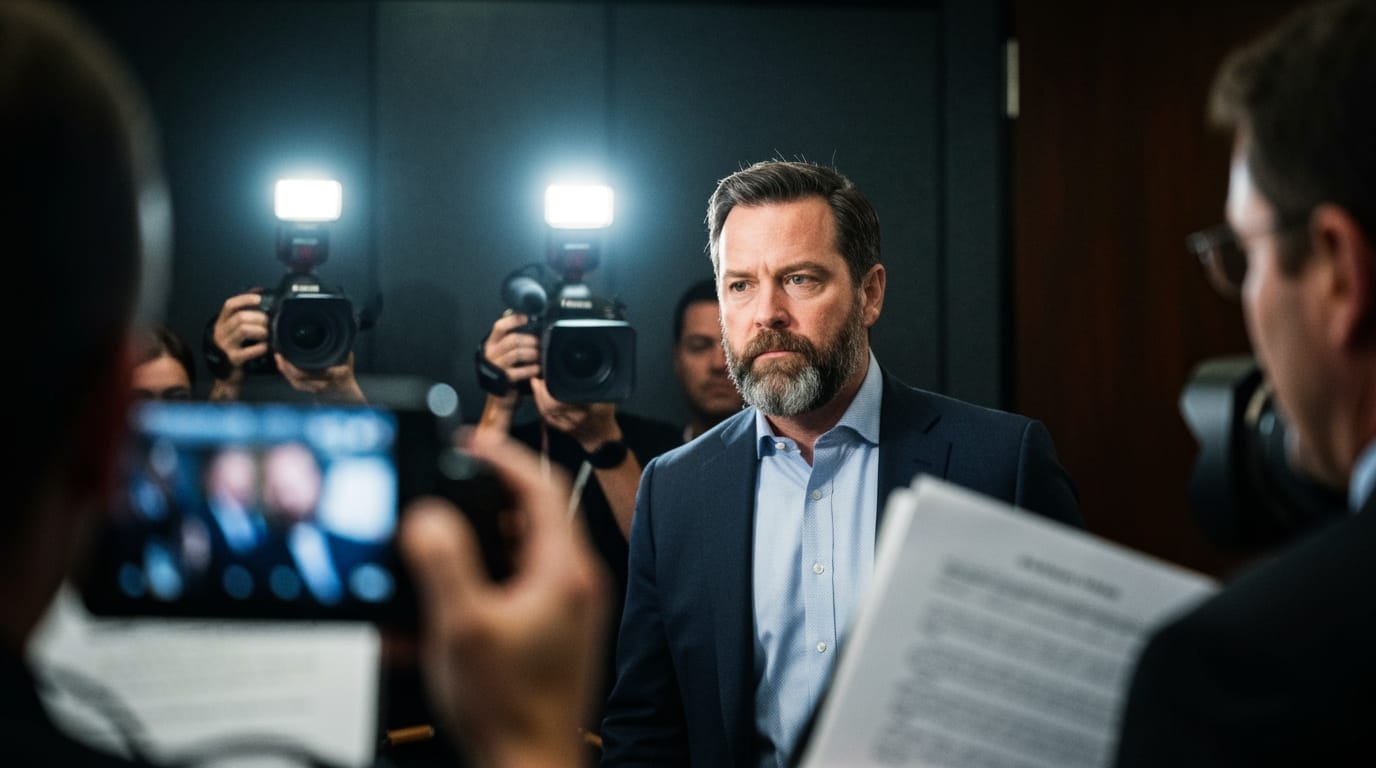
A proposed $110 billion merger between media giants Paramount Skydance and Warner Bros. Discovery has been paused until at least June 2027, following an agreement reached amid twin antitrust lawsuits filed by a coalition of state attorneys general and the Writers Guild of America (WGA). The delay, stipulated in court on Friday, marks a significant victory for opponents who argue the consolidation would stifle competition, harm consumers, and negatively impact content creators across the film and television industries.
The agreement to halt the deal for nearly a year and a half, or until a federal judge rules on the merits of the challenges, stems from a temporary restraining order issued earlier this week by U.S. District Judge Araceli Martínez-Olguín in the Northern District of California. This judicial intervention came after 12 state attorneys general, led by California’s Rob Bonta and New York’s Letitia James, filed a lawsuit on July 13, asserting the merger would violate federal antitrust laws. The WGA followed suit the next day with its own legal challenge, echoing concerns about competition and the welfare of writers. Paramount Skydance, while agreeing to the delay, maintains that the transaction is beneficial for competition, consumers, and creators, expressing confidence in its ability to prove its case at trial.
The Legal Labyrinth: Antitrust Claims Take Center Stage
The core of the legal challenge against the Paramount Skydance-Warner Bros. Discovery merger lies in Section 7 of the Clayton Act, which prohibits mergers that could substantially lessen competition or create monopolies. The coalition of states, which includes Arizona, Colorado, Connecticut, Massachusetts, Minnesota, Nevada, New Jersey, New Mexico, Oregon, and Washington, alleges that combining these two entertainment powerhouses would severely reduce competition in three critical markets: the distribution of wide-release theatrical films, the distribution of anticipated top-grossing theatrical films, and the licensing of basic cable television channels.
California Attorney General Rob Bonta articulated these concerns, stating that if the merger were to proceed, the combined entity would control approximately one-third of both theatrical motion pictures and basic cable programming in the United States. Opponents fear this concentration of power would lead to higher prices for consumers, a reduction in the quality and variety of content, and fewer opportunities for independent filmmakers and distributors. New York Attorney General Letitia James echoed these sentiments, emphasizing that the halt was a "critical victory" in efforts to protect the film and television industries.
Separately, the Writers Guild of America's lawsuit underscores the human impact of such massive consolidation. The union contends that the merger would lead to lower pay, fewer job opportunities, and reduced bargaining power for writers and other industry professionals. This perspective highlights concerns that cost-cutting measures often associated with large mergers could disproportionately affect creative talent. Paramount, however, has consistently argued that the deal would promote competition and expand opportunities for writers.
Mounting Financial Stakes and Prior Hurdles
The extended delay carries significant financial implications for Paramount Skydance. Should the deal not close by September 30, the company has agreed to pay Warner Bros. Discovery shareholders a "ticking fee" of $0.25 per share per quarter. This amounts to approximately $7 million per day, or $650 million quarterly, a substantial cost that will accrue as the legal battles unfold.
Prior to these lawsuits, the $111 billion acquisition had already navigated several regulatory hurdles. The U.S. Department of Justice had approved the deal in June, and the European Commission granted conditional approval, contingent on Paramount exiting a European distribution deal with Universal. However, the challenges from state attorneys general and the WGA have proven to be more formidable obstacles, highlighting the intricate and often unpredictable nature of large-scale media mergers.
Beyond the antitrust concerns, a separate shareholder lawsuit filed in Delaware court has added another layer of complexity. This suit alleges that controlling shareholders Larry Ellison and his son David, who leads Skydance, engaged in "illegal promises and payments" to secure regulatory approval for the Ellison family's initial purchase of Paramount. This lawsuit also raises questions about alleged discussions between Larry Ellison and former President Trump concerning potential changes at CNN under the new ownership.
The Broader Context of Media Consolidation
The proposed merger and the legal challenges it faces are set against a backdrop of increasing consolidation within the media landscape. Driven by the intense competition in the streaming wars and the evolving economics of traditional media, companies are seeking scale to better compete for content, subscribers, and advertising revenue. Warner Bros. Discovery, for example, reported a net loss of $11.5 billion in 2024, despite generating $39.3 billion in revenue, partly due to a significant goodwill impairment charge related to its linear TV networks. Paramount Global also reported a net loss from continuing operations of $6.20 billion in 2024.
Many industry observers note that the difficulty in making streaming services profitable, coupled with declining revenues from traditional cable subscriptions (cord-cutting), has pushed companies toward mergers as a survival strategy. Paramount's portfolio includes CBS, Paramount Pictures, Nickelodeon, MTV, Comedy Central, BET, Paramount+, and Pluto TV, while Warner Bros. Discovery encompasses the Warner Bros. film studio, HBO, CNN, and the streaming service HBO Max. A merger would combine these vast assets, creating a single entity with an immense content library and significant market share across film distribution, television, and streaming.
However, critics argue that such mega-mergers can lead to a reduction in creative diversity, fewer buyers for content, and less innovation as a few dominant players control a larger portion of the market. The current legal standoff underscores the tension between the economic imperatives driving consolidation and the public interest concerns regarding market concentration and consumer welfare.
An Uncertain Future for a Hollywood Megadeal
The agreement to delay the Paramount Skydance-Warner Bros. Discovery merger until June 2027 sets the stage for a protracted legal battle that will significantly shape the future of Hollywood. While the companies express readiness to defend their transaction in court, the immediate halt provides a temporary reprieve for those who fear the anti-competitive consequences of such a massive combination.
The coming months will see the plaintiffs and defendants prepare for trial, with new schedules expected to be proposed by July 31. The outcome of these legal proceedings will not only determine the fate of this particular $110 billion deal but also establish important precedents for future mergers in an entertainment industry increasingly defined by scale and global reach. The resolution will have far-reaching implications for how content is created, distributed, and consumed, influencing everything from movie ticket prices to the diversity of shows available on streaming platforms.


